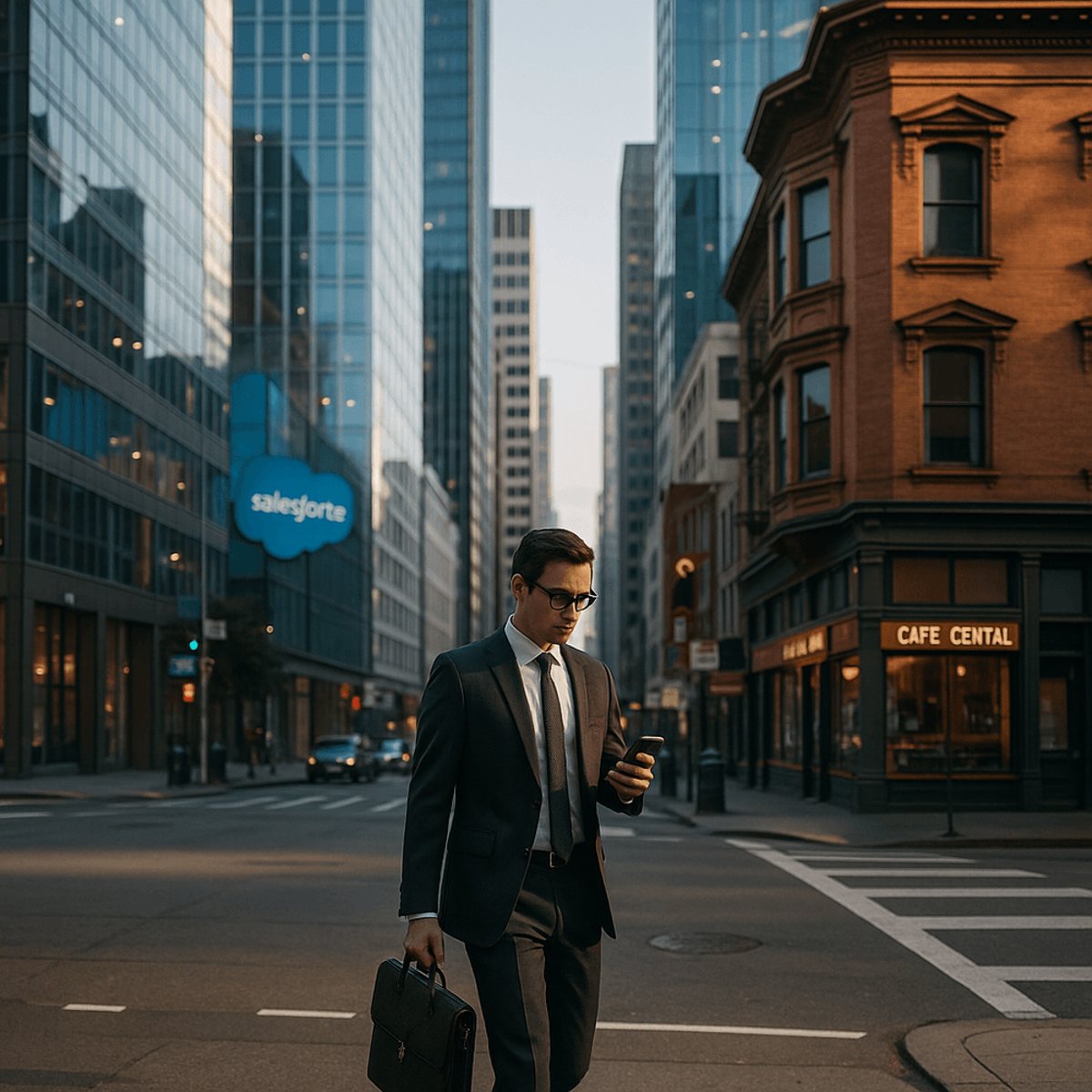
While Wired just published a comprehensive business travel guide for San Francisco, the timing reveals a curious disconnect. The media company that covers tech's bleeding edge has delivered a lifestyle piece that largely sidesteps the AI revolution reshaping the very city it's describing.
Wired just dropped what looks like an exhaustive guide to San Francisco for business travelers, complete with hotel recommendations, restaurant picks, and cultural hotspots. But there's something almost surreal about a tech publication writing about San Francisco in 2024 without really talking about, well, tech.
The guide does acknowledge that San Francisco sits 'at the epicenter of the machine intelligence revolution' and mentions that AI companies have set up camp in certain neighborhoods. But that's about where the tech coverage ends. Instead, most of the 23,000-word piece reads like a lifestyle magazine's take on the city - heavy on Mission burritos and Dolores Park picnics, light on the seismic business shifts happening blocks away.
It's a fascinating editorial choice. Here's a city where OpenAI has become a household name, where every coffee shop seems to host pitch meetings, and where the AI boom has fundamentally altered the business landscape. Yet the guide spends more words on pizza recommendations than on the startup ecosystem that's drawing those business travelers in the first place.
The article does mention key locations like the Moscone Center, where major conferences like Dreamforce and Microsoft Ignite take place. And it notes that neighborhoods like SOMA house corporate offices south of Market Street. But these feel like perfunctory nods rather than insights into why business travelers are flocking to the city.
What's particularly striking is how the guide addresses San Francisco's reputation. Author Michael Calore pushes back against 'doom loop' narratives, arguing that reports of the city's decline are 'gross exaggerations.' He's probably right - the city is clearly thriving in many sectors. But he makes this case by highlighting restaurants and bars rather than the economic indicators that actually matter to business travelers.
The disconnect becomes more apparent when you look at the spaces the guide recommends. Take Noisebridge, described as 'a community of makers, hackers, DIY advocates, and hands-on tinkerers.' It's portrayed as a quirky cultural curiosity rather than part of a broader innovation ecosystem. Similarly, the guide mentions that South Park is where 'Twitter, Instagram, Dropbox, Strava, and countless other San Francisco startups got off the ground' - but treats this as historical context rather than ongoing reality.
This isn't necessarily a criticism of the guide itself, which genuinely seems useful for someone looking to navigate SF's neighborhoods and food scene. The hotel recommendations look solid, especially the breakdown of Union Square versus SOMA options. The restaurant coverage is comprehensive, and the cultural suggestions feel authentic.
But it does highlight a broader challenge in tech media. How do you cover cities like San Francisco, Austin, or Seattle that exist simultaneously as business destinations and lifestyle brands? Wired clearly chose to lean into the lifestyle angle, perhaps calculating that business travelers want to experience the city's culture rather than dive deeper into its economic drivers.
The guide's approach to AI is particularly telling. While it mentions that 'all of the city's AI companies have set up camp' in certain neighborhoods, it doesn't name them or explain what this means for the business ecosystem. For a publication that regularly covers AI developments, this feels like a missed opportunity to connect the dots between San Francisco's tech transformation and its appeal to business travelers.
There's also something revealing about which details make the cut. The guide notes that the Powell Street cable car passes 'right past OpenAI CEO Sam Altman's megamansion' - treating the company's leadership as a tourist curiosity rather than a business reality shaping the city.
The timing matters too. This guide arrives as San Francisco grapples with post-pandemic changes, hybrid work adoption, and the AI boom's impact on everything from office real estate to local spending patterns. Business travelers visiting the city today are navigating a fundamentally different landscape than they were even two years ago.
What we're seeing might be the inevitable result of San Francisco's dual identity. It's simultaneously the world's most important tech hub and a city trying to maintain its cultural character. Media outlets covering it face a choice: focus on the business transformation or the lived experience. Wired chose the latter, which makes sense for a travel guide but feels incomplete for a tech publication.
The guide does succeed in one important way - it pushes back against oversimplified narratives about San Francisco's decline. By showcasing the city's vibrancy and diversity, it provides a needed counterpoint to doom-and-gloom coverage. But it also misses the chance to explain why the city remains central to global tech and what that means for the business travelers it's trying to help.
Wired's San Francisco business guide represents a broader challenge in tech media - how to cover cities that serve as both innovation hubs and lifestyle destinations. While the guide succeeds as a cultural primer, it misses the opportunity to help business travelers understand the tech transformation that's actually driving them to visit. In a city where AI companies are reshaping entire industries, that feels like the bigger story worth telling.