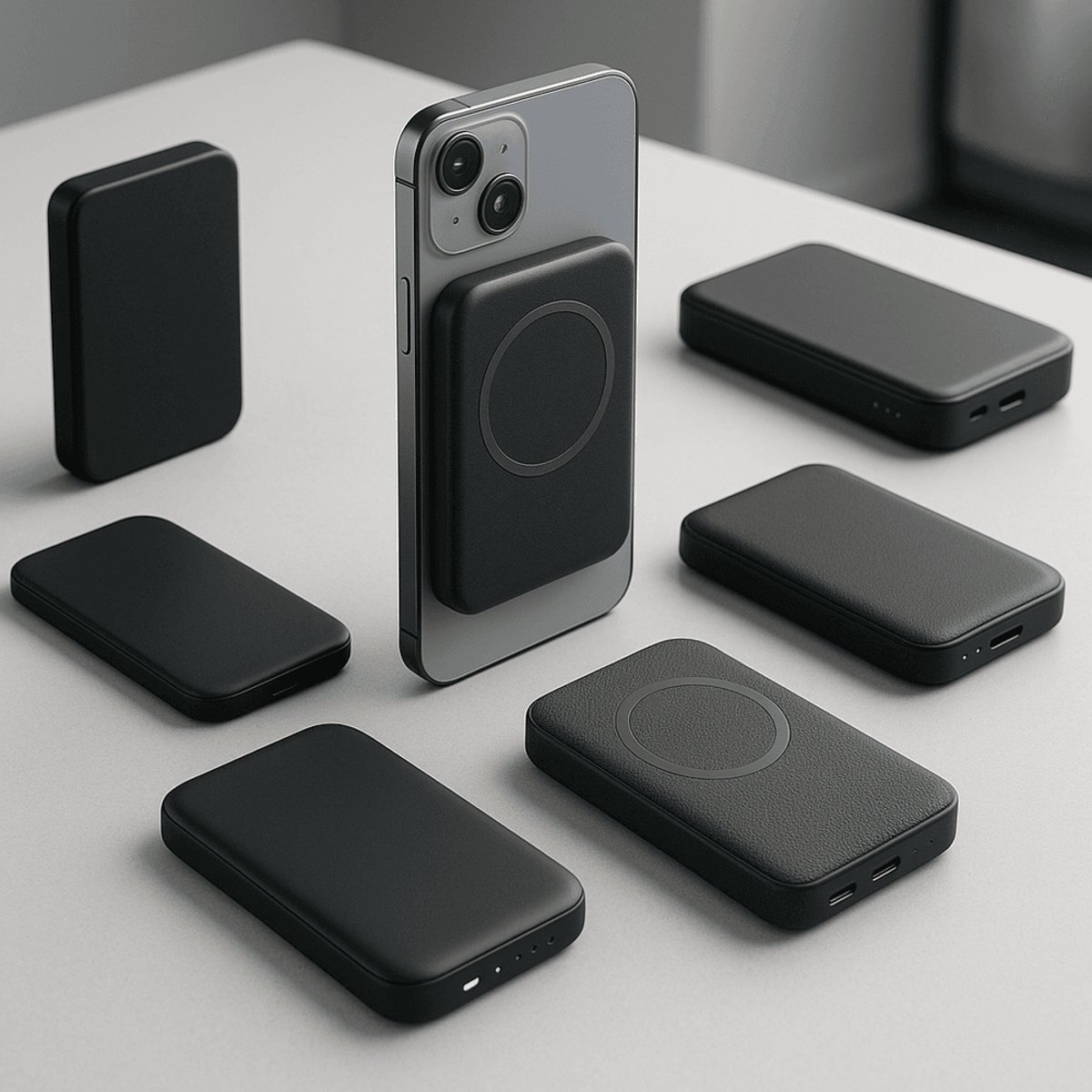
WIRED just dropped their comprehensive 2025 roundup of the best MagSafe power banks, putting 13 wireless chargers through rigorous testing. The tech publication's deep dive comes as magnetic wireless charging becomes standard across more devices, with both iPhone users and Qi2-compatible Android phones now having solid options for on-the-go power that doesn't require cables.
WIRED just delivered the definitive 2025 MagSafe power bank buying guide, and the results might surprise you. After extensive hands-on testing with everything from budget £25 options to premium $100 designer models, their findings reveal a market that's both matured and fragmented.
The standout performer? Apple's MagSafe Battery for the iPhone Air at $99. Despite packing just 3,149mAh, it's specifically engineered for the ultra-thin iPhone Air and delivers 68% charge at 12 watts. But here's the catch - it only works properly with the iPhone Air due to its unique horizontal orientation requirement.
For those wanting versatility without sacrificing portability, Anker's Nano Power Bank emerged as the slim champion at just 0.34 inches thick. At $46, it delivers Qi2 certification with 15-watt charging and managed to push most compatible phones past the 50% mark during testing.
The testing methodology was particularly thorough, with WIRED's Simon Hill putting each power bank through real-world scenarios using an iPhone 14 Pro as the baseline. The results exposed dramatic performance variations that don't always correlate with price or capacity claims.
Take the Moft Snap Stand Power Set at $50 - despite its premium faux leather finish and magnetic wallet combo, the 3,400mAh capacity could only manage 41% charge on the test iPhone. Compare that to the budget-friendly Groov-e Power Bank at £25, which delivered a full iPhone charge with 30% battery remaining thanks to its beefy 10,000mAh capacity.
Wireless charging speeds varied wildly across the lineup. While newer models with Qi2 certification hit the 15-watt sweet spot, several supposedly premium options maxed out at just 7.5 watts for iPhones. The Benks ArmorGo with its striking aramid fiber finish looked the part but disappointed with slow 7.5-watt wireless charging, though its USB-C port could push 15 watts when plugged in.
Several models earned the dreaded "avoid" label. The Alogic Matrix Universal Magnetic Power Bank suffered a complete failure during testing - one unit refused to charge entirely. The UAG Lucent Power Kickstand packed just 4,000mAh into a bulky frame while commanding premium pricing.
The standout value proposition came from Vonmählen's Evergreen Mag at £60, currently limited to UK and European markets. This German manufacturer impressed with 27% recycled cobalt, 90% recycled aluminum, and 100% recycled plastics without compromising performance. The 5,000mAh pack delivers Qi2-certified 15-watt wireless charging in an 8.6mm profile.
For users prioritizing aesthetics, Burga's designer line offers tempered glass and anodized steel construction with eye-catching patterns. The tested camo model delivered 70% charge wirelessly, though the $100 price tag for 5,000mAh capacity represents poor value compared to utilitarian alternatives.
The charging infrastructure story gets interesting when considering dock compatibility. Several manufacturers like Anker and Alogic design their power banks to integrate with desktop charging stations, creating modular charging ecosystems for home and office use.
What's particularly noteworthy is how magnetic strength varied significantly between models. WIRED's testing found that weaker magnets led to alignment issues and charging interruptions, especially when using phones with cases. The Belkin BoostCharge suffered from this problem despite decent overall performance.
The Qi2 standard's adoption is accelerating the magnetic wireless charging ecosystem beyond just iPhones. Android manufacturers are increasingly adding Qi2 compatibility, making these power banks relevant for a broader user base than the original MagSafe ecosystem.
Looking at the charging curve data, most power banks delivered their advertised wireless speeds initially but showed thermal throttling during extended charging sessions. The Anker models consistently maintained stable temperatures, while some budget options became uncomfortably warm.
The USB-C port performance varied dramatically, from 10-watt limitations on budget models to 20-watt capability on premium options. This wired backup charging proved crucial during testing, especially for power banks with modest wireless charging speeds.
WIRED's comprehensive testing reveals a MagSafe power bank market where price doesn't always predict performance. While Apple's iPhone Air battery commands a premium for device-specific optimization, alternatives like Anker's ultra-slim Nano and the eco-conscious Vonmählen options deliver compelling value. The key takeaway for consumers: capacity claims and marketing materials matter less than real-world testing data, especially when thermal management and magnetic strength significantly impact daily usability.