YouTube just announced what it's calling "the largest upgrade to Live we've ever made" at today's Made on YouTube event, introducing AI-powered stream highlights that automatically convert clips into Shorts, simultaneous horizontal and vertical streaming, and live reaction features. The updates target the 30% of daily logged-in viewers who watched live content in Q2, giving creators new monetization pathways in YouTube's ongoing battle with Twitch for streaming dominance.
YouTube is making its biggest bet yet on livestreaming, rolling out a suite of AI-driven features that could fundamentally change how creators broadcast and monetize their content. The announcement comes as the platform faces increasing pressure from Twitch and emerging livestream competitors.
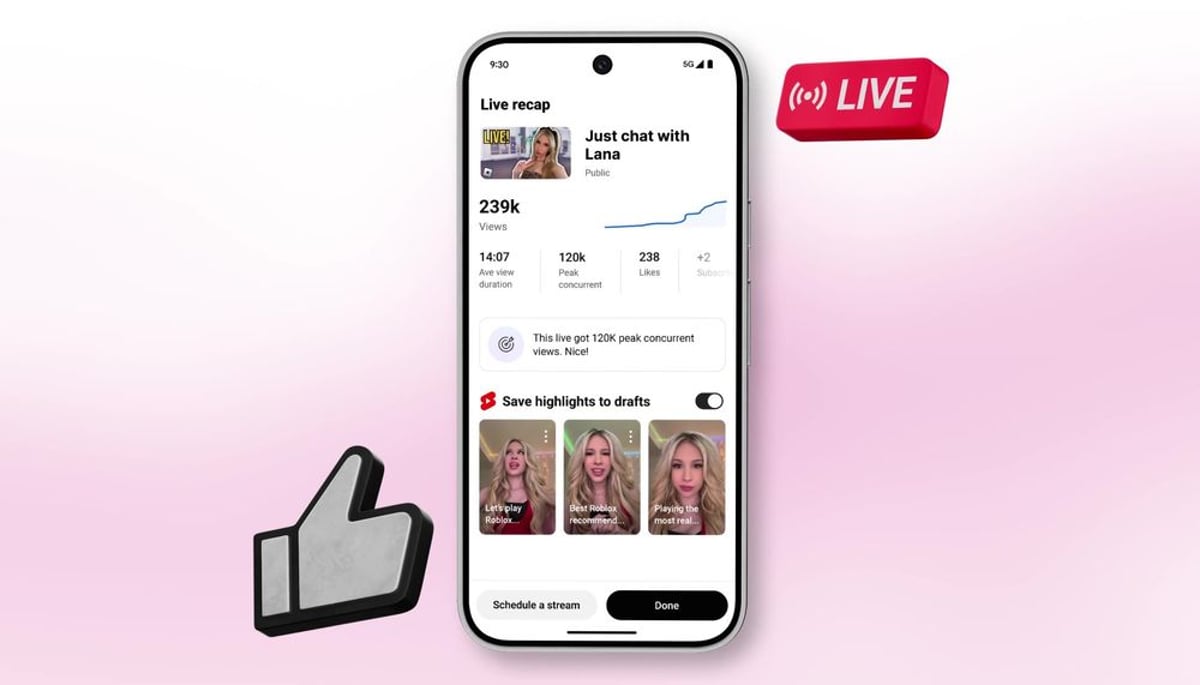
The centerpiece feature uses artificial intelligence to automatically identify and convert compelling stream moments into YouTube Shorts, launching "in the next few weeks" according to Aaron Filner, YouTube's senior director of product management. This addresses one of creators' biggest pain points - the manual effort required to repurpose live content for YouTube's algorithm-driven discovery engine.
But the real technical breakthrough is simultaneous dual-format streaming. Creators can now broadcast in both horizontal and vertical formats simultaneously, with a unified chat room that connects viewers regardless of their viewing preference. The feature recognizes the fundamental shift in viewing habits, where mobile users prefer vertical content while desktop audiences stick with traditional horizontal streams.
"More than 30 percent of daily logged-in viewers had watched live content in YouTube's second quarter this year," the company revealed, showing livestreaming's growing importance to the platform's engagement metrics. That's a significant jump from previous quarters and suggests YouTube's investment in live features is paying off.
The live reaction functionality takes direct aim at Twitch's reaction stream culture. Creators will be able to stream live reactions to eligible YouTube content, including keynotes and live events, without the copyright headaches that plague similar features on other platforms. YouTube says testing begins "early next year," giving the company time to work out licensing agreements with content partners.
Monetization gets a major upgrade too. Creators with channel memberships can now seamlessly transition between public and members-only streams, creating a "freemium" live experience that could drive subscription growth. It's a clever psychological play - viewers who get invested in a stream are more likely to pay to continue watching when it switches to members-only.
The rollout also includes expanded ad placements, bringing the side-of-stream ads currently on desktop and TV to mobile devices later this year. Combined with the AI highlights feature, creators get multiple revenue streams from a single live broadcast.
Google's parent company is clearly positioning YouTube as a comprehensive creator economy platform, not just a video hosting service. The integration with "Playables" games - YouTube's interactive gaming feature launched last year - creates vertical livestream gaming experiences that could appeal to mobile-first audiences.
The timing isn't coincidental. Twitch has struggled with advertiser-friendly content policies and creator payouts, while emerging platforms like Kick and Rumble fragment the livestreaming audience. YouTube's massive reach and improved monetization tools could lure high-profile streamers away from dedicated streaming platforms.
"Grounded in community feedback, these features are designed to help creators get discovered, grow their channel, and increase their earnings," Filner said, emphasizing the business case for creators to invest in YouTube's live ecosystem.
The real test will be adoption rates. YouTube has historically struggled to convert its massive video audience to live content, despite multiple attempts to promote livestreaming features. The AI automation and improved mobile experience could be the differentiators that finally make YouTube Live competitive with dedicated streaming platforms.
YouTube's livestream overhaul represents the platform's most serious attempt to compete with Twitch and capture the growing live content market. The AI-powered highlights and dual-format streaming address real creator pain points, while enhanced monetization tools provide clear financial incentives to choose YouTube over competitors. Success will depend on whether these features can attract top-tier streamers and convert YouTube's massive video audience into live viewers. With 30% of daily users already watching live content, the foundation is there - now YouTube needs to execute on the technical rollout and creator adoption.