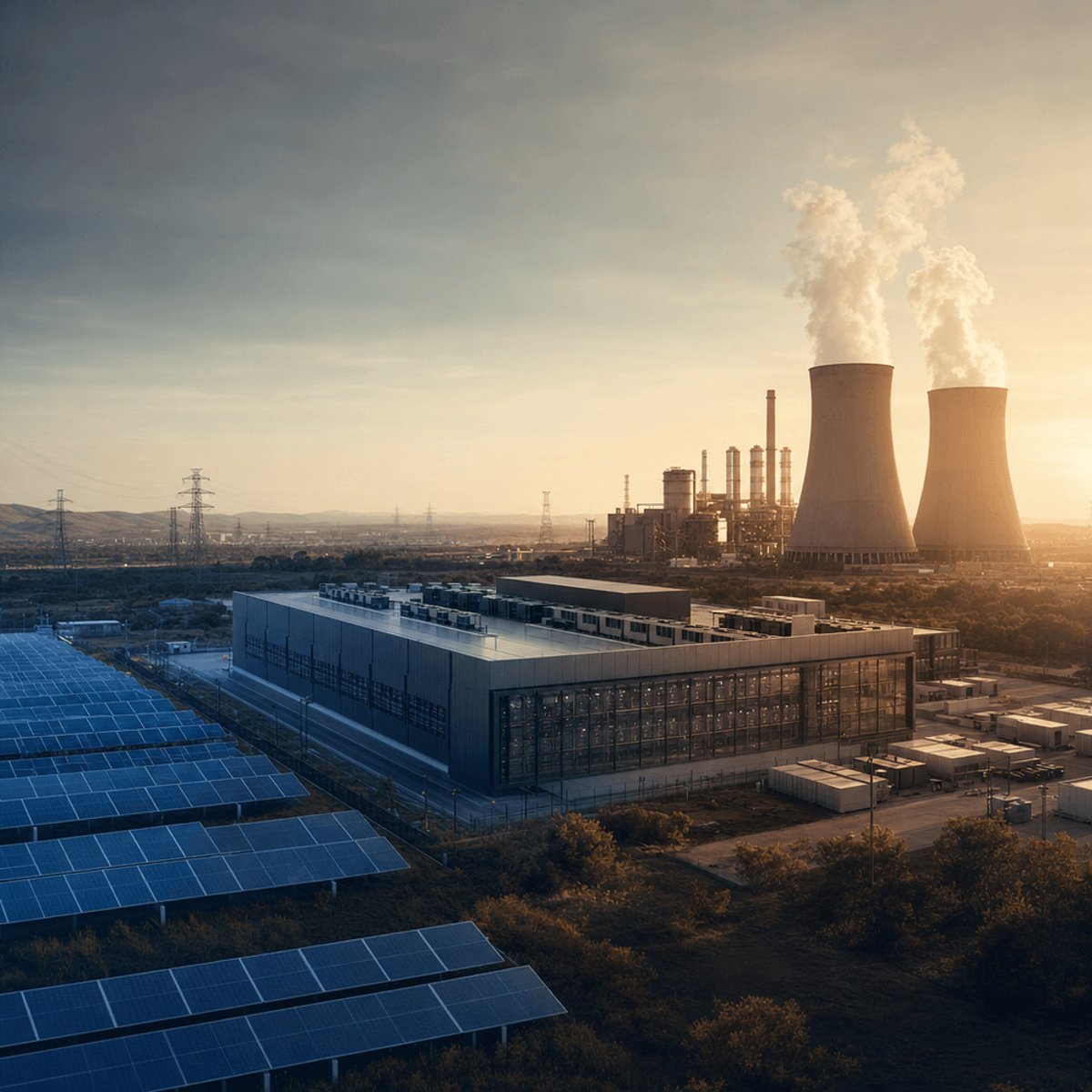
The man who built his empire promising a solar-electric future just placed a massive bet against it. Elon Musk's xAI has gone all-in on natural gas to power its AI ambitions, while SpaceX explores building data centers in orbit - anywhere, it seems, except tapping the solar infrastructure his own companies sell. The pivot marks a striking contradiction for the executive who spent decades evangelizing renewable energy through Tesla and SolarCity, raising questions about whether AI's insatiable power demands are forcing even climate advocates to compromise their principles.
Elon Musk built his reputation as Silicon Valley's climate crusader. For years, he positioned Tesla not just as an electric car company but as the vanguard of a renewable energy revolution. Solar roofs, Powerwall batteries, and emissions-free transportation would usher in what he called a "solar-electric economy." Now his newest venture is quietly abandoning that vision.
xAI, Musk's artificial intelligence startup launched to compete with OpenAI and Google's AI efforts, has reportedly committed to natural gas infrastructure to power its expanding data center operations. The decision, reported by TechCrunch, represents a fundamental break from the climate principles Musk has championed since acquiring SolarCity in 2016.
The timing couldn't be more awkward. Tesla continues selling solar panels and energy storage systems to homeowners and utilities, marketing them as the future of clean energy. Meanwhile, Musk's AI ambitions are driving him straight back to fossil fuels - the very energy source he's spent two decades trying to eliminate.
It's not just xAI. SpaceX has been exploring concepts for orbital data centers, according to industry sources familiar with the company's long-term planning. The idea would place compute infrastructure in space where solar energy is abundant and uninterrupted, avoiding Earth's day-night cycles and weather constraints. But it also sidesteps the harder question: why not use solar power on Earth, where Tesla already builds the technology?
The answer comes down to AI's brutal economics. Training large language models requires staggering amounts of electricity delivered 24/7 without interruption. Data centers running AI workloads can't afford the intermittency of solar and wind without massive battery installations that drive costs even higher. Natural gas plants offer reliable baseload power that can scale up rapidly - exactly what AI companies need as they race to build bigger models faster than competitors.
Microsoft and Google face similar tensions. Both have pledged to reach carbon neutrality while simultaneously building data centers that consume more power than small countries. Microsoft recently signed deals to reopen the Three Mile Island nuclear plant. Google's emissions have jumped 48% since 2019, driven almost entirely by AI infrastructure.
But Musk's situation is different. He's not just any tech CEO making compromises - he's the executive who made climate action his personal brand. Tesla's mission statement still reads: "accelerate the world's transition to sustainable energy." The company's energy division generated $6.4 billion in revenue last year selling solar and battery products.
Now xAI's data center strategy suggests that when forced to choose between AI ambitions and climate principles, Musk is picking AI. The natural gas commitment allows xAI to build out infrastructure faster and cheaper than renewable alternatives, helping it compete against better-funded rivals like OpenAI and Anthropic.
SpaceX's orbital data center concepts take the contradiction even further. If solar power works in space, why not invest in making it work economically on Earth? Tesla already manufactures the components. The company could theoretically build solar-powered data centers with enough battery storage to handle overnight operations. It would cost more upfront, but it would align with everything Musk claims to believe about energy's future.
Instead, SpaceX is exploring solutions that would require launching data center components on Starship rockets - an approach that burns enormous quantities of rocket fuel to access solar power in orbit rather than installing panels on Earth. The irony is hard to miss.
Industry analysts see xAI's natural gas pivot as pragmatic but hypocritical. "Every AI company is grappling with power constraints," one energy consultant told TechCrunch. "But most of them didn't spend the last decade lecturing everyone about sustainable energy." The consultant requested anonymity to preserve business relationships.
The shift also highlights growing tensions in tech between stated climate values and actual business practices. As AI becomes more central to these companies' strategies, power demands are overwhelming their renewable energy commitments. Data center operators are scrambling to secure electricity from any source available, and fossil fuels remain the fastest, cheapest option in most markets.
For Musk, the xAI decision creates an uncomfortable narrative. Tesla shareholders have long tolerated his side projects because they ostensibly served the broader mission of sustainable technology. SpaceX would enable solar power from space. Neuralink would help humanity merge with AI. The Boring Company would reduce traffic and emissions.
But xAI running on natural gas doesn't fit that story. It's just another AI company choosing fossil fuels for convenience and cost, led by the person who supposedly cared more about climate than anyone else in tech.
Musk's xAI bet on natural gas reveals the uncomfortable truth behind AI's rapid expansion: even climate advocates are willing to compromise their principles when the technology demands it. Whether this represents temporary pragmatism or a permanent shift in priorities remains to be seen, but it's already undermining the credibility of someone who built multiple companies on the promise of sustainable energy. As AI continues consuming ever-larger shares of global electricity, the tech industry's climate commitments are being tested like never before - and so far, AI is winning.