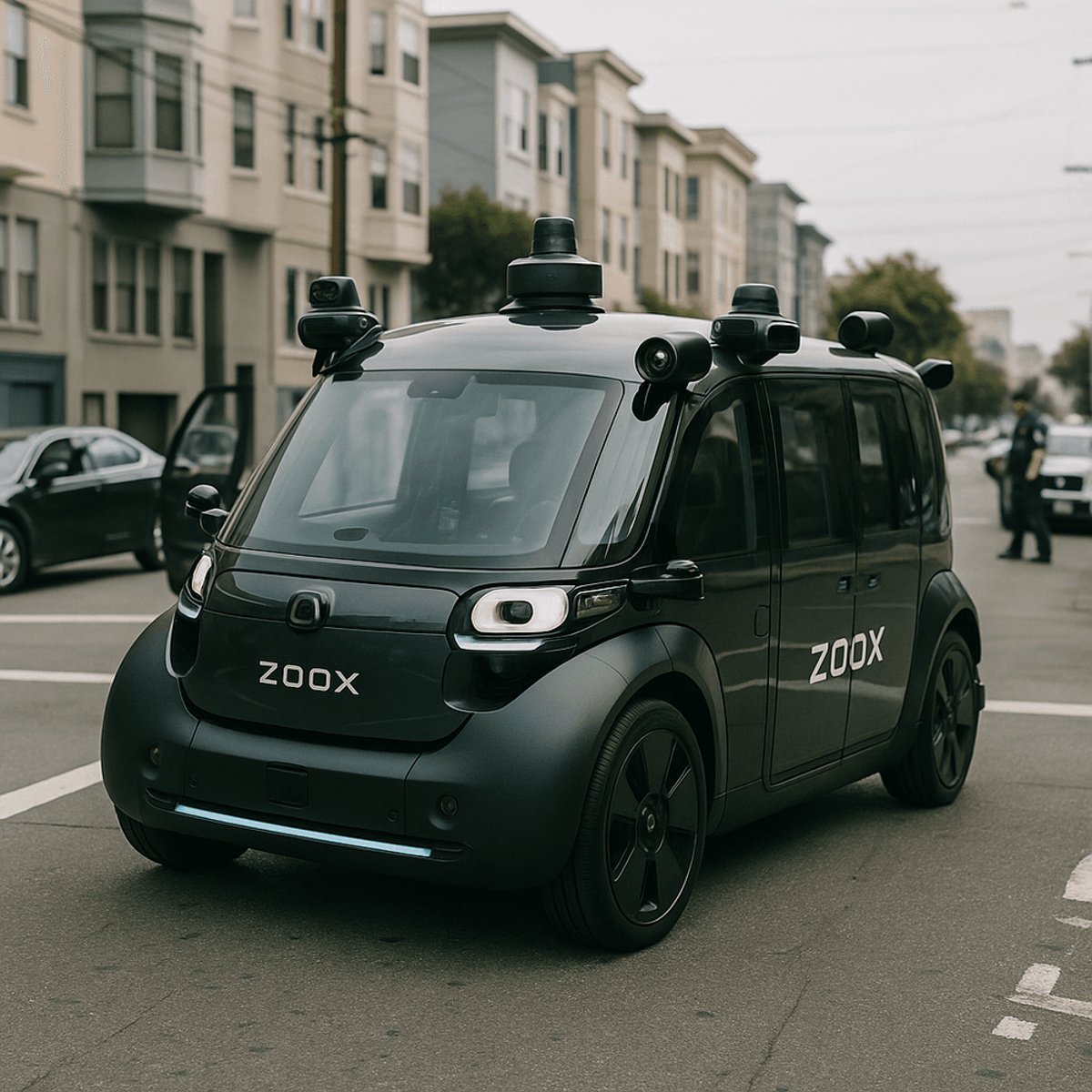
The San Francisco Police Department is investigating Zoox after one of its robotaxis collided with a suddenly opened car door on January 17, raising fresh questions about the Amazon-owned company's ability to navigate urban edge cases. The crash injured a street ambassador and comes as Zoox pushes to scale its fledgling public robotaxi service in San Francisco, already plagued by recalls and operational hiccups since launching rider programs just months ago.
Zoox just hit another roadblock in its quest to prove autonomous vehicles can handle real-world chaos. The Amazon-owned robotaxi company is under investigation by San Francisco police after one of its self-driving vehicles struck the driver's side door of a parked 1977 Cadillac Coupe DeVille near 15th and Mission Streets on January 17, TechCrunch reports.
The crash happened around 2 p.m. when street ambassador Jamel Durden opened his car door into the path of the approaching robotaxi. Durden's hand was smashed in the collision, and the Zoox vehicle's glass doors were damaged. A Zoox employee riding as a passenger inside the autonomous vehicle was unharmed, according to the San Francisco Police Department - a detail the company hadn't previously disclosed.
Zoox claims its system "identified the opening door and tried to avoid it but contact was unavoidable," framing the incident as an edge case where human unpredictability outpaced machine reaction time. The company insists it offered medical attention to Durden, who allegedly declined until his vintage Cadillac was towed, according to MissionLocal.
But the timing couldn't be worse for Zoox's public rollout. The company only started offering free rides through its "Zoox Explorer" early-rider program in San Francisco last November, mirroring a similar Vegas deployment. Since then, it's been a rocky ride. Just weeks before this crash, Zoox issued a recall in December to fix software that caused vehicles to cross center lanes and block crosswalks - exactly the kind of unpredictable behavior that spooks regulators and the public.
And that wasn't even Zoox's first rodeo with recalls. The company pushed two separate software updates earlier in 2025 before it even launched public rides, raising questions about whether its technology was truly road-ready.
The California Department of Motor Vehicles, which wields significant power over autonomous vehicle operations in the state, has already met with Zoox about the January 17 incident. The company filed a crash report "in compliance with California regulations," according to the DMV, though that document isn't publicly available yet. SFPD declined to share its incident report with TechCrunch, citing the ongoing investigation.
Zoox filed its own police report but says authorities haven't requested additional details - a sign the investigation may still be in early stages. In a January 20 statement, the company said it's "cooperating with local authorities to provide an accurate account of the incident," leaning heavily on its safety-first messaging.
The door-opening scenario represents a classic autonomous vehicle challenge. Human drivers constantly scan for parked cars and anticipate door openings, a skill honed through years of urban driving. Teaching machines to predict when someone might fling open a door requires sophisticated sensor fusion, predictive modeling, and split-second decision-making. Zoox's claim that contact was "unavoidable" suggests its system detected the door but couldn't brake or swerve in time - a worrying limitation for a technology that's supposed to outperform human reflexes.
The incident also highlights the growing pains of deploying robotaxis in dense urban environments like San Francisco's Mission District, where parked cars, cyclists, pedestrians, and unpredictable street life create a gauntlet of edge cases. Competitors like Waymo and Cruise have logged millions of autonomous miles in the city, but both have faced their own scrutiny over crashes and unexpected behaviors.
For Amazon, which acquired Zoox in 2020 for over $1 billion, this investigation adds pressure to a moonshot bet that's yet to generate revenue. The e-commerce giant is counting on Zoox to stake its claim in the autonomous future, competing against Tesla's delayed robotaxi ambitions and Waymo's growing lead.
Durden's employer couldn't be reached for comment, and it's unclear if he's pursuing legal action. But as Zoox scales its early-rider program, every incident gets magnified - both by regulators scrutinizing safety data and by a public still skeptical that machines can navigate the messy reality of city streets.
The January 17 door collision may seem like a minor fender-bender, but it's a crucial test case for how regulators, insurers, and the public evaluate autonomous vehicle readiness. If Zoox's sensors truly couldn't avoid an opening door - one of the most predictable urban hazards - it raises uncomfortable questions about the technology's current limits. With the California DMV watching closely and competitors racing ahead, Zoox needs to prove this was an unavoidable outlier, not a symptom of deeper detection gaps. The company's track record of recalls and edge-case failures isn't doing it any favors as it tries to convince San Francisco that its robotaxis belong on these streets.