
Newsletter
Beyond Tech

The Tech Buzz
February 07, 2026
IN PARTNERSHIP WITH

Feature: Free Grocery Pop-Ups Won't Solve NYC's Food Crisis. This Will…
Consumer Tech: Chevy Equinox EV $10K discount; Doroni H1-X eVTOL; iPhone 20 all-glass design; Luffu AI health platform; Costco x Nike SB Dunk Low
Art/Culture: Bad Bunny Wins Grammy; Trump to sue Trevor Noah; TPUSA alt Super Bowl show; Disney Q1 $10B theme parks; Netflix lineup; Markiplier's Iron Lung $21.5M
Food/Drink: Free Grocery Gimmicks vs WYDE; Figure 02 robot loads dishwasher; Chipotle $1M Super Bowl giveaway; Soderbergh film & cocktail series; One.bio invisib
Sports: ESPN acquires NFL Media in billion-dollar deal; Anthropic partners with Williams F1; Alcaraz youngest Grand Slam; Levy sells Tottenham stake; athlete activism
Futurism: China's Moya humanoid robot; MIT 3D-printed plastic homes; microbes extract metals; algae removes microplastics; Mars rover AI-planned drive
Wellness: Autism panel reshuffle; medtech M&A surge; 40% cancers preventable; Lotus Health $35M AI care; faith-based addiction funding; Grail's Galleri FDA filing

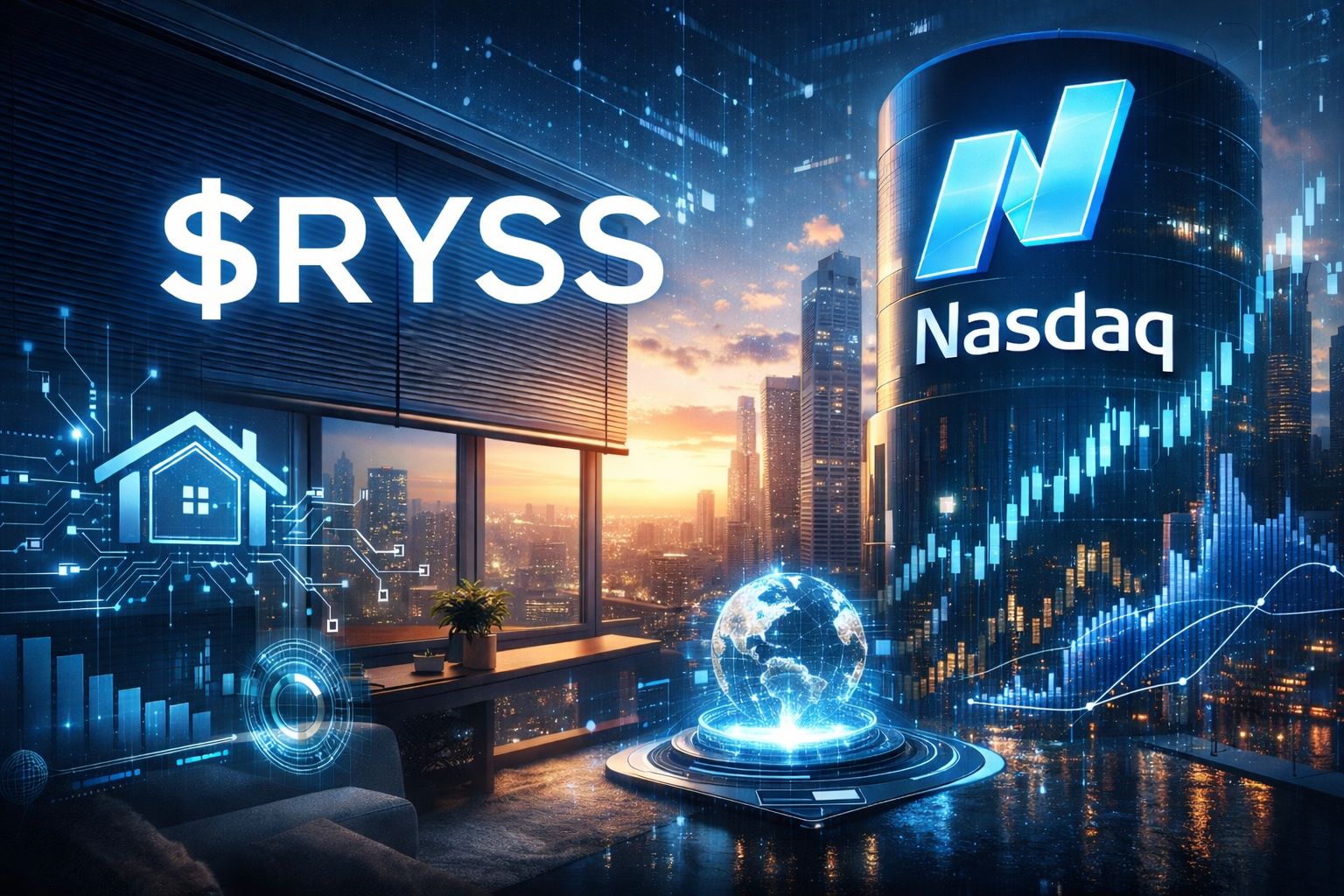
RYSE is building the A.I. layer for the smart home, starting at one of the most important control points: window coverings. Blinds and shades shape how natural light, heat, and comfort move through an entire space — yet over 90% remain manually controlled across homes, offices, and hotels.
The first wave of smart home leaders showed what’s possible. Google acquired Nest for $3.2 Billion. Amazon bought Ring for over $1 Billion. Each began with a single overlooked category. RYSE is following that path with window covering automation.
RYSE has earned over $15 million in revenue, holds 10 patents, and is expanding through major retail and B2B channels, including sales in 100+ Best Buy stores and deployments with Fairmont Hotel.
The company has reserved the Nasdaq ticker $RYSS. This may be their final public round before they shift towards institutional capital ahead of any potential exit or liquidity.

Chevy Equinox EV Discount — The 2026 Chevy Equinox EV now offers a $10,000 discount, reducing its price by 20% from $45,895.
Garage-Ready eVTOL — Doroni's H1-X personal eVTOL aircraft is designed for urban mobility, it fits in garages & requires just 25 hrs pilot training. 600 pre-orders.
iPhone 20 — The iPhone 20, expected Sept. 2027, might sport an all-glass design without physical buttons, hidden cameras and a 2nm chip.
Luffu: AI for Family Health — Fitbit founders James Park and Eric Friedman introduce Luffu, an AI-driven platform for family health monitoring. I
Speakly's AI Dictation — Speakly, an AI voice dictation app, transforms speech into text for messages, emails, and writings, integrates various apps.
Costco x Nike Collab — Costco's Kirkland Signature teams up with Nike for a SB Dunk Low sneaker priced at $130.
[Open Deal] WYDE Hits $14M FDV & Becomes The First 501(c)(4) Exchange
This week, Wyoming Decentralized Exchange (WYDE) hit a $14M valuation, funded over 4,184 meals, and received federal recognition as a 501(c)(4) nonprofit.
And the government just announced food policy that aligns perfectly with WYDE’s mission. Wyde Founder Aaron Rafferty writes about how The 2025-2030 Dietary Guidelines for Americans emphasize the importance of real food and flips the food pyramid towards reduction of processed foods and the inclusion of protein, dairy, and healthy fats in diets to address chronic health issues linked to poor nutrition.

“I've been working on something at @wydeorg that connects directly to this moment. Millions of Americans are obese and still hungry because they do not eat REAL FOOD.”
— Aaron Rafferty, Co-Founder of Wyde

Tech Buzz Editorial Feature
Aaron Rafferty, founding member of WYDE and behavioral scientist, just published a provocative takedown of this week’s performative tech philanthropy in NYC. He lays out how while Polymarket and Kalshi burn millions on vanishing grocery pop-ups, WYDE’s blockchain infrastructure is quietly feeding thousands through transaction fees alone. The contrast reveals everything wrong with how tech approaches social impact, and everything right about what comes next.
Polymarket dropped $1M on the Food Bank for New York City. Sounds generous until you do the math: that's roughly 10 million meals, or 0.1% of Feeding America's annual 9.7 billion meal distribution. Kalshi went smaller, handing out $50 gift cards at a single bodega for three hours. Both companies made hundreds of millions betting on elections. Both chose four-day stunts over sustainable infrastructure.
The new NYC Mayor Zohran Mamdani sees it differently. His $60M pilot program for city-run grocery stores tackles food access where it actually breaks down: in wallets, not warehouses. Istanbul proved municipal markets work. Bogotá's subsidized transit and Vienna's public housing show that government can deliver. But grocery stores operate on 1-3% margins. Without perpetual funding that survives budget cycles and political winds, even brilliant pilots collapse.
Here's the problem every founder, VC, and public policy wonk should understand: charity doesn't scale because it relies on conditions that fluctuate. Donations spike during crises and evaporate during quiet news cycles. Corporate giving optimizes tax strategies, not outcomes. Government programs get gutted when administrations change or economies contract.
Food insecurity affects 3 million New Yorkers right now. It needs funding mechanisms that operate automatically, transparently, and permanently. That means infrastructure generating resources by default, not through quarterly fundraising campaigns or viral moments.
Enter WYDE, the world's first 501(c)(4) tax-exempt impact exchange, and their $EAT token launched in December 2025 on Coinbase's Base network. The mechanism is brutally simple: 25% of every transaction fee flows directly to verified 501(c)(3) hunger relief partners. Not during campaigns. Not when markets feel charitable. Every single trade. Automatically. Forever.
By mid-January, normal trading activity funded 4,184 meals. That number now exceeds 7,000 meals. No pop-up store. No publicity stunt. Just people trading a digital asset while smart contracts route fees to food banks in real time. The remaining 75% of fees fund liquidity pools, platform development, and token holder rewards, solving what Rafferty calls the Philanthropic Token Trilemma: building systems that last decades instead of weeks.
The tokenomics create accountability tech VCs should envy. 80% of the 100 billion token supply stays locked behind impact milestones: 100M meals, 250M, 500M, 750M, 1 billion. Rewards unlock when outcomes deliver, not when timers expire. Every transaction lives on-chain, transparent and auditable, unlike the opacity plaguing traditional charity or the disaster of former NYC Mayor Eric Adams' $NYC token that became a cautionary tale in crypto philanthropy.
Imagine Mamdani's municipal grocery program funded by $NYFOOD, a causecoin structured like $EAT but targeting verified partners across the five boroughs. The math at modest scale looks like this:
$10M daily trading volume × 1% fees × 25% to food programs = $25,000 daily = $9.1M annually in perpetuity.
Scale to $50M daily volume and you're generating $45.6M yearly without a single budget hearing or donation ask. The $60M pilot becomes the foundation. The causecoin becomes the engine that survives when political will fades and initial funding dries up.
For technologists and investors, this model proves blockchain's utility beyond speculation. For real estate professionals, it demonstrates how crypto infrastructure can stabilize neighborhoods by addressing root causes of instability. For founders, it offers a blueprint: build protocols where user activity generates social outcomes as exhaust, not through guilt-driven giving.
For VCs evaluating 2025 portfolios, the question becomes whether impact can generate returns while solving problems governments can't fund and charities can't sustain. WYDE proved the answer is yes. Federal tax-exempt status validates the legal framework. Thousands of meals prove the operational model. The technology exists. The partners are verified. The transparency is absolute.
Cities can keep chasing headlines with initiatives that vanish by Valentine's Day, or they can deploy infrastructure that operates automatically through every market condition and political cycle. Polymarket and Kalshi proved appetite exists. Mamdani proved political will exists. WYDE built the funding mechanism that survives both.
Read Rafferty's full breakdown on the Tech Buzz here to understand why the next wave of social infrastructure might run on transaction fees instead of tax dollars.
The model exists. The math works. All that's missing is deployment at scale.

2026 Grammys — Bad Bunny made history by winning album of the year for a Spanish-language album. Billie Eilish won song of the year. Also: Trump Threatens to Sue Trevor Noah over joke linking him to Jeffrey Epstein.
TPUSA’s Alt Halftime Show — Turning Point USA announced Kid Rock as headliner for an alternative Super Bowl halftime show celebrating "faith, family, and freedom".
Disney’s Big Q1 — Disney reported Q1 2026 earnings surpassing forecasts with theme parks generating $10B and streaming revenue increasing.
New Releases on Netflix — Netflix unveils a lineup including Bridgerton's conclusion and new seasons of popular shows, enhancing its streaming appeal.
Iron Lung Smash Hit — YouTuber Markiplier successfully debuted his low-budget film, earning $21.5M globally, showcasing new media potential in the industry.


Free Grocery Store Gimmicks — Polymarket and Kalshi use stunts to tackle food insecurity in NYC. WYDE offers sustainable funding via transaction fees.
Robot Revolution in the Kitchen — Figure 02 humanoid robot impresses by loading and unloading a dishwasher.
Chipotle's Super Bowl Giveaway — Chipotle is offering $1 million in free food during the Super Bowl as part of its AI-generated ad to air post-halftime.
Soderbergh's Film & Cocktail Series — Steven Soderbergh celebrates his 63rd birthday with a weekly series at Nitehawk Cinema featuring nine iconic films and cocktails inspired by each.
Invisible Fiber Revolution — One.bio unveils a groundbreaking oat fiber that is flavorless, odorless, and water-soluble, enhancing gut health and metabolic function.

ESPN-NFL Deal — ESPN acquired NFL Media assets in a billion-dollar deal, granting NFL a 10% stake. It will manage NFL Network and broadcast 28 games p/a.
Anthropic Joins F1 Race — Anthropic partners with Williams F1 Team in a multiyear deal, integrating its AI model Claude into team operations.
Grand Slam — Carlos Alcaraz defeated Novak Djokovic in four sets at the 2026 Australian Open, becoming the youngest to achieve a career Grand Slam at 22.
Levy's Tottenham Sale — Daniel Levy is negotiating to sell his ~30% stake in Tottenham Hotspur for £1 billion ($1.4 billion) to a consortium led by Ng Wing Fai, backed by Asian business tycoons.
Athlete Activism in America — Breanna Stewart's protest against ICE during a game and athlete activism, its risks, and the crucial role athletes play in societal issues.


Human-Like Robot — China's Moya robot, revealed in Shanghai, is the first fully biomimetic AI robot designed for human-like interaction.
3D-Printed Plastic Homes — MIT engineers are developing a method to 3D print structural elements from recycled plastic in place of wood framing.
Microbes Mine Metals — Biotechnology offers solutions for extracting metals like nickel and copper from aging mines.
Algae to the Rescue — A University of Missouri researcher engineered lab-grown algae that removes microplastics from water by producing limonene.
Mars Rover's AI Breakthrough — NASA's Perseverance rover completed its first AI-planned drive using vision-language models for waypoint creation, driving 689 ft. and 807 ft..


Autism Advisory Panel Reshuffle — Interagency Autism Coordinating Committee welcomes new members under President Kennedy's directive.
Medtech M&A Surge — Medical technology mergers and acquisitions rose significantly in the latter half of 2025, driven by strategic consolidations & innovations.
Preventable Cancer Alert — Nearly 40% of new cancer cases globally are avoidable; tobacco, infections, and alcohol are key contributors.
AI Healthcare Revolution — Lotus Health secures $35M to launch a 24/7 AI-driven primary care service combining AI with human oversight, initially free.
Faith-Based Recovery Boost — Health Secretary R.F.K. Jr. will enhance funding for faith-based addiction treatment to combat rising drug use and homelessness.
Microbubble Robots — Enzyme-powered bubbles deliver anti-cancer drugs via ultrasound targeting tumors.
Yuvezzi Eye Drops Approved — Tenpoint Therapeutics’ presbyopia treatment offers a FDA-approved once-daily alternative to glasses.
Instagram: https://www.instagram.com/thetechbuzz.ig/

| Get the daily newsletter that helps you understand the tech ecosystem sent to your inbox.
More Newsletter Posts


