Newsletter
Trump-Xi Summit & The Victory of State Capitalism

The Tech Buzz
May 22, 2026
IN PARTNERSHIP WITH

Top Tech News: Stocks rally on US–Iran peace hopes; Warsh sworn Fed Chair; AI security EO delayed, Trump $2B quantum computing investments
Company Watch: SpaceX IPO buzz; Nvidia record qtr + “Vera” CPU; Anthropic +130% rev; Hark $6B, OpenAI IPO
Buzzy Tools: Google Search IO (Gemini 3.5 Flash); Aura XR glasses; OpenAI guaranteed compute; Spotify AI.
Buzzy Tech: JPM adds AI talent; 3‑min solid‑state battery; XPeng L4 robotaxi 2027; fuel‑cell AI DCs.
Crypto: Blockchain.com IPO file; CLARITY Act advances; tokenized stocks push 24/7; HYPE hits $62 ATH.

AI has changed how the best companies go to market. The ones pulling ahead aren’t following a template, they’re building their own systems.
If you’re one of them, GTM Atlas was built for you.
Curated by Attio, the AI CRM, GTM Atlas is a free resource for early-stage teams navigating growth from scratch. Across the full customer journey, from lead capture to expansion, you’ll get:
Systems thinking that scales with you
Exclusive frameworks and lessons from industry leaders
A point of view on your GTM, not borrowed from a playbook
Mapped by operators. Curated by Attio.

Markets Rally — The Dow hit record high as S&P 500, Nasdaq rose on renewed US-Iran peace hopes fueling a stock rebound.
Warsh Fed Chair — Trump swears in Kevin Warsh as Fed Chair today. The 56-year-old rate-hawk will serve four years, succeeding Powell who stays on board until 2028.
AI Security Delay — Trump delayed an executive order requiring security reviews of AI models citing US AI leadership concerns and a need for faster innovation.
Senate Blocks Trump Deal — Republicans opposed Trump's $1.8B settlement fund for political allies alleged to be victims of government “weaponization”.
Quantum Leap — Trump is investing $2B in nine quantum computing companies including IBM for national security expanding semiconductors, steel, nuclear, and the U.S. rare-earths portfolio.

Tech Buzz Editorial Feature
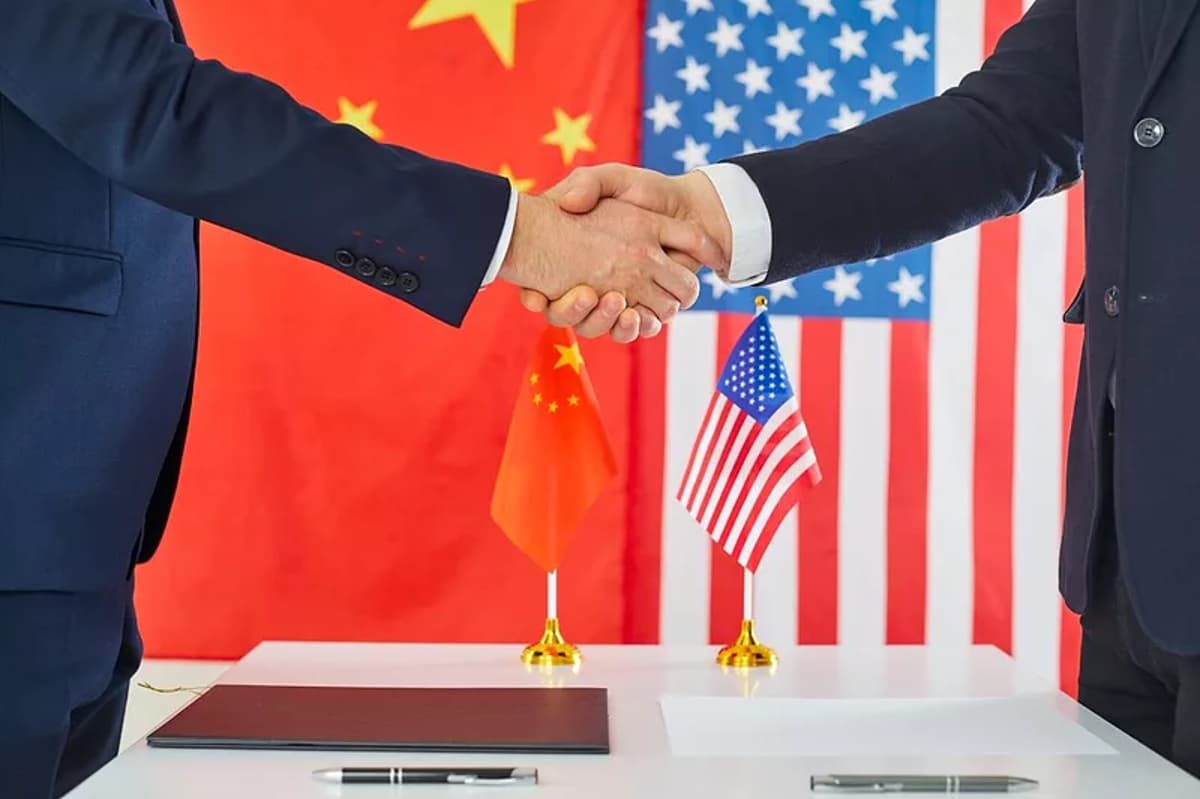
Trump left this week’s Xi summit having learned an expensive lesson. China dominates because Beijing literally forces its tech companies and banks to work together. WeChat is a messaging app, a bank, a payment system, an AI platform, and a government data pipeline all in one. That's what economist Yanis Varoufakis calls "cloud finance." Many other economists have also noted that China’s remarkable development over the past few decades is largely attributable to its’ unique form of State Capitalism, a new hybrid mode between Chinese socialism and capitalism. In the era of AI, this model will become even more advantageous. Many in the U.S. political and Silicon Valley elite circles (think Musk and Thiel) envy the Chinese model, but can't build it yet because Wall Street refuses to share power with Silicon Valley.
So the White House is trying something different. If private capital won't connect the dots, the federal government will do it by taking equity stakes in everything that matters. The $2B quantum computing package announced this week puts Washington in business with IBM, Rigetti Computing, D-Wave Quantum, Infleqtion, and GlobalFoundries. The government gets between 5% and 15% ownership in exchange for the grants. Same deal structure as the rare earth investments in MP Materials, Vulcan Elements, and USA Rare Earth. Same as the golden share in US Steel and the 8% stake in nuclear operator Westinghouse.
Since the Intel deal last August netted taxpayers an unrealized $40B profit, Trump has been bragging about his stock-picking skills on Truth Social. The man who ran casinos into the ground is now running the world's strangest venture fund.
IBM's quantum play is the flashiest piece. The company is creating a standalone entity called Anderon to build America's first dedicated quantum chip foundry in Albany, New York. IBM is putting up $1B, the government is matching it with another $1B, and taxpayers get a slice of this new company, not IBM itself. GlobalFoundries is getting $375M for related manufacturing work, which translates to roughly 1% of that company. The other quantum startups are getting $100M each.
These are equity investments that make the federal government a shareholder in technologies that don't have proven business models yet. It's state capitalism for a country where the state and capital usually pretend not to know each other.
Then there's crypto, which is turning out to be the weird exception to Wall Street's refusal to cooperate, and possibly an important indication of where the future of U.S. finance could be heading under a more State Capitalist model.
The CLARITY Act just cleared the Senate Banking Committee despite bankers protesting about it for months due to disagreements of stablecoin yields cutting in on their turf. Polymarket odds have now jumped to 68% that it becomes law in 2026.
Here's why crypto is different. Banks can participate in digital asset infrastructure without admitting they're letting tech companies into their territory. They get to call it "regulatory compliance" and "digital asset custody" instead of surrendering to the cloud finance model that Beijing already built. Stablecoins are just dollars with better plumbing. Tokenized securities are just securities with blockchain receipts. Banks can control both without giving Google or Anthropic access to actual banking licenses.
Wall Street's territorial instincts may be an existential problem for competitiveness. But crypto might be the loophole that gets everyone to the negotiating table. Tech calls it "the future of money." Finance calls it "digital assets." Both sides can benefit.
Quantum computing sits in a completely different bucket. It doesn't threaten Wall Street's turf because nobody knows if it will have commercial applications within the next decade. It's a physics moonshot with national security window dressing.
But there's a reason Trump is funding nine quantum companies right now. Chinese programmers at DeepSeek have been squeezing world-class AI performance out of older, inferior chips through pure coding talent. They've worked around U.S. hardware bans by writing better software. If they can do that with classical computing, what happens when they start optimizing quantum algorithms the same way?
The quantum grants are a hedge against that future. Fund the hardware layer before Chinese coders figure out how to dominate it through software innovation alone. Trump brought Nvidia CEO Jensen Huang to the Xi summit to beg China to buy American chips again. That was the surrender on the current war. Quantum is the bet that there's a next war where the U.S. can still compete.
Look at what the Trump administration is actually buying into. Quantum chips, rare earth minerals, nuclear power plants, steel manufacturing. These are all sectors where tight integration with finance isn't necessary yet. You can fund them as standalone industrial projects without forcing JPMorgan and OpenAI to share a boardroom.
Crypto is the controlled experiment. Let the banks participate voluntarily through regulatory frameworks and custody services. See if American cloud finance can be assembled from the outside in, one equity stake and one bill at a time, without ever threatening the landlords of capital.
Whether this works depends on a race between U.S. institution building and Chinese innovation speed. Can Washington construct a cloud finance gradually through investments and legislation before Chinese programmers figure out how to dominate every technology category through better code? The $2B in quantum money and the CLARITY Act are both tests of the same theory. The results might determine whether the 21st century economy runs on U.S. rules or Chinese infrastructure.
“In China there's no clash, there's no rent seeking contest between their big tech, their AI industry and their banking sector. The two work together. Maybe they don't want to, but they are forced to do so by the government."
Latest deals and trending companies
SpaceX — Targets $28.5T market with upcoming IPO via AI, Starlink with Colossus secured $1.25B monthly Anthropic contract. $2.6B loss from $20.7B CAPEX.
SB Energy IPO — AI data center power firm plans US IPO backed by SoftBank, OpenAI, Ares with $1.8B+ secured for expansion.
Nvidia Earnings — Reported record quarter on strong chip sales reinforcing AI, data-center dominance. Unveils Vera CPU targeting $200B AI computing market.
Anthropic — 130% revenue surge to $10.9B in June quarter expecting first operating profit. Negotiating Microsoft Maia 200 chip access after $5B investment.
OpenAI IPO Race — 83% chance of going public before Anthropic due to prediction shifts, court win despite spending concerns, leadership turnover.
Hark — Brett Adcock AI hardware startup raised $700M+ Series A at $6B valuation. Backed by Parkway, Nvidia, AMD, Brookfield, Intel, Qualcomm, Salesforce.
Mercury $5.2B — Fintech raised $200M at $5.2B, 49% up becoming federally regulated bank aiming for listing with $650M ARR.
The Latest Trending Tools & Cutting Edge Technology Developments
Buzzy Tools To Watch and Try Today
Search AI — Gemini 3.5 Flash for multimodal search, personalized updates globally
Aura XR — Smart glasses with Android XR, Gemini AI, spatial computing
OpenAI Compute — Scalable, predictable compute access for AI products
Spotify Audio — Beta AI tool creates audiobooks expanding languages
Alibaba M890 — Zhenwu chip triples performance boosting China AI options
Buzzy Tech Discoveries and Breakthroughs Trending Today
JPM AI Shift — Adding AI specialists cutting traditional roles via attrition, retraining
3min Battery — 451Wh/kg solid-state charges in 3 minutes with high safety
XPeng Taxi — L4 robotaxi with 3K TOPS AI, no LiDAR, driverless by 2027
Robots— HoloMotion-1 unlocks humanoid control, 300 fps on edge devices
Fuel Cell AI — Nebius-Bloom replaces gas turbines with fuel cells for eco AI power
The Latest News in Crypto & Blockchain
[Open Deal] Blockchain IPO — Filed for US IPO joining crypto listings wave after 2025 IPOs by Circle, eToro while Kraken paused plans.
CLARITY Act — Senate Banking approved act enhancing crypto regulation potentially triggering Bitcoin rally requiring bill merge, supermajority vote.
SEC Tokens — SEC innovation exemption for tokenized stocks as DTCC, Nasdaq, ICE plan trades modernizing $126T market with 24/7 settlement.
SpaceX $1.45B BTC — Holds Bitcoin while preparing IPO highlighting strategic financial moves entering public market.
Polymarket Data — Partnered w/ Nasdaq Private for prediction contracts on private valuations, secondary activity, IPO timing expanding startup bets.
HYPE $62 High — Hit ATH past $62 on strong ETF inflows from Bitwise, Grayscale, institutional interest with $25.8M daily, $54M cumulative first week. Up 20% in 24hrs.
Instagram: https://www.instagram.com/thetechbuzz.ig/

Advertisement
Advertisement
| Get the daily newsletter that helps you understand the tech ecosystem sent to your inbox.