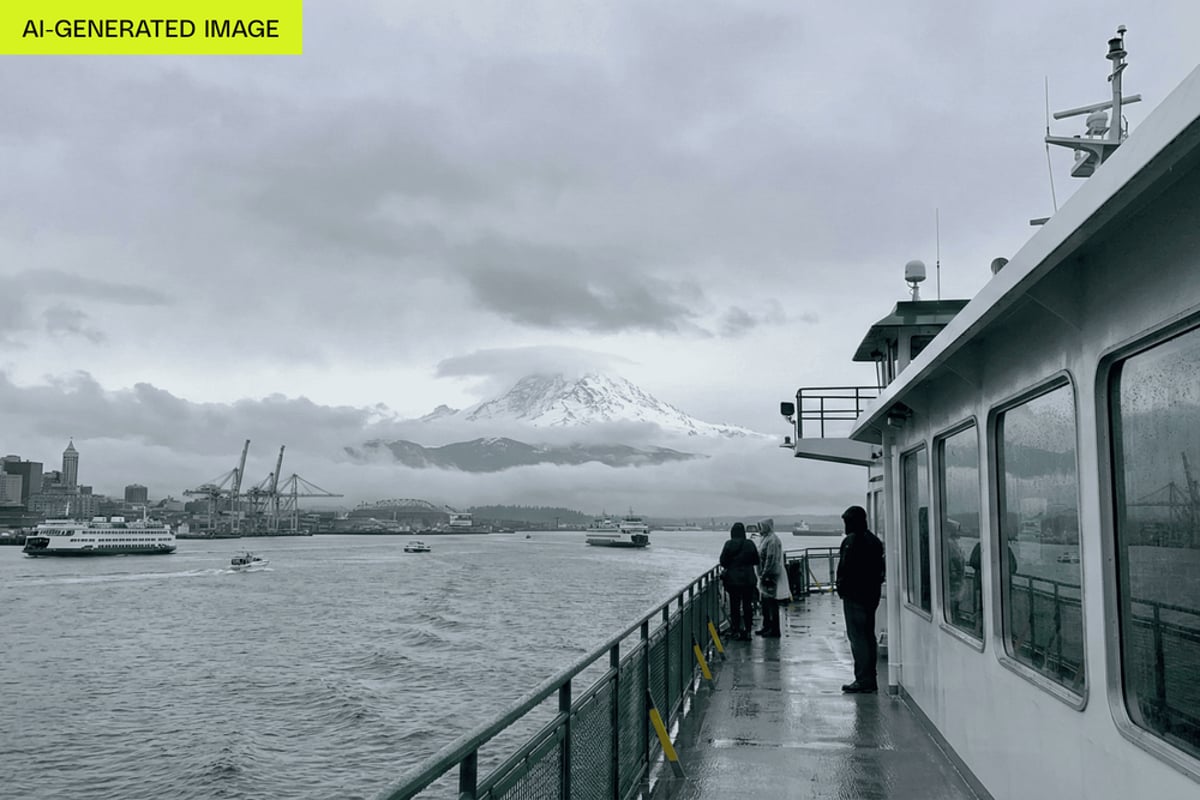
Remember when AI images were a punchline? The warped fingers, rubbery limbs, and otherworldly gloss were instant giveaways. Not anymore. AI image generators have gotten so good at creating convincing fakes by embracing the imperfections of real cameras that telling what's real from what's synthetic has become almost impossible. The trick? They stopped trying to be perfect.
The early days of AI image generation were pure comedy gold. Your prompts would yield people with too many fingers, textures that looked like digital soup, and an uncanny smoothness that screamed 'fake.' But that era is decisively over. The shift didn't happen because AI engineers finally cracked photorealism. It happened because they stopped chasing it.
Google dropped a reality check in late 2025 when it unveiled Nano Banana Pro within its Gemini app. The model went viral almost immediately, with people using it to create weirdly convincing figurines of themselves. But here's the thing that makes it different: instead of rendering everything with that signature AI glow, Nano Banana Pro deliberately imitates the look of photos captured on a phone camera. That means contrast issues, aggressive sharpening artifacts, the weird perspective compression phones create, and all those processing choices that make a snapshot from your device instantly recognizable.
This is the paradox at the heart of modern AI image generation. The things that make a photo look real aren't technical perfection. They're imperfections. Ben Sandofsky, cofounder of the acclaimed iPhone camera app Halide, explained it best: by embracing the look of phone camera processing, which already makes our photos look "a little untethered from reality," Google might have sidestepped the uncanny valley entirely. AI doesn't need to recreate reality with museum-quality accuracy. It just needs to mimic how we've all learned to record reality, flaws included.
It's not just Google playing this game. Adobe's Firefly image generator includes a "Visual Intensity" control that lets users tone down that glossy, hypersmoothed aesthetic. Meta offers a "Stylization" slider. Even OpenAI's video generation tool Sora 2 produces convincing clips by mimicking the grainy, low-resolution look of security camera footage. When the baseline is CCTV quality instead of Vogue cover perfection, making an AI-generated video look believable becomes almost trivial.
The progression from DALL-E's earliest iterations is staggering. Five years ago, OpenAI launched with 256x256 pixel thumbnails. A year later, DALL-E 2 jumped to 1024x1024 images that looked shockingly real at first glance, but started falling apart under scrutiny. There were still tells. The dog in a firefighter outfit had fuzzy contours and weird patches. The whole thing carried an air of stylization you'd associate with an illustration rather than a photograph.
What changed is the destination. Engineers realized that striving for technical perfection was actually counterintuitive. Real photos aren't perfectly lit or perfectly composed. Your phone's computational photography does wild things to your images. It cranks shadows to reveal detail, boosts sharpness to make subjects pop, and makes aggressive choices about exposure and color balance. These aren't flaws in phone photography. They're features. And by studying how phone cameras actually work, AI models learned that chasing realism means chasing these characteristics, not away from them.
There's a broader context here too. OpenAI positions itself as a relative newcomer compared to giants like Google and Meta, but established companies aren't sitting idle. Google's Pixel 10 cameras now embed generative AI directly into the imaging pipeline, using it to improve digital zoom on non-human subjects. Traditional camera makers like Leica are slowly adopting C2PA's Content Credentials standard to cryptographically sign images at the point of creation.
But here's where it gets unsettling: the verification infrastructure isn't keeping pace with the generation capability. Content Credentials can identify how an image was created, but most photos today still aren't signed. For the system to work, hardware makers need to adopt it at scale. Platforms need to display and respect the credentials. Until then, we're on our own. And it's getting harder by the week to trust what we see.
The irony is sharp: AI image generators became dramatically more convincing not by achieving technical perfection, but by deliberately introducing the computational imperfections we've learned to associate with real cameras. The gap between what's real and what's synthetic is now so slim that verifying the truth of an image has become urgent. Content Credentials and cryptographic signatures are coming, but they're arriving slower than the technology itself is advancing. Until authentication systems catch up, and until the platforms where we share images actually implement them at scale, the best approach might be to assume nothing is real unless proven otherwise.