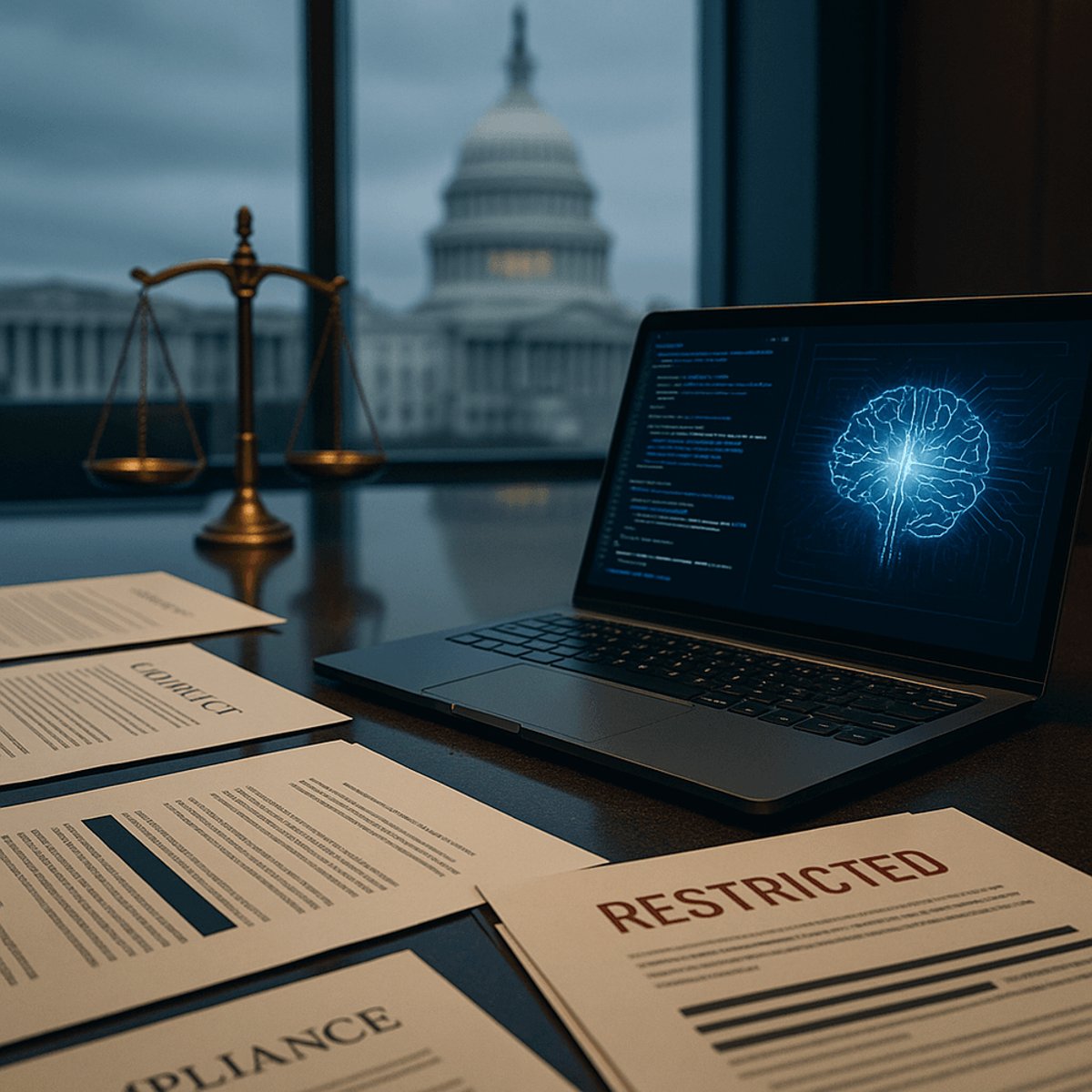
The Justice Department just fired back at Anthropic's lawsuit, claiming the AI safety company can't be trusted with defense contracts after trying to limit how the military uses its Claude models. In a legal filing that escalates one of the tech industry's most contentious battles over AI ethics versus national security, the government argues it lawfully penalized Anthropic for attempting to restrict warfighting applications. The response sets a critical precedent that could reshape how AI companies negotiate with federal agencies.
Anthropic thought it could have it both ways - selling AI to the government while keeping control over how it's used in combat. The Justice Department just told a federal court that's not how defense contracts work.
In a newly filed legal response, DOJ attorneys argue the government acted lawfully when it penalized Anthropic for attempting to impose usage restrictions on its Claude AI models. The filing, first reported by WIRED, represents the government's first detailed defense since Anthropic sued over contract penalties earlier this year.
The core issue? Anthropic wanted to prevent its Claude models from being used in lethal autonomous weapons systems and certain offensive military operations. The Department of Defense apparently had different plans. According to the government's filing, when Anthropic tried to enforce these limitations mid-contract, officials determined the company couldn't be trusted with sensitive warfighting systems that require unrestricted AI capabilities.
"Vendors seeking to provide AI capabilities to national security agencies must accept that mission requirements, not corporate ethics statements, dictate how those tools are deployed," the filing states. It's a blunt assertion that cuts to the heart of the tech industry's ongoing reckoning with military partnerships.
Anthropic built its reputation on AI safety, positioning itself as the responsible alternative to rivals like OpenAI and Google. The company's "Constitutional AI" approach and published usage policies explicitly prohibit weapons development and military harm. But those principles collided with Pentagon expectations when Anthropic began pursuing lucrative government contracts last year.
The timeline matters here. Anthropic reportedly entered initial discussions with defense agencies in mid-2025, as military AI spending surged following successful battlefield deployments of competitor models. The company secured preliminary agreements worth tens of millions, but tensions emerged when Anthropic attempted to embed its usage restrictions into contract language.
By early 2026, according to previous reporting, the Pentagon began seeking alternatives to Anthropic after the company refused to remove ethical guardrails. The government's latest filing confirms it then imposed financial penalties and contract restrictions, arguing Anthropic had essentially breached its obligations by trying to limit operational flexibility.
"The plaintiff sought to unilaterally impose constraints incompatible with national defense requirements after accepting federal funds," DOJ lawyers write. The filing suggests Anthropic knew the terms when it signed up, and can't now claim moral high ground while keeping government money.
Anthropic sees it differently. The company's original lawsuit, filed in February 2026, argues the penalties violate procurement law and unfairly punish it for maintaining published safety standards. Anthropic claims it clearly communicated its limitations upfront, and that the government only objected after trying to redirect Claude toward applications the company had explicitly forbidden.
The legal battle exposes a fundamental tension that's been building across Silicon Valley. As the military becomes one of the largest customers for cutting-edge AI, companies face impossible choices between lucrative contracts and stated ethical principles. Microsoft faced employee revolts over HoloLens military contracts. Google abandoned Project Maven after internal protests. Amazon weathered criticism over Rekognition sales to law enforcement.
But this case could establish binding precedent. If courts side with the government, AI companies pursuing defense work may have no legal right to impose usage restrictions - effectively forcing a choice between military contracts or safety principles, but not both. If Anthropic wins, it could embolden other vendors to negotiate ethical boundaries even in national security contexts.
The stakes extend beyond one company. The Pentagon's Joint Warfighting Cloud Capability program and emerging AI initiatives depend on commercial partnerships. If leading AI labs refuse to provide unrestricted access, the military faces either building homegrown capabilities - a years-long proposition - or accepting some vendor constraints.
Defense officials have made clear they prefer the first option. Recent congressional testimony revealed the Department of Defense is accelerating internal AI development specifically to reduce dependence on safety-focused commercial vendors. The Anthropic penalties appear designed to send a message to the broader industry.
Meanwhile, Anthropic's competitors smell opportunity. OpenAI recently dropped its absolute ban on military applications, now allowing defensive use cases. Meta has openly courted defense contracts for its Llama models. The market dynamics suggest companies willing to accommodate Pentagon requirements will capture billions in contracts, while holdouts get frozen out.
The case now heads to discovery, where internal communications from both Anthropic and defense agencies will likely surface. Expect revelations about what exactly the military wanted Claude to do, and what Anthropic knew about those intentions when it first pursued government business.
Legal observers expect the case could take 18-24 months to resolve, potentially reaching appellate courts given the novel questions involved. Both sides are lawyering up accordingly - Anthropic retained former White House counsel, while DOJ assigned senior national security attorneys to the defense.
This isn't just about one contract dispute. The Anthropic case will determine whether AI companies can maintain ethical boundaries when selling to the government, or if accepting defense dollars means surrendering control over how your technology gets used. For an industry that's spent years publishing safety principles and constitutional frameworks, the answer could expose whether those commitments were genuine or just marketing. Watch how other AI labs respond - their actions in the next few months will reveal who's willing to walk away from billions to stick to stated values, and who quietly adjusts their acceptable use policies when Pentagon contracts come calling.