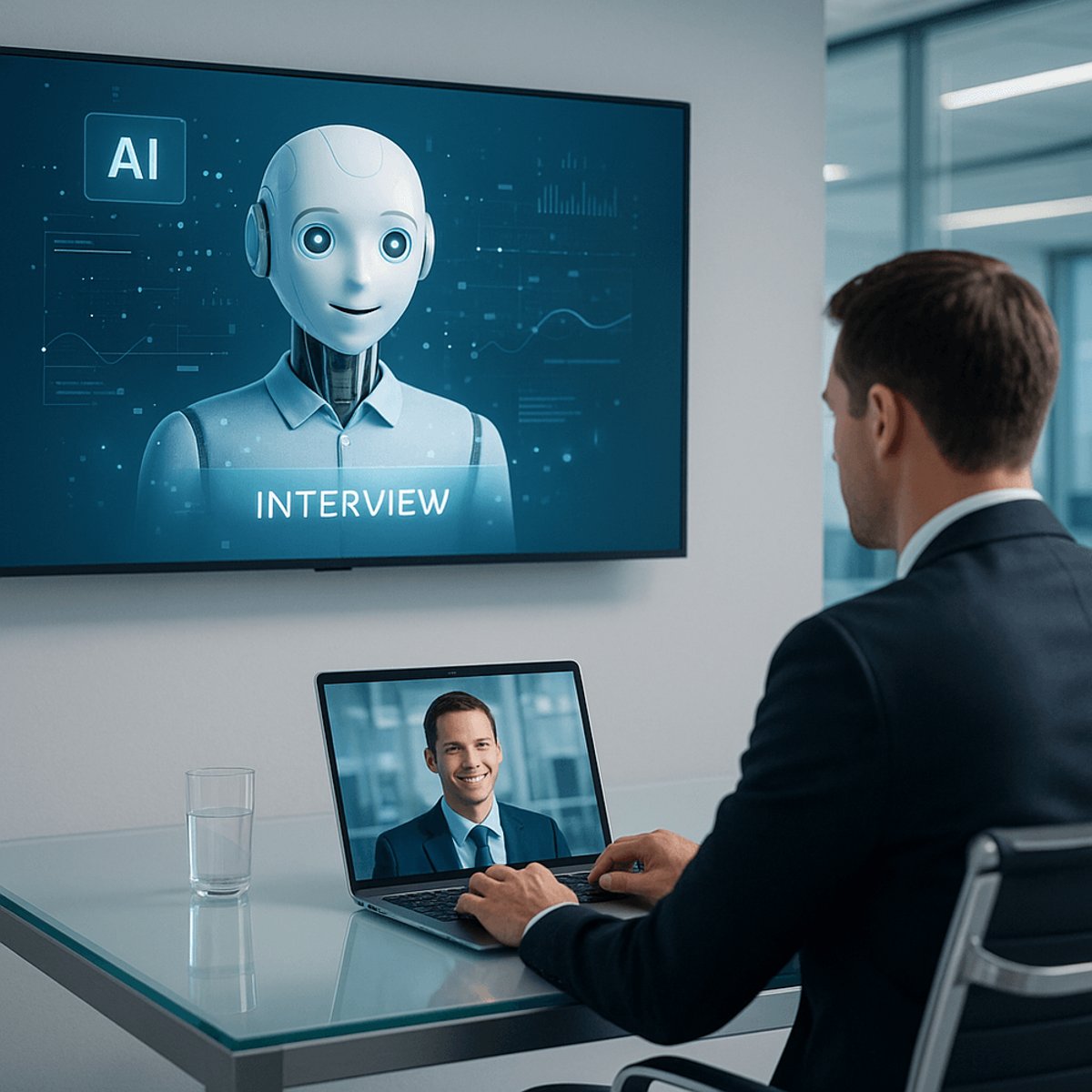
The job interview is getting its biggest AI makeover yet. Alex, an 18-month-old startup from Y Combinator, just closed a $17 million Series A to automate the initial screening calls that recruiters typically handle manually. The company's voice AI is already conducting thousands of interviews daily for Fortune 100 companies, signaling a major shift in how hiring happens at scale.
Job seekers are about to face a new reality - their first interview might not be with a human at all. Alex, a Y Combinator startup that's automating the initial job screening process, just secured $17 million in Series A funding to expand its AI interviewing platform that's already handling thousands of calls daily.
The round, led by Peak XV Partners with participation from Y Combinator and Uncorrelated Ventures, validates what many in HR already suspected - AI is coming for recruitment, and it's happening faster than expected. Several Fortune 500 CHROs even joined the funding round directly, signaling enterprise enthusiasm for automated hiring tools.
"Our AI recruiter does thousands of interviews a day and helps people get hired at some of the biggest companies in the world," co-founder Aaron Wang told TechCrunch. Wang, who spent time at Facebook before founding Alex 18 months ago, says the platform handles the routine screening tasks that bog down human recruiters - checking backgrounds, discussing salary expectations, and confirming availability.
The timing couldn't be better. While companies are tightening budgets and reducing headcount, they're simultaneously drowning in job applications. Alex's voice AI steps into this gap, conducting autonomous video interviews and phone screens within hours of someone applying. The system frees up human recruiters to focus on building relationships with pre-qualified candidates rather than wading through hundreds of initial conversations.
Though Wang declined to name specific customers, he revealed they include Fortune 100 companies, major financial institutions, nationwide restaurant chains, and Big 4 accounting firms. The client roster suggests AI interviewing has already moved beyond Silicon Valley experiments into mainstream corporate hiring.
Alex isn't operating in a vacuum. The AI recruiting space is heating up with competitors like HeyMilo, ConverzAI, and Ribbon all vying for similar enterprise contracts. Even Mercor, the data labeling startup currently seeking a $10 billion valuation, started as an AI recruiter before pivoting to its current model.
What sets Alex apart is its long-term vision beyond just screening calls. Wang believes the company can build professional profiles that are "richer and deeper than what LinkedIn currently offers" by interviewing millions of job applicants. "Our thesis is that a 10-minute conversation with you tells me a whole lot more about you than your LinkedIn profile does," he explained.
This latest funding follows Alex's $3 million seed round led by 1984 Ventures last year, bringing total funding to $20 million. The rapid fundraising pace reflects investor conviction that AI interviewing will become standard practice across corporate America, especially as companies look for ways to maintain hiring quality while reducing costs.
For job seekers, this shift means preparing for AI-powered first impressions. The days of charming a human recruiter over the phone are giving way to algorithms that evaluate responses, tone, and qualifications in real-time. While this might streamline the process, it also raises questions about bias, fairness, and whether AI can truly assess cultural fit and soft skills that human interviewers traditionally evaluate.
Alex's $17 million raise signals that AI interviewing has moved from experiment to essential hiring infrastructure. As Fortune 100 companies embrace automated screening, job seekers need to adapt to a world where algorithms conduct first impressions. The real test isn't whether AI can replace human recruiters for basic tasks - it's whether these systems can maintain the fairness and nuance that good hiring requires. With competitors circling and enterprise adoption accelerating, the next 12 months will determine whether AI interviewing becomes the new standard or hits scaling roadblocks that give human recruiters a reprieve.