Former Vice President Al Gore just deployed artificial intelligence in the fight against deadly air pollution. His nonprofit Climate Trace launched a groundbreaking tool that tracks fine particulate matter from over 660 million sources worldwide, potentially exposing polluters who've hidden in plain sight for decades. The timing couldn't be more critical - PM2.5 pollution kills up to 10 million people annually, yet most don't know where it's coming from.
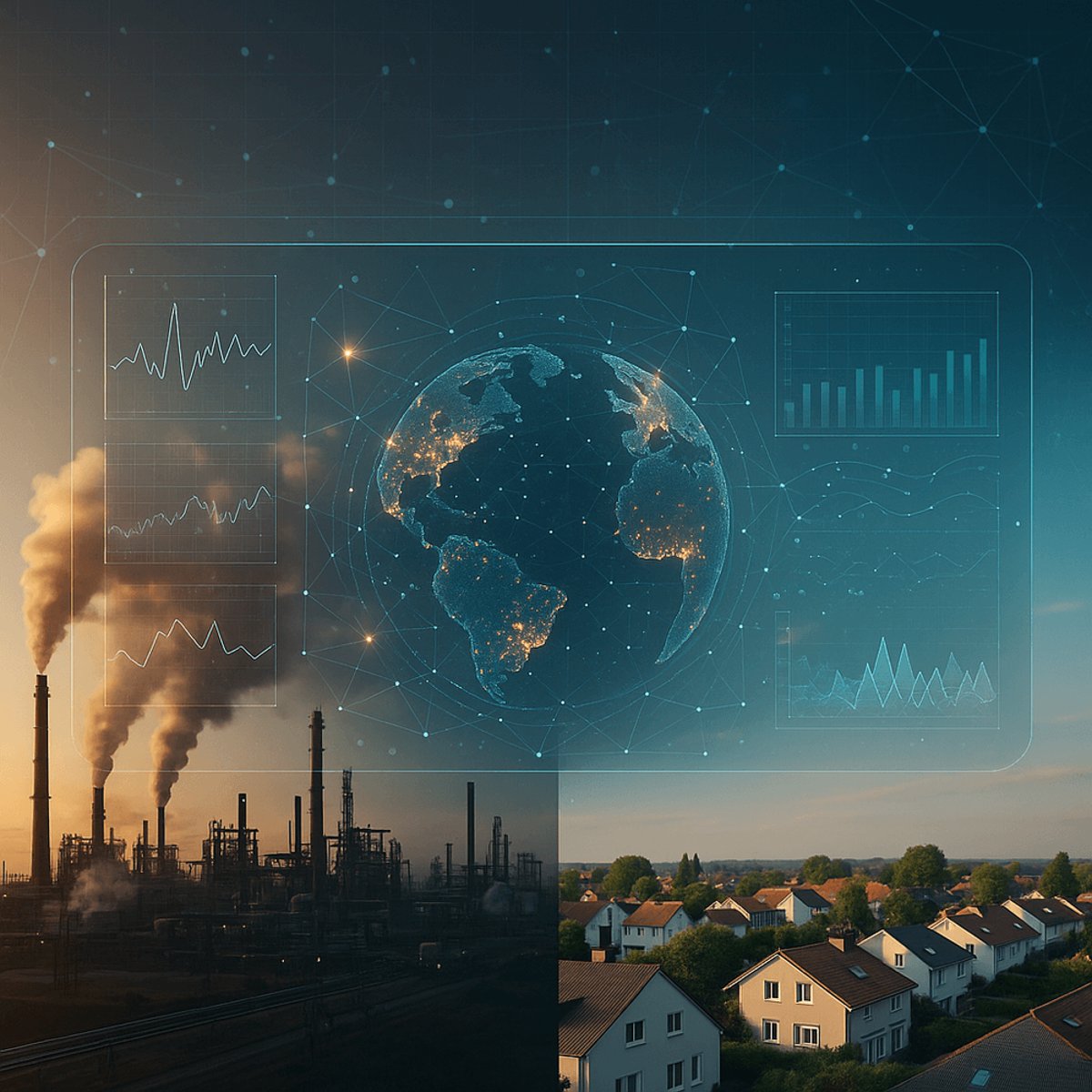
Climate Trace just gave the world its most powerful weapon yet against invisible killers. The nonprofit co-founded by Al Gore rolled out an AI-powered tracking system Wednesday that maps fine particulate pollution from more than 660 million sources across the globe, creating the first comprehensive picture of where deadly PM2.5 comes from and where it goes.
The breakthrough comes as scientists increasingly understand the devastating health toll of fine particulate matter. While most people know fossil fuels warm the planet, fewer realize burning them creates microscopic particles that kill as many as 10 million people every year - more than AIDS, tuberculosis, and malaria combined.
"For some time, I've been trying to bring more attention to the global public health crisis that's related to what some refer to as conventional air pollution, or PM2.5," Gore told TechCrunch. "It has been difficult for people to get precise information about what pollution they're breathing, where it's coming from, what the quantities are."
The inspiration struck during Gore's work with Memphis communities fighting a crude oil pipeline through their neighborhoods. Watching refinery plumes drift over residential areas, he wondered if Climate Trace could track these pollutants globally. The answer required AI muscle that wasn't available even a few years ago.
"The very idea of tracking 662 million sites around the world - I mean without AI, people couldn't have imagined doing something like that," Gore explained. "But of course, as we've all seen in the last couple of years, AI can do stuff that is quite extraordinary."
Working with researchers at Carnegie Mellon University, Climate Trace wrestled global pollution data into something both comprehensive and defensible. The result gives users access to raw data on major polluters plus visualizations showing how PM2.5 plumes drift around major cities. Gore says the plume mapping will eventually cover the entire world.
The health stakes keep climbing as researchers uncover PM2.5's wide-ranging damage. Beyond its well-known links to lung cancer and heart disease, studies now connect fine particulate exposure to low birth weight, kidney disease, Parkinson's, Alzheimer's, dementia, and type 2 diabetes. Even at supposedly safe legal levels, PM2.5 causes tens of thousands of excess deaths in the US annually.
Much of this groundbreaking health research traces back to Joel Schwartz, the Harvard scientist whose earlier work led to banning leaded gasoline. Gore sees a similar opportunity now - using health data to build political momentum for cleaner energy.
"I think that it creates a set of conditions and incentives that could very well make it more likely that we can accelerate the transition away from carbon-intensive facilities," he said. "It makes it more likely to build political support for the conversion of these facilities to much less emitting technologies."
The timing matters as environmental justice advocates increasingly connect air quality to racial and economic inequality. Communities near refineries, power plants, and industrial facilities - often low-income neighborhoods with high minority populations - bear disproportionate health burdens while lacking data to fight back effectively.
Climate Trace's transparency weapon arrives just as AI capabilities hit a sweet spot for this kind of massive data processing. Training models to identify and track hundreds of millions of pollution sources would have been computationally prohibitive just a few years ago. Now it's becoming standard practice for well-funded nonprofits.
The platform represents a new front in climate activism - using AI not just to predict future warming but to expose present-day health threats with surgical precision. If successful, it could pressure companies and governments to clean up faster than traditional regulatory approaches alone.
Gore's latest project shows how AI can flip the script on environmental accountability. Instead of waiting for governments to regulate or companies to self-report, Climate Trace puts pollution data directly in people's hands. The real test comes next - whether communities can use this unprecedented transparency to demand cleaner air and hold polluters accountable. With 10 million lives at stake annually, the pressure for action just got a major technological upgrade.