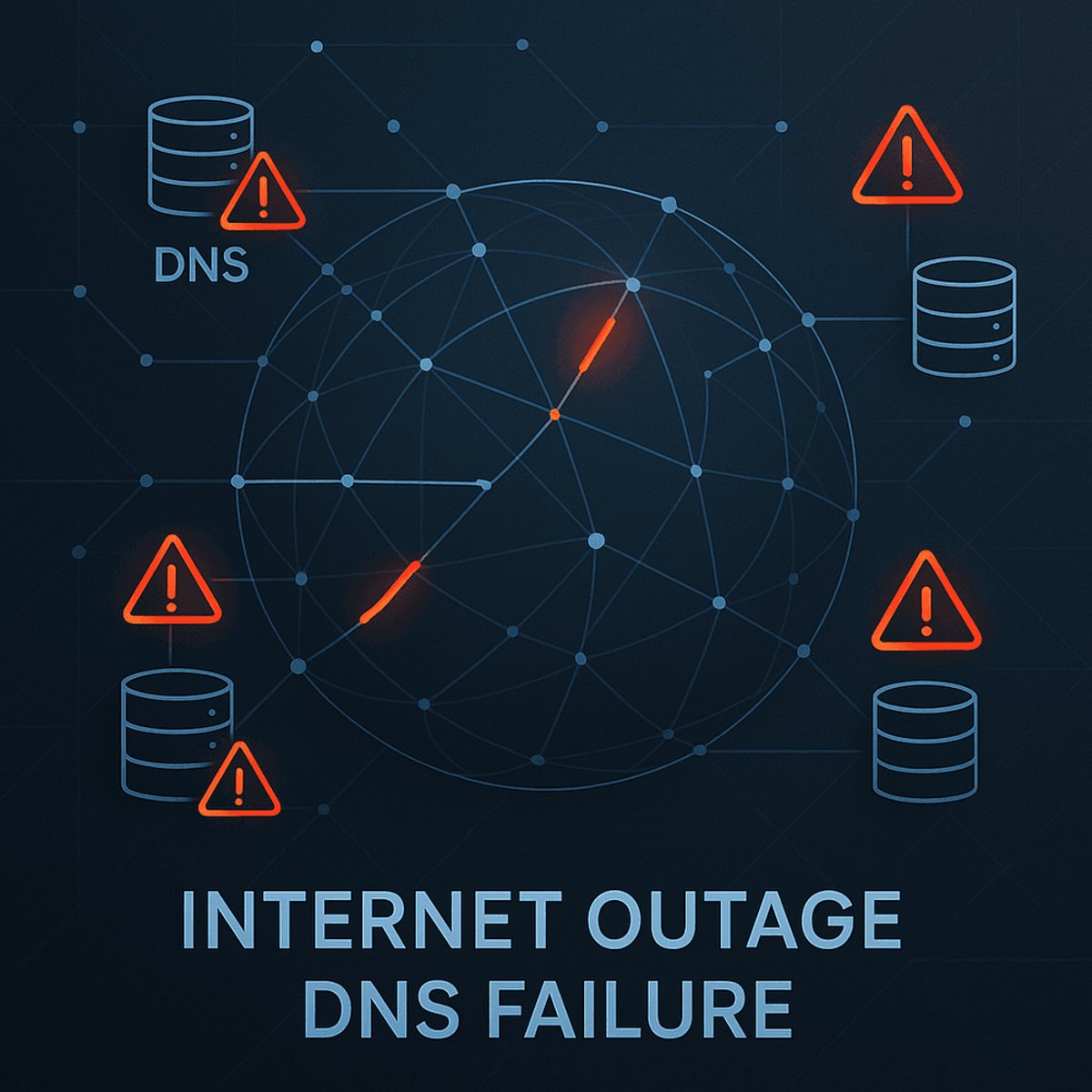
Amazon Web Services just experienced a massive DNS failure that knocked out huge chunks of the internet this morning. The outage, which started around 3 a.m. ET, disrupted major platforms including Zoom, Signal, Coinbase, and even Amazon's own Ring devices before being resolved hours later.
Amazon Web Services just delivered a harsh reminder of how much of the internet runs through its data centers. A DNS infrastructure failure starting at 3 a.m. ET brought down swaths of websites and apps that millions rely on daily, from video calls to cryptocurrency trading.
The casualties read like a who's who of essential digital services. Zoom users couldn't join meetings, Signal messages went undelivered, Coinbase traders watched helplessly as they lost access to their crypto portfolios, and Fortnite players got booted from matches. Even Amazon's own Ring doorbell cameras went dark, leaving homeowners temporarily blind to their front doors.
The root cause was DNS - the internet's phone book that translates human-readable web addresses into the numerical IP addresses that computers actually use. When DNS fails, it's like having all the street signs disappear at once. Your destination still exists, but there's no way to find it.
Amazon controls roughly 30% of the global cloud market, making it the backbone for countless businesses, government agencies, and consumer services. That dominance means when AWS hiccups, the entire internet feels it. Banks, news sites, and government portals all struggled to load as the outage rippled across time zones.
The company's terse statement this morning confirmed what millions of users already knew: something had gone very wrong. "The outage had been fully mitigated and most services are returning to normal," Amazon announced around mid-morning, without explaining what actually broke in the first place.
This wasn't just an inconvenience for individual users. Businesses lost revenue during peak morning hours, remote workers couldn't access critical systems, and IT departments scrambled to implement workarounds. The economic impact of even a few hours of downtime across this many services likely runs into hundreds of millions of dollars.
The timing couldn't have been worse, hitting during the Monday morning rush when businesses and schools were firing up for the week. Unlike planned maintenance windows that companies schedule during off-peak hours, this outage struck when internet traffic was surging.
This marks the most significant internet disruption since CrowdStrike's catastrophic update in 2024 that crashed millions of Windows machines worldwide. That incident took days to fully resolve and caused massive airline delays and hospital system failures. Before that, Akamai's DNS provider malfunction in 2021 knocked major sites like FedEx and PlayStation Network offline for hours.
The pattern is troubling: as more of our digital infrastructure consolidates around a handful of massive providers, single points of failure become more catastrophic. When AWS sneezes, the entire internet catches cold. This morning's outage serves as a stark reminder that our increasingly connected world remains surprisingly fragile.
What makes DNS outages particularly frustrating is their unpredictability in terms of recovery time. While some glitches resolve in minutes, DNS issues can linger for hours as changes propagate across the global network of servers that make the internet function. Even after Amazon declared the problem fixed, some users continued experiencing intermittent connectivity issues.
Today's AWS outage exposed just how dependent the modern internet has become on a small number of infrastructure giants. While services have largely recovered, the incident raises uncomfortable questions about concentration risk in cloud computing. For businesses still relying heavily on single-cloud strategies, this morning served as an expensive wake-up call about the value of redundancy and disaster planning.