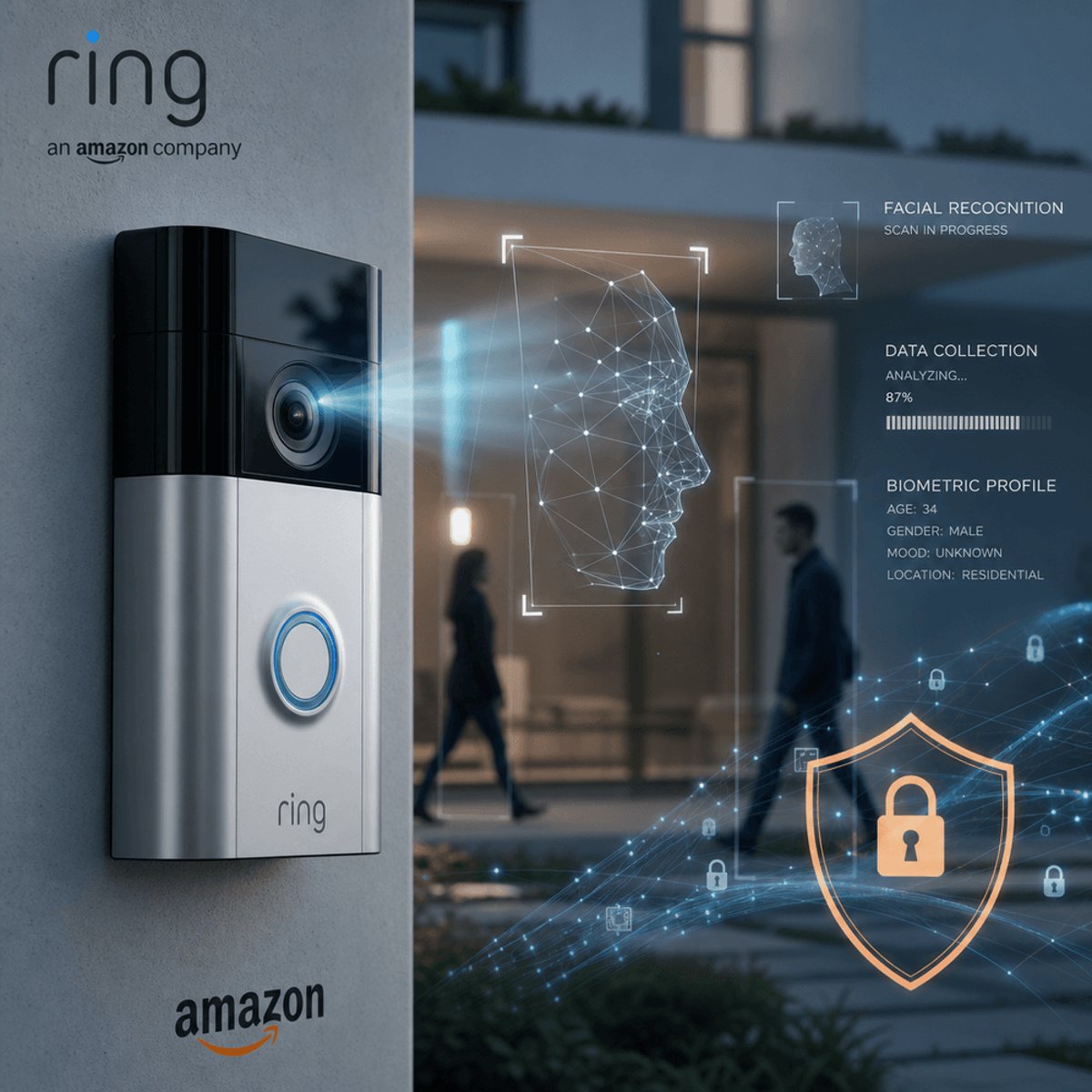
Amazon is facing a class action lawsuit over its Ring doorbell camera's facial recognition capabilities. Virginia resident Charles Sigwalt filed the suit in Seattle, alleging that Ring's Familiar Faces feature stores biometric images of people passing by homes without their knowledge or consent. The case could have far-reaching implications for how consumer tech companies deploy AI-powered surveillance features in connected home devices.
Amazon is in hot water over how its Ring doorbell cameras use facial recognition technology. A class action lawsuit filed in Seattle by Virginia resident Charles Sigwalt alleges that the company's Familiar Faces feature collects and stores biometric data from people who simply walk past Ring-equipped homes - all without their knowledge or permission.
The timing couldn't be more sensitive for Amazon. As AI-powered surveillance becomes standard in consumer devices, the legal framework around biometric data collection remains murky. Ring's Familiar Faces feature, which the company rolled out as a convenience tool for homeowners to identify regular visitors like family members or delivery drivers, now sits at the center of a privacy controversy that could reshape the smart home industry.
According to TechCrunch's reporting, Sigwalt's complaint takes aim at the fundamental operation of Ring's AI system. Unlike traditional motion-activated cameras that simply record video, the Familiar Faces feature actively processes facial data, creating biometric templates that allow the system to recognize and categorize individuals over time. The lawsuit argues this crosses a line from passive recording to active biometric surveillance.
The legal challenge comes at a moment when facial recognition technology faces increased scrutiny nationwide. Several states have enacted or proposed biometric privacy laws, with Illinois' Biometric Information Privacy Act serving as the template for many consumer lawsuits. Virginia, where Sigwalt resides, passed its own Consumer Data Protection Act, which includes provisions around sensitive data collection.
Ring has positioned the Familiar Faces feature as optional and user-controlled. Homeowners must actively enable the feature and manually label faces for the AI to learn. But the lawsuit's core argument is that the people being scanned - neighbors, delivery workers, or anyone walking past a Ring doorbell - never consented to having their biometric information captured and analyzed. They're unknowing participants in a surveillance system they didn't opt into.
This isn't Amazon's first privacy rodeo with Ring. The company has faced criticism over Ring's partnerships with law enforcement agencies, which allowed police to request doorbell camera footage from users. Amazon ended that program in 2023 after sustained pressure from privacy advocates. The company also shut down its Neighbors Public Safety Service, which had allowed police to directly request footage through the Ring app.
The smart home market has exploded in recent years, with facial recognition becoming a standard feature across competing platforms. Google's Nest cameras offer similar facial recognition capabilities, while Apple's HomeKit Secure Video uses on-device processing to identify people. But Ring's market dominance - the company claims millions of active users - makes it a prime target for class action litigation that could establish industrywide precedent.
Legal experts note that the lawsuit's success will likely hinge on whether Ring's data collection violates specific state biometric privacy statutes. The case also raises thorny questions about reasonable expectations of privacy in semi-public spaces like front porches and sidewalks. Courts have generally held that people have limited privacy expectations in publicly visible areas, but biometric data collection may trigger different legal standards than simple video recording.
For Amazon, the stakes extend beyond this single lawsuit. A successful class action could open the floodgates to similar claims from Ring users nationwide. More importantly, it could force the company to fundamentally redesign how its AI-powered home security products handle facial recognition - potentially removing the feature entirely or implementing opt-in systems for anyone who might be captured by the cameras.
The case also highlights the tension between AI innovation and privacy protection in consumer technology. Ring's engineers likely viewed Familiar Faces as a helpful feature that makes home security smarter and more personalized. But what happens when that personalization relies on processing the biometric data of people who never agreed to be part of the system? That's the question now heading to court, and the answer could reshape how companies deploy facial recognition in consumer devices.
The lawsuit against Amazon's Ring facial recognition feature represents more than just another privacy complaint - it's a test case for how far consumer AI can go in capturing biometric data without explicit consent. As smart home devices get smarter and more invasive, courts will need to draw lines around what's acceptable surveillance and what crosses into unlawful data collection. For now, Ring users might want to think twice about enabling Familiar Faces, and their neighbors might want to think about whether they're comfortable being digitally profiled every time they walk past a doorbell camera.