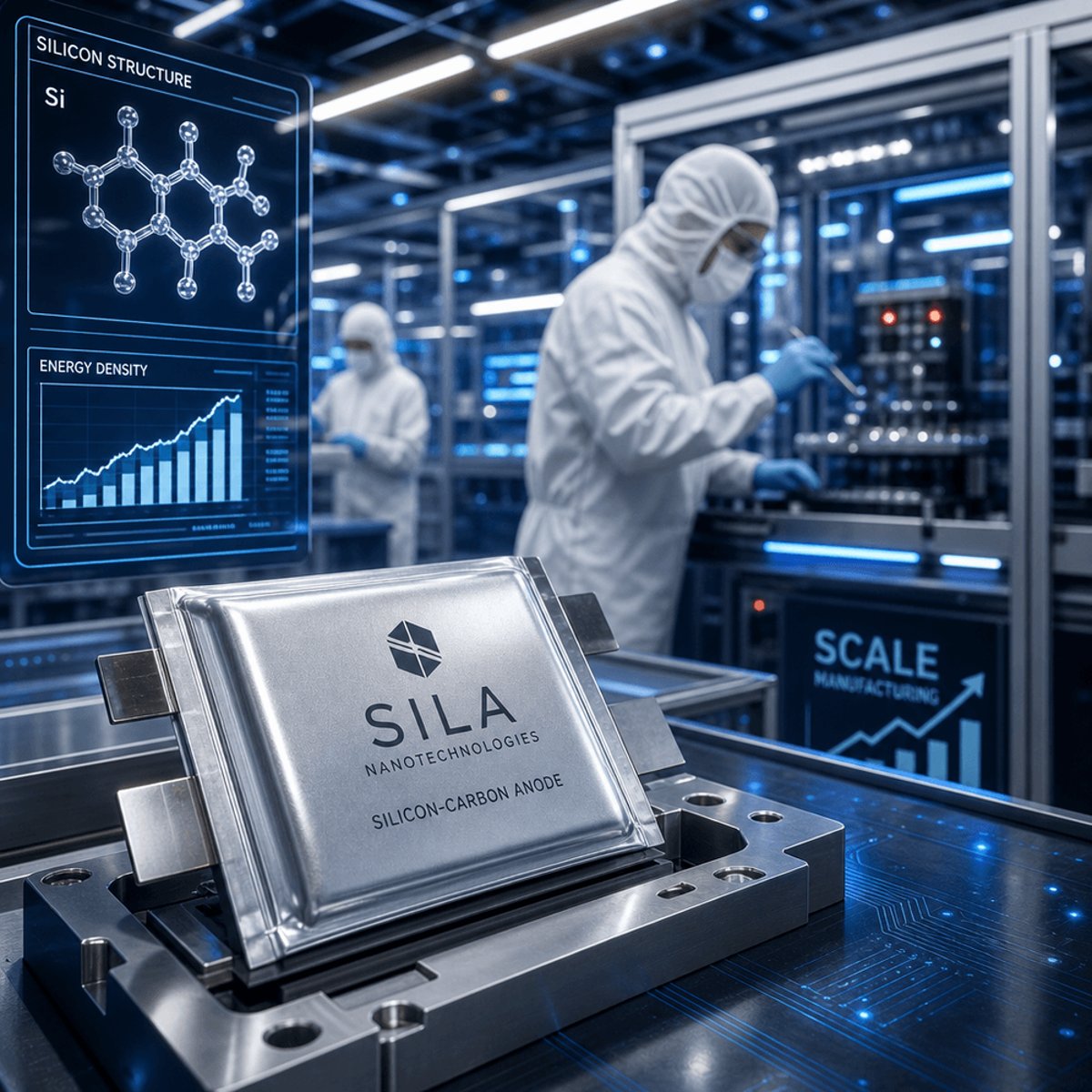
While the EV market stumbles through a growth slowdown, battery materials startup Sila just closed a $300 million funding round to double down on its silicon-carbon anode technology. The raise - bucking broader industry headwinds - will fuel expansion of the company's manufacturing capacity to supply materials for over 100,000 electric vehicles annually. It's a bold bet that the infrastructure powering EVs will outlast the current demand slump.
Sila is betting big on batteries while everyone else is backing away from EVs. The startup just locked down $300 million in fresh funding to expand production of its silicon-carbon anode material, which promises to boost battery performance beyond what traditional graphite anodes can deliver. According to TechCrunch, the capital will scale manufacturing capacity to supply enough material for more than 100,000 electric vehicles per year.
The timing couldn't be more contrarian. EV sales growth has cooled dramatically over the past year as consumers balk at high prices and range anxiety persists. Tesla slashed production targets in Q2, while legacy automakers like Ford and General Motors have delayed multibillion-dollar EV factory expansions. But Sila is playing a different game - one focused on the fundamental materials that will power the next generation of batteries, regardless of when mass adoption actually hits.
Silicon anodes can theoretically store up to 10 times more lithium ions than conventional graphite, translating to longer range and faster charging. The catch? Pure silicon expands and contracts dramatically during charge cycles, quickly degrading battery performance. Sila's proprietary approach uses a silicon-carbon composite that maintains structural integrity while delivering meaningful energy density gains. The company claims its material can boost battery capacity by 20-40% compared to standard graphite anodes.
The technology has already landed Sila partnerships with major players. Mercedes-Benz announced plans to use Sila's materials in its EQG electric SUV, while consumer electronics giants have quietly integrated the technology into premium devices. These early design wins validate the manufacturing scalability that's made or broken countless battery startups over the past decade.
But scaling production of advanced battery materials is notoriously capital-intensive and technically challenging. Building out manufacturing capacity requires specialized equipment, rigorous quality control, and years of process optimization. That's where the $300 million comes in - funding that will help Sila expand its factory footprint and ramp production volumes to automotive scale. The company hasn't disclosed who led the round or its current valuation, though previous investors include Sutter Hill Ventures, Bessemer Venture Partners, and Chengwei Capital.
The raise positions Sila to capitalize on a longer-term trend even as short-term EV sentiment sours. Battery materials represent a critical bottleneck in the supply chain, and companies that can deliver performance improvements while maintaining cost competitiveness will command strategic value. China currently dominates anode production, controlling over 90% of global graphite processing capacity. Western governments and automakers are desperate to diversify that supply chain.
Industry watchers see the funding as a vote of confidence that battery innovation will continue attracting capital even when the end products face headwinds. "The EV slowdown is about demand elasticity and pricing, not about the underlying technology trajectory," one battery industry analyst noted. "Materials innovation compounds over time, and investors understand that."
Sila's factory expansion also signals that the company expects automaker commitments to materialize despite near-term market volatility. Automotive supply contracts typically lock in multi-year purchase agreements, providing revenue visibility that can justify large capital investments. The question is whether Sila can execute on manufacturing scale-up while maintaining the material performance that earned those early partnerships.
Competitors aren't sitting still. Startups like Amprius and Enovix are pursuing their own silicon anode approaches, while traditional battery manufacturers including CATL and LG Energy Solution continue refining their own next-generation materials. The race is on to prove which technology can deliver both performance and manufacturability at automotive volumes and economics.
Sila's $300 million raise is a reminder that infrastructure bets don't always move in lockstep with consumer demand cycles. While automakers navigate a challenging EV market, the materials and technology enabling better batteries continue attracting serious capital. The company's expansion will test whether silicon anode technology can finally break out of the lab and into mass-market vehicles - a transition that's eluded battery startups for years. If Sila delivers on its production targets, it could reshape the competitive landscape for battery materials just as the next wave of EV adoption begins. But execution risk remains high, and the distance between promising technology and automotive-scale manufacturing is littered with well-funded failures.