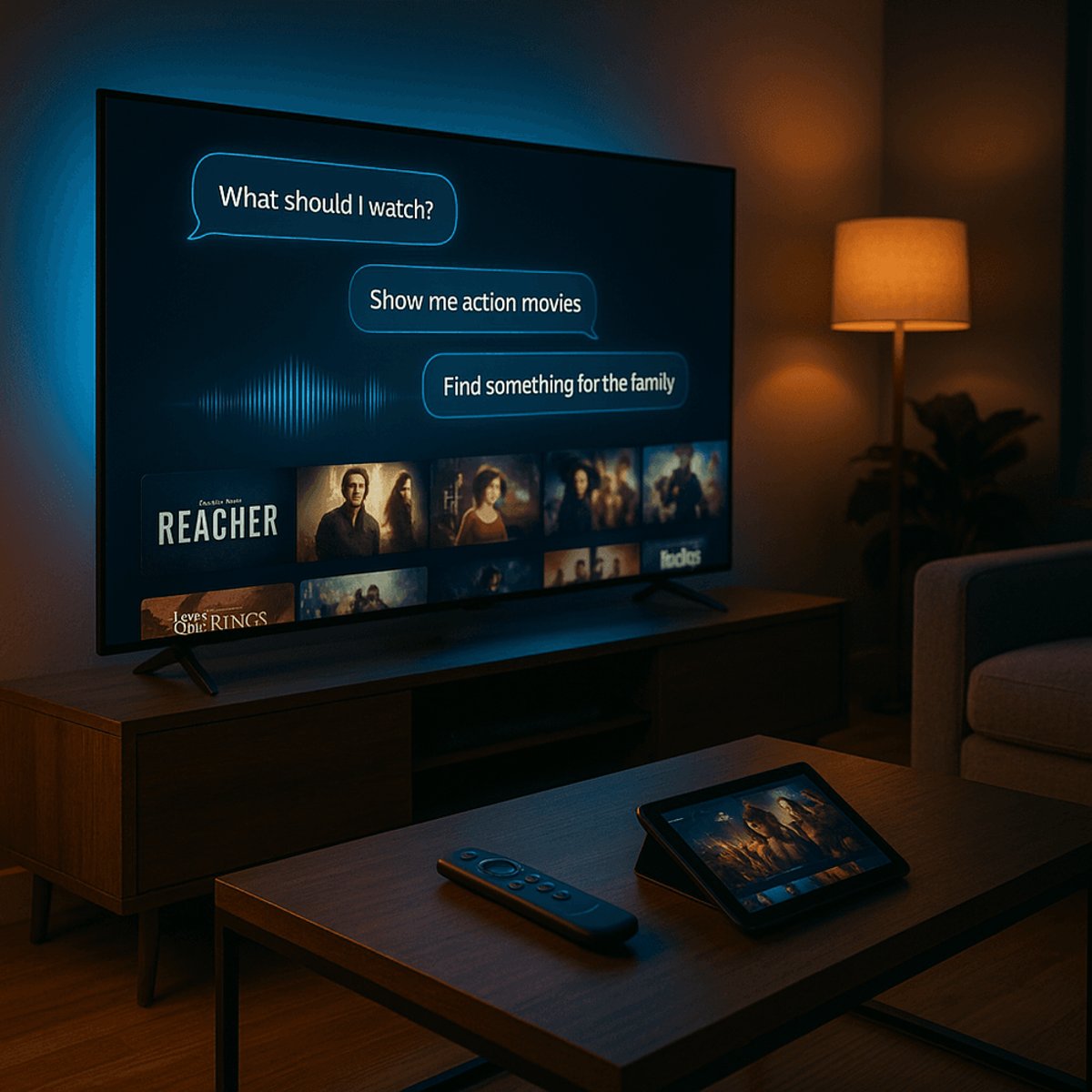
Amazon just dropped its biggest Fire TV upgrade yet, bringing its souped-up Alexa+ AI to streaming devices for the first time. The enhanced voice assistant can now handle complex movie searches, real-time sports stats, and behind-the-scenes trivia while you watch. With 300 million Fire TV devices already in homes worldwide, this AI integration could reshape how people interact with their entertainment.
Amazon just made streaming a lot smarter. At its fall hardware event in New York, the company unveiled Alexa+ integration across its Fire TV ecosystem, marking the first time its upgraded AI assistant will power television experiences. The move positions Amazon to compete directly with Google's AI-enhanced Chromecast and Apple's increasingly intelligent Apple TV.
The timing couldn't be better for Amazon's streaming ambitions. Fire TV VP Aidan Marcuss revealed that customers have purchased nearly 300 million Fire TV devices globally, with the company launching 250 new TV models through hardware partners in 2025 alone. That massive install base now gets access to conversational AI that goes way beyond "play the next episode."
Alexa+ transforms the couch potato experience into something resembling a conversation with a knowledgeable film buff. Instead of basic commands, users can ask nuanced questions like "find me something similar to that show I binged last weekend" or "show me movies with that actor from the coffee commercial." The AI understands context and delivers personalized recommendations based on viewing history.
But the real breakthrough comes during active viewing sessions. Alexa+ can field questions about filming locations, provide behind-the-scenes trivia, identify actors, and even break down movie soundtracks – all while content plays uninterrupted. For sports fans, the feature gets particularly interesting, offering real-time scores, player statistics, and the ability to jump between live games across multiple streaming services including Prime Video, Sling TV, DirecTV, and Fubo.
Perhaps most impressively, Alexa+ can locate specific scenes within movies and shows using natural language commands. The feature initially works with "thousands" of Prime Video titles, though Amazon promises expansion across other platforms. Imagine saying "show me the scene where they're arguing in the kitchen" and having the AI jump directly there – that's the kind of functionality that could make traditional channel surfing feel prehistoric.
The AI upgrade arrives alongside Amazon's most comprehensive Fire TV hardware refresh yet. The new lineup spans budget-conscious 2-Series TVs starting at $159.99 for 32-inch models up to the flagship Fire TV Omni QLED Series beginning at $479.99. The Omni QLED represents Amazon's push into premium territory, boasting 60% brighter displays than previous generations, double the local dimming zones, and adaptive brightness that automatically adjusts to room lighting.
All new devices feature Amazon's latest quad-core processor, delivering 30% faster performance than previous generations. They also include "Omnisense" brightness adjustment and "Dialogue Boost" technology that dynamically enhances speech clarity during films and TV shows. The Fire TV Stick 4K Select, priced at $39.99, serves as the entry point for 4K streaming with HDR 10+ support, powered by Amazon's new Vega OS operating system.
The competitive implications extend far beyond Amazon's ecosystem. Google has been pushing AI integration through its Chromecast devices and Android TV platform, while Apple continues expanding Siri capabilities on Apple TV. Amazon's advantage lies in its massive Fire TV install base and deep integration with Prime Video content, creating a flywheel effect where better AI drives more viewing, which generates more data to improve recommendations.
For streaming services, Amazon's AI push represents both opportunity and challenge. Platforms that integrate deeply with Alexa+ features could see increased engagement, while those that don't might find themselves at a discovery disadvantage. The initial focus on Prime Video titles for scene-finding capabilities gives Amazon's own content a subtle but significant edge.
Industry analysts expect other major streaming platforms to follow Amazon's lead rapidly. The ability to search content conversationally and get contextual information while watching addresses longstanding user frustrations with traditional streaming interfaces. As voice recognition accuracy improves and AI models become more sophisticated, the television remote might join the flip phone in the technology graveyard sooner than expected.
Amazon's Alexa+ integration represents more than just another voice control upgrade – it's a fundamental shift toward conversational entertainment discovery. With 300 million Fire TV devices already deployed and new AI capabilities rolling out, Amazon is betting that the future of streaming lies not in better search algorithms, but in making televisions genuinely intelligent conversation partners. The success of this gambit could determine whether Amazon maintains its streaming hardware dominance or watches competitors like Google and Apple catch up through their own AI innovations.