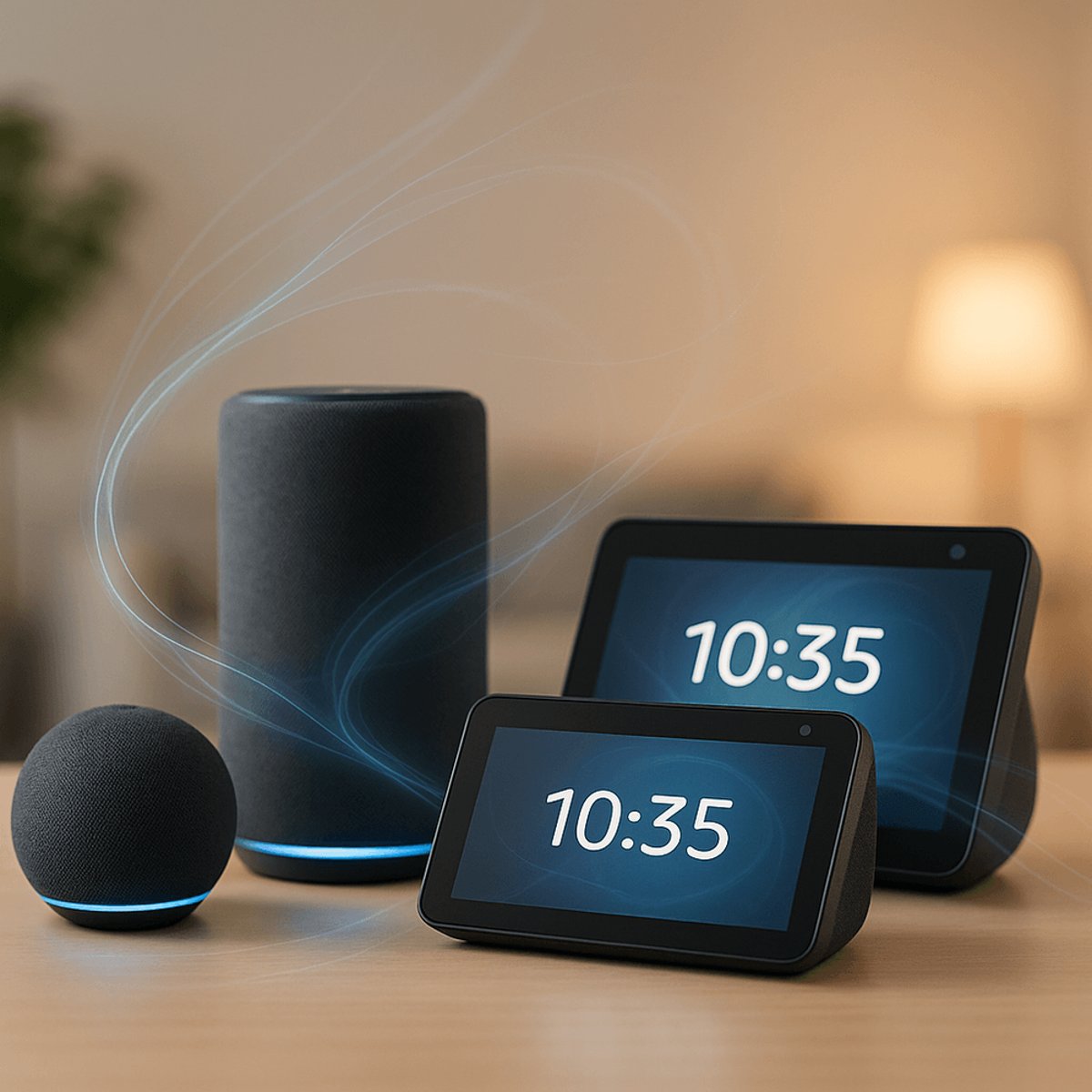
Amazon just dropped its first Alexa+ hardware lineup, marking a crucial pivot in the smart speaker wars. Four new Echo devices starting at $99.99 pack generative AI directly into the hardware, representing Amazon's biggest bet yet on keeping pace with OpenAI and Google in the AI assistant race.
Amazon just fired the opening shot in the next phase of the smart home wars. The company's latest Echo lineup, unveiled Tuesday at its fall hardware event in New York, represents more than just a product refresh - it's Amazon's most aggressive move yet to reclaim ground lost to AI rivals like OpenAI and Google.
The centerpiece is Alexa+, Amazon's generative AI assistant that's been in limited beta since February. Now it's finally getting the hardware it deserves. The new Echo Dot Max ($99.99) reimagines the compact speaker category, while the Echo Show 8 and 11 ($179.99 and $219.99) bring AI-powered displays to mainstream price points. The premium Echo Studio rounds out the lineup at $219.99.
"These are the most powerful Echo devices we have ever created," Panos Panay told the audience, according to Amazon's announcement. The former Microsoft hardware veteran, who joined Amazon in 2023, is betting big on custom silicon and AI integration to differentiate these devices from the previous generation.
The technical leap is significant. Amazon's new AZ3 and AZ3 Pro chips handle AI processing directly on the device, eliminating the latency that plagued earlier smart speakers. Daniel Rausch, head of Amazon's Alexa and Echo businesses, says the chips have "AI built right in," enabling features that would have been impossible with cloud-only processing.
But the real innovation lies in what Amazon calls "Omnisense" - a platform that gives these devices contextual awareness beyond simple voice commands. The Echo Show can now recognize individual users and serve personalized insights, from sleep analysis to home security alerts. It's the kind of proactive intelligence that Google's Nest devices have struggled to deliver consistently.
Timing is everything here. Amazon faces unprecedented pressure from AI assistants that actually understand context and nuance. OpenAI's ChatGPT has redefined what users expect from AI interactions, while Google's Gemini continues pushing the boundaries of multimodal AI. Even Meta has found success with its Ray-Ban smart glasses, which pack Llama AI into a wearable format.
The competitive landscape has shifted dramatically since Amazon's last major Echo refresh. Smart speakers are no longer just voice-controlled music players - they're becoming AI-powered home hubs that need to anticipate needs, not just respond to commands. Amazon's betting that Alexa+ can close this gap, but the company is already hedging with acquisitions like AI wearables startup Bee, which makes conversation-recording wristbands.
What's particularly clever about Amazon's approach is the shipping timeline. The Echo Dot Max and Echo Studio arrive October 29, just in time for holiday shopping season. The Echo Show models follow November 12, creating two waves of availability that could maximize market impact. All devices come with Alexa+ early access "out of the box," finally giving Amazon's AI assistant the hardware foundation it needs to compete.
The pricing strategy reveals Amazon's broader ambitions. At $99.99, the Echo Dot Max undercuts premium competitors while delivering AI capabilities that were unthinkable at this price point just two years ago. It's a direct challenge to Google's Nest Audio and Apple's HomePod mini, both of which lack comparable AI integration.
For Amazon, this launch represents more than catching up - it's about defining the next decade of smart home interaction. With custom AI chips, contextual awareness, and competitive pricing, these devices could finally deliver on the promise of truly intelligent assistants that enhance daily life rather than just responding to commands.
Amazon's Alexa+ Echo lineup represents a critical inflection point in the smart speaker market. With AI processing moving to the edge and contextual awareness becoming standard, these devices could finally deliver on the promise of truly intelligent home assistants. The real test will be whether Alexa+ can match the conversational sophistication that users now expect from AI - and whether Amazon can maintain its ecosystem advantage as competitors like Google and Apple respond with their own AI-powered hardware.