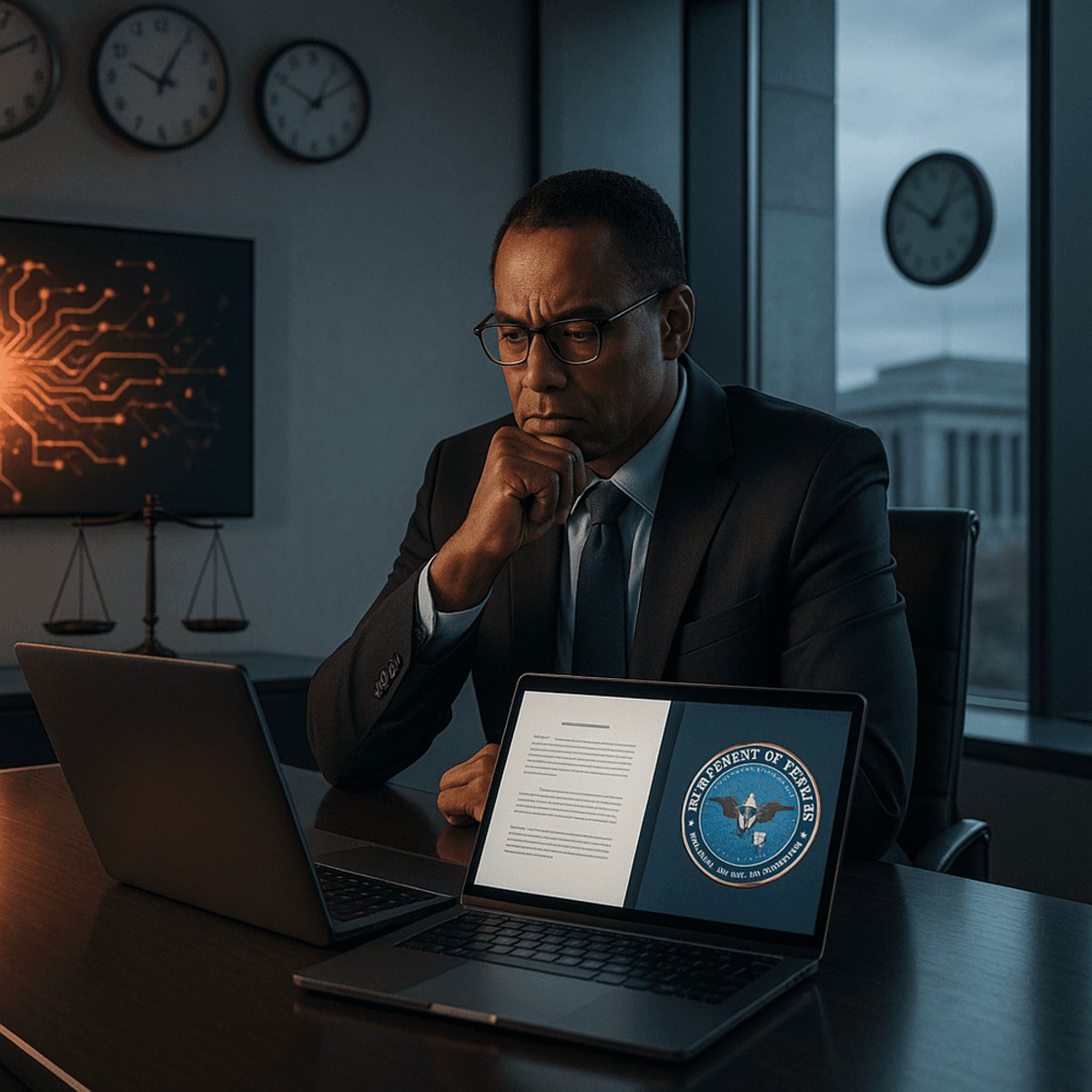
Anthropic has mere hours to make a decision that could redefine AI's role in national security. The Defense Department is demanding unrestricted access to the company's Claude AI models, forcing the AI safety-focused startup into a high-stakes standoff that pits its founding principles against Pentagon requirements. The deadline, first reported by CNBC, represents a watershed moment for the AI industry's relationship with military applications.
The clock is ticking on one of the most consequential decisions in AI's short history. Anthropic, the company founded by former OpenAI executives on principles of AI safety, now faces a Pentagon ultimatum that strikes at the heart of those values.
According to sources familiar with the matter, the Defense Department has set a hard deadline for Anthropic to revise its acceptable use policy, which currently restricts Claude from being deployed in weapons systems, surveillance operations, or offensive military applications. The Pentagon's position is straightforward: if it's going to be a customer, it needs the same unrestricted access to AI capabilities that adversaries are racing to develop.
The timing couldn't be more brutal. Anthropic raised $2 billion from Google and others last year, with much of its growth strategy banking on enterprise and government contracts. Walking away from Pentagon business means potentially billions in foregone revenue at a time when AI labs are burning through cash faster than ever. The company's latest Claude 3.5 model requires massive computational resources, and competitors like OpenAI and Microsoft have already secured defense contracts.
But capitulating comes with its own devastating costs. Anthropic was explicitly founded in 2021 by Dario and Daniela Amodei after they left OpenAI over disagreements about AI safety priorities. The company's Constitutional AI approach, which bakes ethical constraints directly into model training, has been its defining feature. Employees were recruited with promises that Anthropic would be different, that it wouldn't compromise on safety for commercial gain.
The Pentagon's stance reflects a broader shift in how the U.S. government views AI competition with China. Defense officials argue that handicapping American AI companies with ethical restrictions while Chinese labs operate without such constraints is tantamount to unilateral disarmament. Microsoft and Google have already navigated these waters, establishing separate frameworks for government work while maintaining public-facing AI principles.
Industry insiders say Anthropic has been trying to negotiate a middle path: allowing some defense applications like logistics and threat analysis while maintaining hard lines against autonomous weapons or offensive cyber operations. But the Pentagon reportedly wants clean, unrestricted access without having to parse which use cases fall on which side of ethical boundaries.
The lose-lose framing isn't hyperbole. If Anthropic refuses, it risks becoming a cautionary tale about how idealism doesn't scale in the brutal economics of frontier AI development. Investors who poured billions into the company will question whether safety-focused positioning is compatible with the revenue needed to train cutting-edge models. Talent might drift to labs with clearer paths to sustainability.
But if the company caves, it risks something harder to quantify: the trust of the AI safety community and the moral authority that has made Anthropic a voice that matters in policy debates. Employees could walk. Academic partnerships might sour. And the company's careful positioning as the responsible AI lab becomes just another marketing claim that evaporated when serious money showed up.
What makes this moment particularly fraught is its timing in the broader AI policy landscape. European regulators are watching how American companies handle military AI applications as they finalize the EU AI Act. Congress is debating AI governance frameworks, and how Anthropic handles this could influence whether lawmakers view industry self-regulation as credible or cosmetic.
There's also the precedent factor. Whatever Anthropic decides will be studied by every other AI lab facing similar pressure. OpenAI already reversed its blanket ban on military applications earlier this year. If Anthropic follows suit, the message to the industry is clear: safety principles bend when government contracts are on the line.
The company has remained publicly silent as the deadline approaches, with no official statement addressing the standoff. Behind the scenes, reports suggest intense internal debate, with the founding team weighing options that all feel like different flavors of compromise. Some employees have reportedly begun circulating internal letters urging leadership to hold the line on military restrictions, while others argue that refusing to help democratic governments defend themselves is its own kind of recklessness.
The Pentagon, for its part, has been increasingly vocal about the urgency of AI adoption across military operations. Defense Secretary statements over the past year have emphasized the existential nature of the AI race with China, framing hesitation as a luxury America can't afford. That rhetoric has translated into procurement demands that don't accommodate nuanced ethical frameworks.
The next few hours will reveal whether AI safety principles can survive contact with national security realpolitik. Whatever Anthropic decides, the outcome will reverberate far beyond this single contract. It's a test case for whether the AI industry's ethical commitments are foundational values or negotiating positions. And in an industry where billions in funding and geopolitical competition collide with existential risk concerns, there may genuinely be no winning move, only choices about which losses matter most. The deadline looms, and with it, a reckoning for how we build powerful AI systems in a world where military advantage and safety guardrails increasingly seem incompatible.