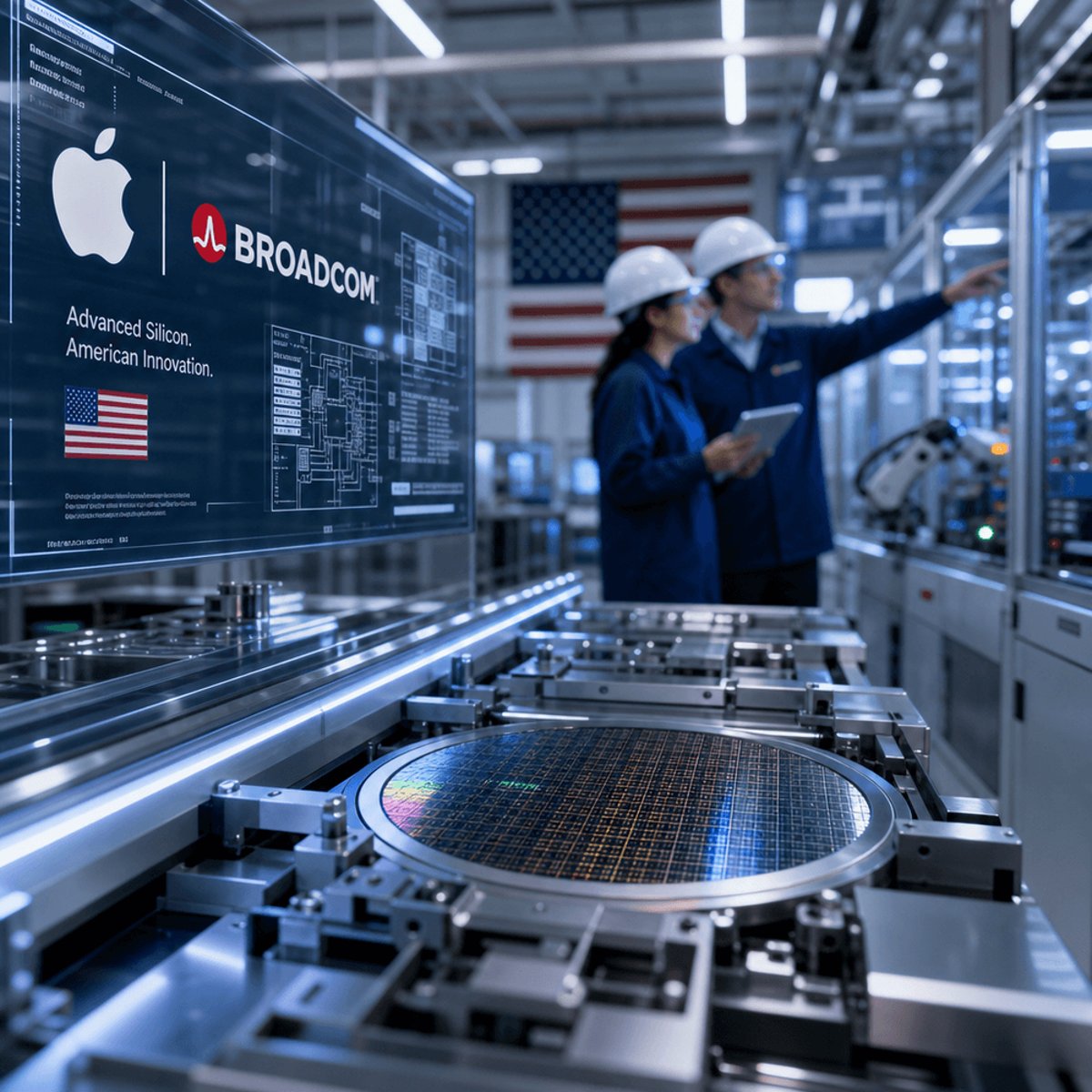
Apple just dropped its biggest bet on American manufacturing yet. The Cupertino giant is committing over $30 billion to expand its partnership with Broadcom, marking the largest domestic chipmaking investment in the company's history. The move signals Apple's determination to secure its semiconductor supply chain while answering political pressure to bring more tech manufacturing stateside. It's a watershed moment that could reshape how the entire industry thinks about chip production.
Apple is making its boldest manufacturing commitment on American soil. The company's $30 billion-plus agreement with Broadcom represents a fundamental shift in how Apple thinks about chip production, moving significant manufacturing capacity away from its traditional overseas partners.
The deal comes as semiconductor supply chains face unprecedented scrutiny. Over the past three years, chip shortages have hammered everything from iPhone production to automotive manufacturing, exposing the fragility of global supply networks. Apple's felt that pain directly - manufacturing delays and component shortages have repeatedly forced the company to adjust product launch timelines.
Broadcom's been a longtime Apple supplier, providing everything from wireless chips to radio frequency components that power connectivity in iPhones, iPads, and Macs. But this expanded partnership goes far beyond their existing relationship. According to CNBC, the investment will fund significant expansion of domestic chip production capabilities, potentially including new fabrication facilities and advanced packaging operations on U.S. soil.
The timing isn't coincidental. Washington's been pushing tech giants to reshore manufacturing through a combination of incentives and pressure. The CHIPS Act allocated billions in subsidies for domestic semiconductor production, while mounting tensions with China have made overseas manufacturing increasingly risky. Apple's navigating a complex geopolitical landscape where supply chain resilience has become as important as cost efficiency.
For Broadcom, the deal provides massive capital to expand its manufacturing footprint. The San Jose-based chipmaker has been investing heavily in advanced packaging and RF technology, areas where Apple's products demand cutting-edge capabilities. This partnership gives Broadcom the financial backing to build out facilities that can handle Apple's exacting specifications and enormous production volumes.
The $30 billion commitment dwarfs Apple's previous domestic manufacturing investments. While the company has long touted job creation and supplier investments in the U.S., the bulk of its device assembly and component production has remained overseas, primarily in China and Southeast Asia. This represents a fundamental recalibration of that strategy.
Industry watchers see this as a potential inflection point. If Apple can successfully bring significant chip production stateside without sacrificing margins or quality, other tech giants will likely follow. Microsoft, Google, and Amazon all rely on complex semiconductor supply chains and face similar pressures to diversify manufacturing.
The deal also positions Apple to capture more value from its vertical integration strategy. By controlling more of its chip supply chain domestically, the company gains flexibility to iterate faster on custom silicon designs while reducing lead times for new components. That could accelerate the pace of hardware innovation across Apple's product lines.
But challenges remain. U.S. chipmaking costs significantly more than Asian alternatives, and the domestic talent pool for advanced semiconductor manufacturing is limited. Apple and Broadcom will need to solve workforce development challenges while proving the economics work at scale. The test will be whether patriotic manufacturing rhetoric can translate into sustainable business fundamentals.
The announcement also comes as Apple ramps up its custom silicon ambitions. After successfully transitioning Macs to Apple Silicon and designing its own iPhone chips for years, the company's been expanding into areas like modem chips and display technology. Domestic production capacity gives Apple more control over these strategic components.
Apple's $30 billion Broadcom commitment represents more than a supplier deal - it's a bet on American manufacturing's future in the semiconductor age. If successful, the partnership could demonstrate that domestic chip production can work at scale for consumer tech giants, potentially triggering a broader industry shift. But the real test comes in execution: whether Apple and Broadcom can build cost-effective, high-volume manufacturing while navigating workforce challenges and maintaining the quality standards Apple's customers expect. For now, it's the clearest signal yet that tech's supply chain geography is being redrawn, with profound implications for how the industry operates over the next decade.