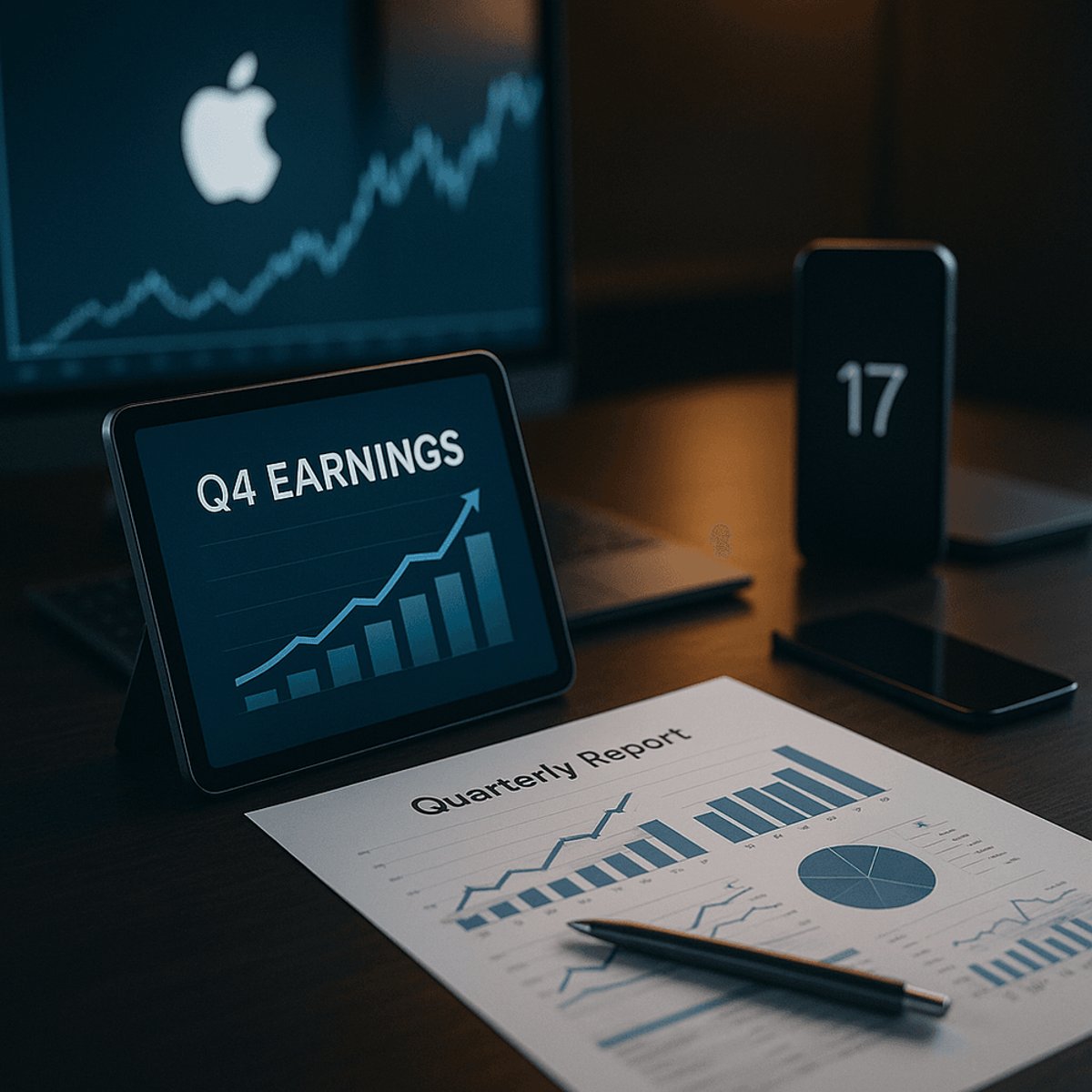
Apple just dropped its fourth quarter earnings, marking the first financial glimpse of iPhone 17 sales performance. Wall Street's watching closely as the tech giant navigates tariff pressures while investors question whether Apple's doing enough to compete in the AI arms race that's reshaping Big Tech spending priorities.
Apple just served up its fourth quarter earnings, and the numbers tell a story that's been months in the making. The September quarter marks the first time iPhone 17 sales hit the books - albeit just over a week's worth - giving Wall Street its first real look at whether Apple's latest smartphone lineup can break a sales slump that's lasted since 2022.
Analysts polled by LSEG are expecting $102.24 billion in revenue and $1.77 per share, representing 7.7% sales growth. That's a slight deceleration from June's 10% year-over-year bump, but still solid numbers for a company navigating an increasingly complex global landscape.
The iPhone 17 story is particularly compelling because early signs suggest Apple might finally have a hit on its hands. Analysts tracking the launch have noted improved demand for the iPhone 17 models, especially the entry-level and Pro variants. If that momentum holds, Apple's fiscal 2025 could mark the first year of iPhone sales growth since 2022 - a milestone that would validate CEO Tim Cook's product strategy.
But there's a shadow hanging over these results: the AI spending question. While Meta, Google, and Microsoft are pouring tens of billions into data centers and AI chips, Apple's been notably restrained. Some investors want to see the company step up its capital expenditures and match the AI investment boom reshaping Big Tech.
Cook did promise last quarter that Apple was "significantly" growing its AI investments, and we might see that reflected in today's capex numbers. The company also announced last week it's shipping artificial intelligence servers from a Houston factory, suggesting the AI spending is ramping up behind the scenes.
Then there's the tariff situation. Apple warned in July it could face $1.1 billion in tariff costs, though the company's gotten some praise from President Trump over its plan to spend $600 billion in the U.S. and boost American semiconductor manufacturing. Investors will be parsing whether actual costs came in under forecast and what the company expects for the current quarter.
Cook's also likely to highlight Apple's five-year deal with Formula 1 to broadcast races in the U.S. on Apple TV. It's the latest move in Apple's sports and media strategy, following years of investments in original content and live sports rights.
Looking ahead, analysts expect Apple to guide to $132.31 billion in December quarter sales and $2.53 per share earnings. That would represent another solid quarter, but the real test will be how iPhone 17 momentum translates into holiday season sales. The December quarter typically accounts for Apple's biggest revenue haul of the year, driven by holiday gift-buying and the full impact of new iPhone models.
The earnings call will also provide insight into Apple's broader strategy as it navigates an increasingly AI-centric tech landscape. While competitors race to build massive AI infrastructures, Apple's betting on a different approach - integrating AI more subtly into its existing ecosystem rather than building from scratch.
Apple's Q4 results offer a fascinating snapshot of a company in transition. The iPhone 17's early success suggests Apple's core business remains resilient, but the bigger question is whether the company can evolve its spending priorities to match the AI-driven transformation reshaping Big Tech. With December quarter guidance and commentary on AI investments, today's call could signal whether Apple plans to play catch-up or stick to its own playbook in the race for AI dominance.