Samsung turned heads at GDC 2026 with its Odyssey 3D gaming monitors, drawing developers and industry leaders to test glasses-free 3D technology that tracks eye movement in real time. The South Korean tech giant announced plans to double its 3D game library from 60 to over 120 titles by year-end, adding major releases like Hell is Us and Cronos: The New Dawn. The showcase at San Francisco's Marriott Marquis featured roundtables with CD Projekt RED, Rogue Factor, and Bloober Team executives, who tested new display tech including HDR10+ GAMING and a 1,040Hz refresh rate monitor.
Samsung just made its boldest play yet for the future of PC gaming displays. At the Game Developers Conference 2026 in San Francisco, the company transformed the Marriott Marquis into an Odyssey Gaming Lounge where developers, media, and industry executives got hands-on time with technology that's trying to redefine how games look and feel.
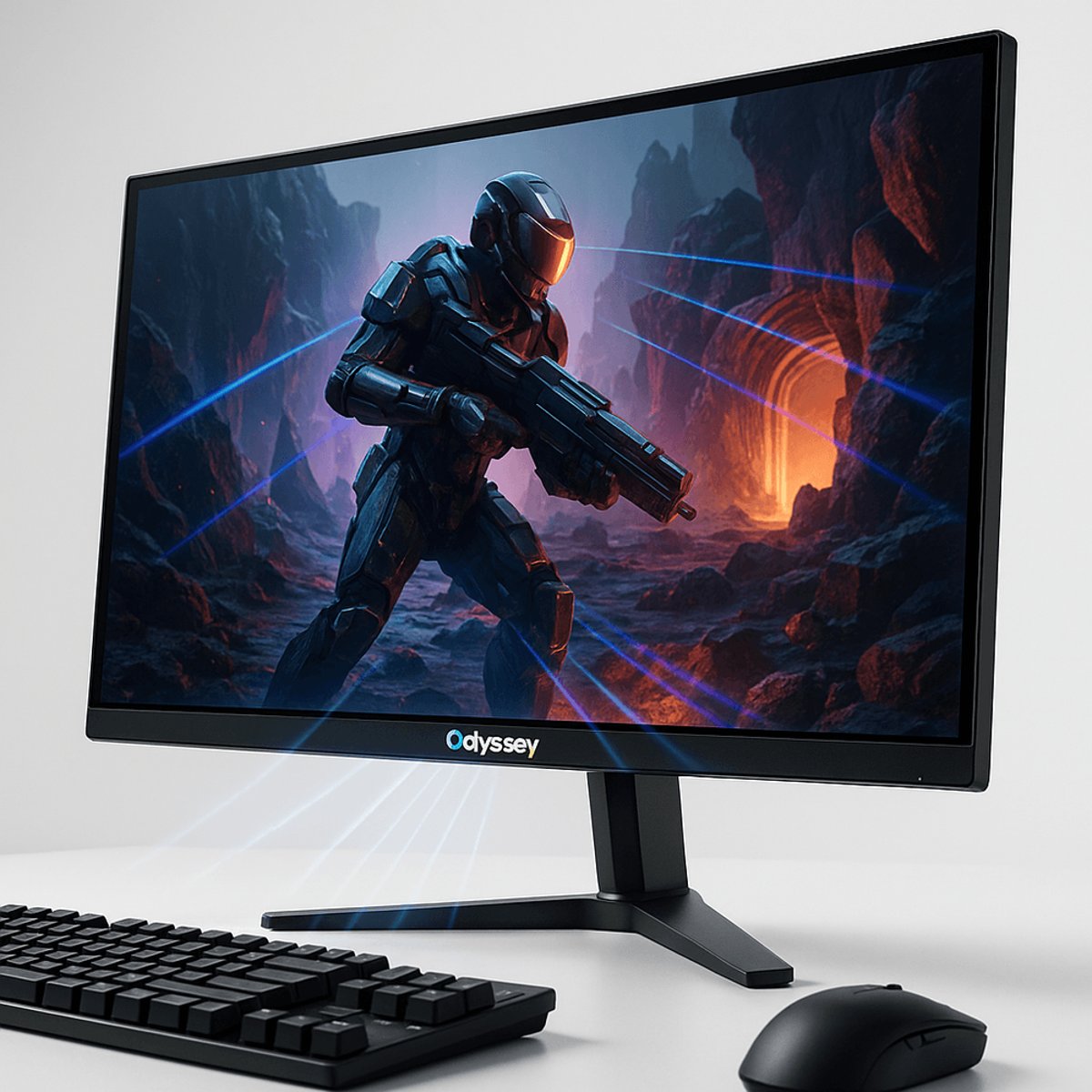
The centerpiece was Odyssey 3D, Samsung's glasses-free 3D monitor that uses eye-tracking and view-mapping to adjust depth perception as you move. Unlike the clunky 3D experiments of the past decade, this is 4K resolution without the headaches - literally. Visitors lined up to try Hell is Us from Rogue Factor on the 27-inch Odyssey 3D (G90XF), a thriller that uses tight corridors and environmental cues to build tension.
"Samsung has redefined 3D gaming - the technology is so sharp and crisp," gaming content creator Floyd Broadnax told attendees during the showcase, according to Samsung's event recap.
The demo drew crowds throughout the week-long event. Developers said the added depth made it easier to read spatial relationships and environmental details without losing the game's atmosphere. Cronos: The New Dawn also appeared in 3D through a launch trailer, showing how the technology handles scale and immersion in different game genres.
But Samsung didn't just bring one monitor. The company showcased three distinct approaches to next-gen displays, each targeting different pain points developers face. The 32-inch Odyssey G8 6K (G80HS) became a testing ground for how higher resolution affects UI readability and environmental detail. In dense 4K scenes, the extra pixels kept fine elements sharp without forcing art style compromises.
The 27-inch Odyssey G6 (G60H) went in a completely different direction: pure speed. With a 1,040Hz refresh rate, it's aimed squarely at competitive gaming and high-performance titles where every millisecond of input lag matters. Developers tested camera pans, aiming mechanics, and rapid inputs to see where the technology might fit in future releases.
HDR10+ GAMING emerged as the sleeper hit of the showcase. Instead of forcing developers to calibrate displays through trial and error, the technology lets the game feed send scene-by-scene metadata directly to the monitor. Highlights, shadows, and color stay closer to what developers see in their own development builds.
"I honestly think HDR10+ is a major milestone in color reproduction, one that we've all been waiting for," Jakub Knapik, VP of Art and Global Art Director at CD Projekt RED, said during a roundtable session. "Thanks to it, players will be able to experience our true artistic intent - not to mention a far more immersive high dynamic range."
Knapik demonstrated Cyberpunk 2077 running on the 32-inch Odyssey G8 6K, showing how the studio's detailed environments benefit from higher pixel density and dynamic HDR adjustments.
The roundtable brought together an unusual mix of studio leaders: Yves Bordeleau, Founder and Head of Studio at Rogue Factor; Jonathan Jacques-Belletête, Creative Director at Rogue Factor; Piotr Babieno, Founder and CEO of Bloober Team; and Samsung's own Kevin Lee, EVP of Customer Experience for Visual Display Business.
Smaller studios talked about using new display tech to experiment and take creative risks. Larger publishers focused on setting standards that can scale across engines, franchises, and platforms. The conversation revealed how different teams approach rolling out features like glasses-free 3D and HDR10+ GAMING - and which make sense for competitive multiplayer versus story-driven single-player experiences.
"Samsung knows games and the brains of the developers, and that is something hardware companies don't often know," Jacques-Belletête told the group, according to Samsung's event notes.
The comment cuts to Samsung's broader strategy: building partnerships with game studios before releasing hardware, not after. By getting developers to test and provide feedback on Odyssey monitors during active development cycles, Samsung's trying to avoid the fate of past display innovations that launched with little software support.
It's working. Samsung's 3D gaming library currently spans 60+ titles, including The First Berserker: Khazan, Stellar Blade, and Lies of P: Overture. With Hell is Us and Cronos: The New Dawn joining the roster, the company's on track to double that to over 120 titles by the end of 2026.
"With our proven track record in hardware and software innovation, we're partnering with global gaming studios to chart a clear path forward on compatibility," Kevin Lee told media during the showcase. "Ultimately, that's about delivering an exceptional gaming experience our customers deserve."
For Samsung, GDC 2026 wasn't just a product showcase - it was a statement about where PC gaming displays are headed. While competitors focus on incremental refresh rate bumps or resolution increases, Samsung's betting that multiple technologies working together will matter more than any single spec.
The Odyssey lineup now covers glasses-free 3D depth perception, scene-by-scene HDR optimization, 6K resolution for UI clarity, and competitive-grade refresh rates pushing past 1,000Hz. That comprehensive approach gives developers options depending on what their games need most.
Whether players actually want glasses-free 3D remains an open question. Past attempts at consumer 3D displays flopped hard, from Nintendo's 3DS to various TV manufacturers' ill-fated experiments. But Samsung's betting that better eye-tracking, higher resolution, and a library of supported games will make the difference this time around.
The early reactions from developers suggest Samsung might be onto something. Seeing their own content running on Odyssey monitors turned abstract specs into tangible trade-offs they could evaluate on screen. That's exactly what Samsung needs if it wants studios to optimize for these features instead of treating them as afterthoughts.
Samsung's GDC 2026 showcase revealed a company betting big on multiple display technologies rather than chasing a single spec. By expanding its 3D gaming library to 120 titles while simultaneously pushing HDR10+ GAMING adoption and extreme refresh rates, Samsung's building an ecosystem that gives developers options. The real test comes when these monitors hit consumer hands - and whether players actually care about glasses-free 3D enough to make it stick this time. With partnerships already locked in across major studios from CD Projekt RED to indie developers, Samsung's at least solved the chicken-and-egg problem that killed past 3D attempts.