Apple just proved that being fashionably late to the AI party might be the smartest move of all. At WWDC 2026, the company's careful, integration-focused approach to artificial intelligence is silencing critics who spent the past two years accusing the iPhone maker of falling hopelessly behind Google, Microsoft, and OpenAI in the generative AI arms race. While competitors rushed half-baked AI features to market, Apple waited, watched, and built something that actually works.
The tech industry has spent two years in an AI frenzy that's starting to look less like innovation and more like panic. Google rushed Bard to market with embarrassing factual errors. Microsoft integrated ChatGPT into Bing so aggressively that early testers reported the chatbot having what can only be described as emotional breakdowns. Meta burned billions on metaverse pivot plans while scrambling to retrofit AI into every product. Meanwhile, Apple did what it does best - absolutely nothing visible.
Except Apple wasn't doing nothing. The company was doing what it's always done: watching the market make expensive mistakes on its behalf.
At WWDC 2026, that patience is paying dividends. According to TechCrunch's coverage of the event, Apple's AI reveals showcase a fundamentally different philosophy than its competitors. Where OpenAI and Google race to build the largest language models in the cloud, Apple focused on practical, privacy-preserving AI that runs primarily on-device.
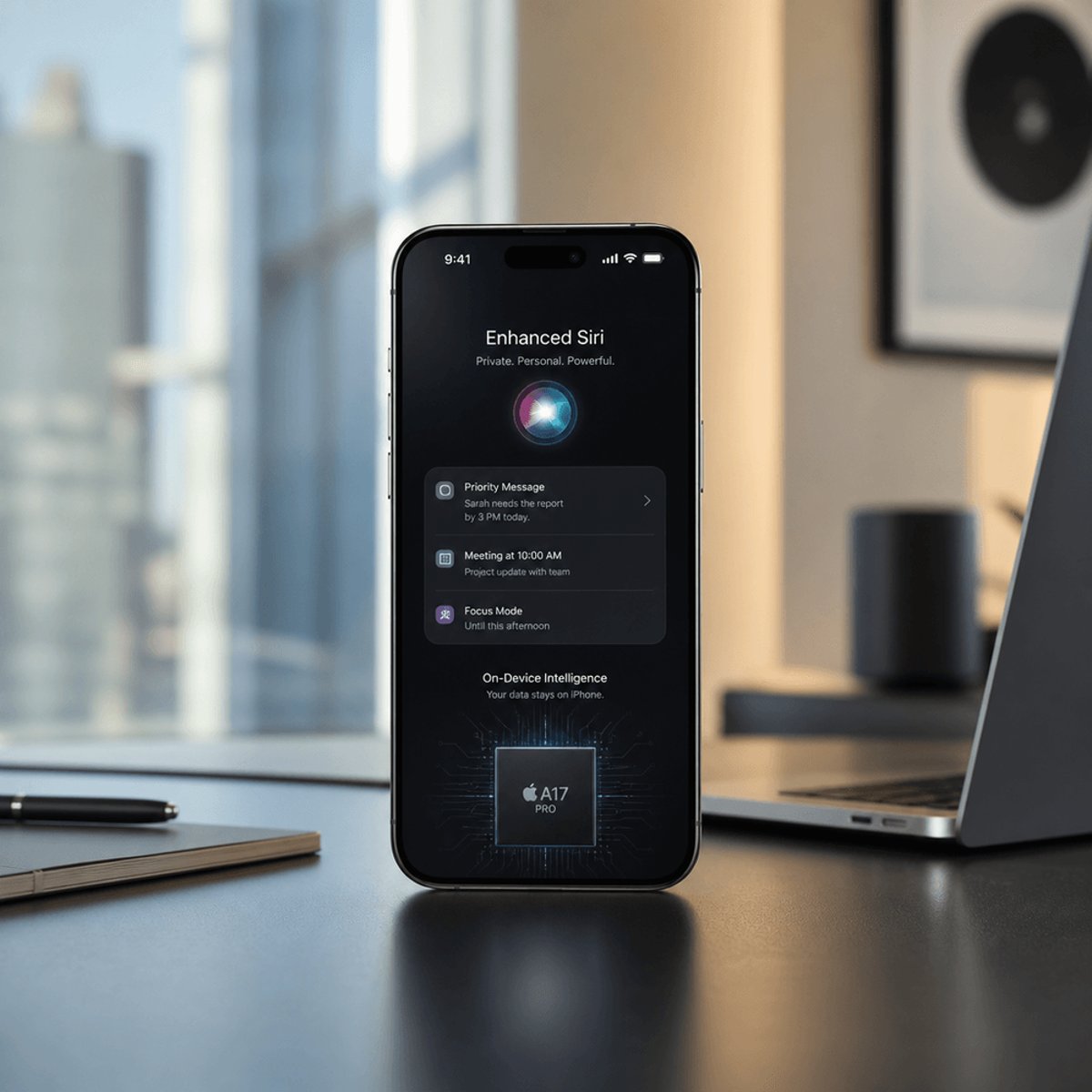
The Siri overhaul alone demonstrates why moving slowly mattered. Rather than bolting ChatGPT-style capabilities onto its aging voice assistant like a Frankenstein experiment, Apple rebuilt Siri's foundation to understand context across apps, maintain conversation threads, and execute complex multi-step tasks without sending your entire life to the cloud. It's the kind of deep integration that requires years of work, not months of frantic catch-up.
"Apple's approach reflects a maturity the industry desperately needs," notes an analysis of the company's AI positioning. While competitors treated AI as a race to ship features, Apple treated it as a product design challenge. The difference shows.
Consider the privacy angle. Google's Gemini and Microsoft's Copilot process queries in the cloud, raising questions about data retention, training practices, and corporate surveillance that privacy advocates have hammered for months. Apple's on-device processing sidesteps those concerns entirely - your data never leaves your iPhone. That's not just good privacy theater; it's a genuine competitive advantage in an era when AI trust is eroding.
The financial calculus looks even smarter. Microsoft and Google bet big on AI subscriptions - Copilot Pro at $20 monthly, Gemini Advanced at similar pricing. They're gambling that consumers will pay ongoing fees for AI capabilities. Apple doesn't need that gamble. Its AI features drive hardware upgrades. Want the best Siri experience? You'll need the latest iPhone with Apple's newest neural engine. It's the classic Apple playbook: software sells hardware, and hardware delivers the margin.
Wall Street is starting to notice. While AI-focused startups face increasing scrutiny over burn rates and path to profitability, Apple's approach looks remarkably capital-efficient. The company isn't building massive data centers for AI training or subsidizing compute costs for free tiers. It's leveraging the billion-plus devices already in customer pockets.
The iPhone maker also avoided the content licensing nightmare plaguing competitors. OpenAI faces lawsuits from publishers and creators over training data. Google negotiated expensive deals with news organizations. Apple's device-focused AI doesn't need to scrape the internet - it works with data you already have, in apps you already use.
Critics spent 2024 and 2025 writing Apple's AI obituary. The company was too slow, too cautious, too privacy-obsessed to compete in the generative AI era. Google would dominate mobile AI. Microsoft would own productivity. Apple would become the IBM of smartphones - respectable legacy player losing relevance.
Those takes aged poorly. Apple's stock has held remarkably steady while AI-hyped competitors faced volatility. Consumer trust in AI features remains higher for Apple than rivals, according to industry surveys. And developers are showing early enthusiasm for Apple's AI frameworks, which promise easier integration than competitors' cloud-dependent alternatives.
The WWDC 2026 announcements don't make Apple the AI leader - that's not the goal. They make Apple the AI company that non-technical humans might actually trust and use. In a market saturated with chatbots that hallucinate, image generators that steal art, and AI assistants that feel more creepy than helpful, boring and reliable might be exactly what wins.
Apple's slow-and-steady AI strategy isn't just smart - it might be the only sustainable path forward. While competitors burned cash and credibility racing to ship generative AI features, Apple did the boring work of building practical tools that integrate seamlessly into devices people already own and trust. The approach won't generate breathless headlines about artificial general intelligence or prompt think pieces about sentient machines. But it might actually make money, respect privacy, and deliver value without the existential drama. In an industry that's spent two years confusing motion with progress, that's starting to look revolutionary.