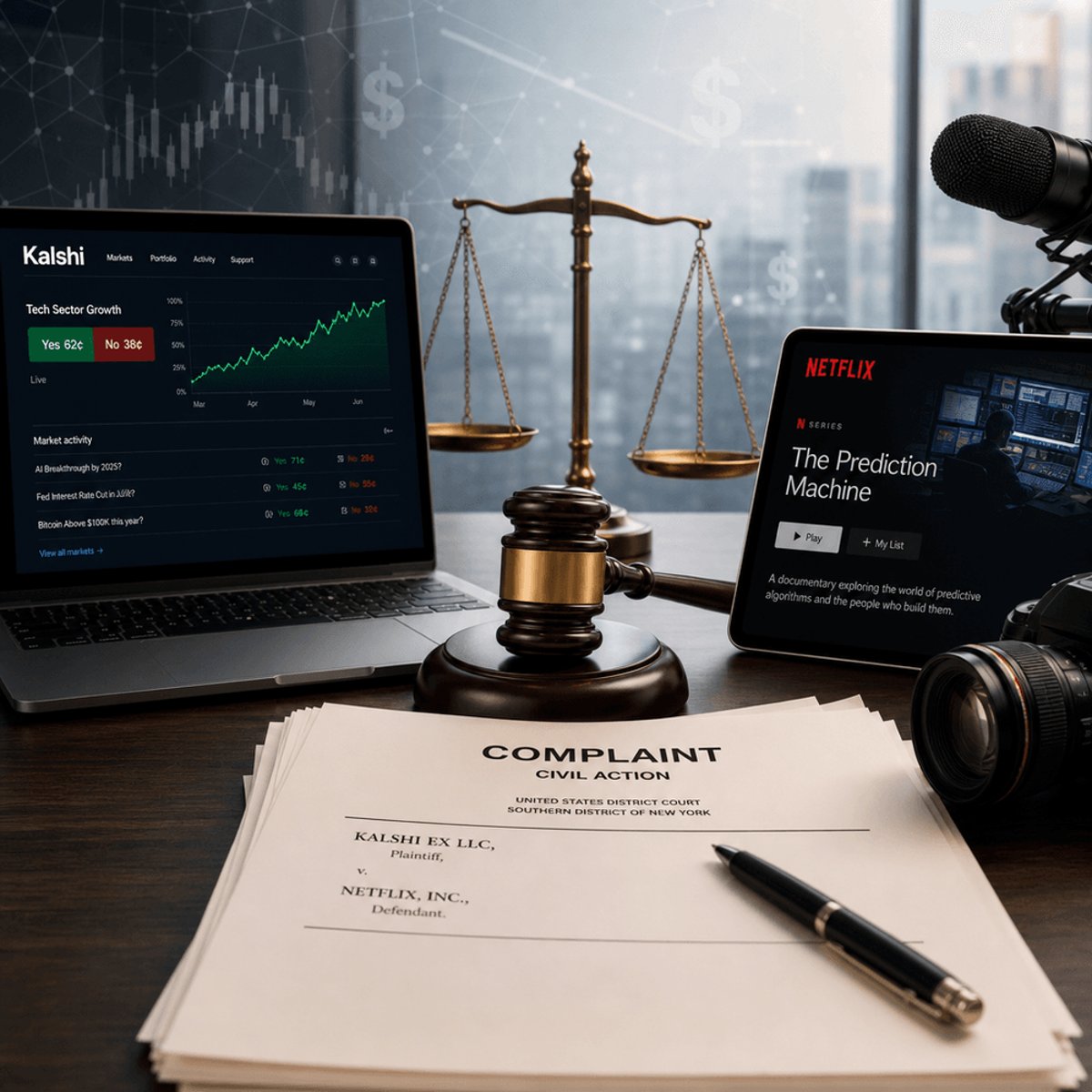
Prediction market startup Kalshi just fired off a legal demand to Netflix, insisting the streaming giant pull down the trailer for its upcoming documentary 'Prediction Games.' The company claims the promotional material is defamatory and contains fabricated documents alongside false statements - setting up what could become a high-stakes legal showdown between a scrappy fintech upstart and Hollywood's streaming behemoth. The move comes as prediction markets face mounting regulatory scrutiny and public attention around election betting and financial derivatives.
Kalshi, the regulated prediction market platform that's been battling regulators and competitors alike, isn't pulling punches with Netflix. The startup fired off a legal letter demanding the streaming service yank the trailer for 'Prediction Games,' a documentary that apparently doesn't paint the company in a flattering light.
According to TechCrunch, Kalshi's legal team claims the promotional material crosses the line from critical journalism into outright defamation. The company alleges the trailer features fabricated documents and misleading statements - serious accusations that could expose Netflix to legal liability if proven true.
The timing couldn't be more fraught for Kalshi. The New York-based startup has spent the past few years fighting to legitimize prediction markets in the U.S., scoring a major victory when it won the right to offer election betting markets after a protracted legal battle with the Commodity Futures Trading Commission. That win put Kalshi on the map, but also made it a lightning rod for criticism from those who view betting on political outcomes as ethically dubious.
Prediction markets operate in a regulatory gray zone that makes them catnip for documentary filmmakers. These platforms allow users to bet real money on everything from election outcomes to economic indicators, effectively creating liquid markets for forecasting future events. Kalshi positions itself as the regulated alternative to offshore competitors, having secured CFTC approval to operate as a designated contract market.
But that legitimacy comes with scrutiny. Netflix's documentary appears to be taking a critical look at the industry, and Kalshi clearly believes the trailer misrepresents the company's operations or practices. The claim of fabricated documents is particularly inflammatory - if Netflix actually created fake paperwork to make Kalshi look bad, that would be a massive editorial failure for the streaming giant.
Netflix hasn't publicly responded to the takedown demand yet. The company typically doesn't comment on pre-release content controversies, preferring to let its legal team handle disputes behind closed doors. But this isn't the first time a Netflix documentary has drawn pre-release fire from its subjects. The streaming service has faced similar pushback over true crime documentaries and corporate exposés, though claims of fabricated evidence are relatively rare.
For Kalshi, the stakes extend beyond just this one documentary. The company has raised significant venture capital and is trying to build prediction markets into a mainstream financial product. Negative publicity, especially if based on misleading information, could spook potential users and partners at a critical growth phase. The startup's regulatory victories mean nothing if public perception turns sharply negative.
The legal threat also raises questions about what exactly the trailer contains. Without seeing the specific documents Kalshi claims are fabricated, it's impossible to judge the merit of their allegations. Are we talking about completely invented paperwork, or is this a dispute over context and framing? The difference matters enormously from both a legal and ethical standpoint.
Prediction markets have exploded in visibility over the past election cycle, with platforms like Kalshi, Polymarket, and PredictIt drawing mainstream attention. That scrutiny cuts both ways - while it brings users and legitimacy, it also invites investigative journalism and documentary filmmakers looking to explore the intersection of gambling, politics, and finance.
What happens next likely depends on Netflix's internal review of the trailer and the strength of Kalshi's legal claims. If the streaming service believes its documentary is on solid ground, it may ignore the demand and prepare for potential litigation. If there's any merit to Kalshi's allegations about fabricated materials, Netflix might quietly edit the trailer or delay the documentary's release.
This legal skirmish between Kalshi and Netflix sets up a fascinating test case for how startups navigate critical media coverage in the streaming era. If Kalshi's allegations hold water, it could prompt Netflix to implement stricter fact-checking for documentary content. If the claims fall flat, it might embolden other documentarians to tackle controversial fintech startups without fear of legal blowback. Either way, 'Prediction Games' just became a lot more interesting - and Kalshi's attempt to suppress the trailer might end up drawing more attention to the documentary than the original release ever would have. For an industry built on forecasting the future, neither company seems to have predicted this particular outcome.