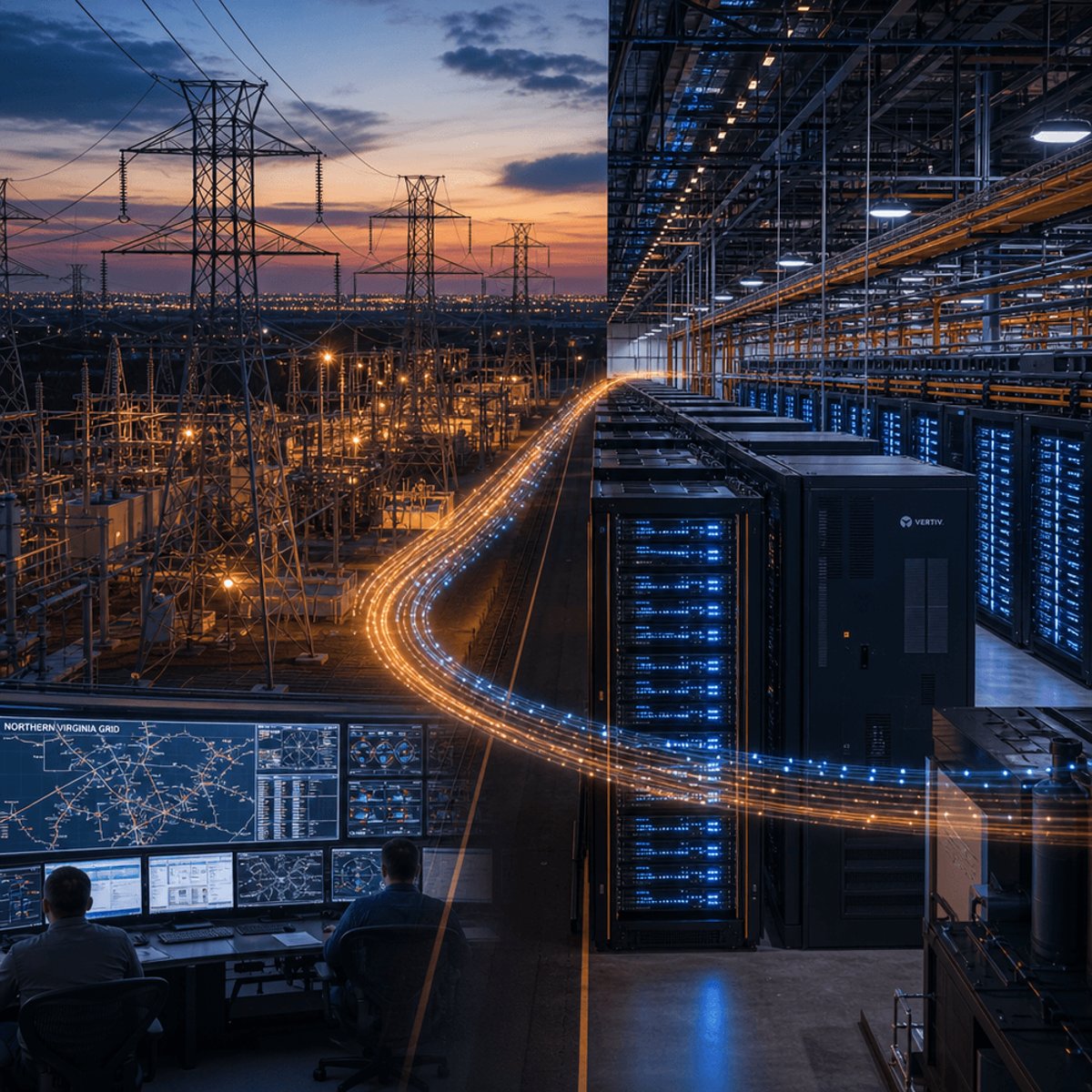
A single downed power line in Northern Virginia just exposed a critical weakness in the backbone of AI infrastructure. The incident revealed how poorly data centers—the engine rooms powering everything from ChatGPT to cloud computing—respond when the electrical grid hiccups. As AI's appetite for electricity skyrockets, the close call is forcing a reckoning about whether the infrastructure supporting the AI boom can handle the strain, especially in data center alley where Amazon, Microsoft, and Google operate massive facilities.
The incident in Northern Virginia wasn't a disaster, but it was a warning shot. When a single power line failed in one of the world's most critical data center corridors, it revealed just how fragile the infrastructure supporting artificial intelligence really is.
Northern Virginia isn't just another tech hub. It's the epicenter of global data center operations, home to roughly 70% of the world's internet traffic at any given moment. Amazon Web Services, Microsoft, Google, and Meta all operate massive facilities in the region, running everything from cloud storage to the compute-intensive training runs that power large language models.
But the AI boom is pushing these facilities to their limits. Data centers supporting AI workloads consume anywhere from 3 to 5 times more electricity than traditional cloud infrastructure. Training a single large language model can require as much power as several thousand homes use in a year. When you multiply that across the dozens of AI models being developed simultaneously, the math gets scary fast.
The power line incident exposed a fundamental mismatch. Data centers have backup generators and uninterruptible power supplies, sure. But those systems were designed for a different era, when brief outages meant buffering videos, not crashing billion-dollar AI training runs that take weeks to complete. Modern AI infrastructure needs what engineers call "five nines" reliability—99.999% uptime—but the electrical grid feeding these facilities wasn't built to that standard.
Grid operators are sounding alarms too. The rapid expansion of AI data centers is happening faster than utilities can upgrade transmission infrastructure. In some cases, data centers are requesting connections that would consume more power than entire towns. The approval and construction process for new high-voltage transmission lines can take years, while AI companies are breaking ground on new facilities in months.
The Northern Virginia close call is prompting serious conversations about solutions. Some experts advocate for on-site power generation using natural gas turbines or even small modular nuclear reactors. Others push for better coordination between data center operators and grid managers, with advanced warning systems that could gracefully reduce AI workloads during grid stress events.
There's also growing interest in geographic diversification. Concentrating so much critical AI infrastructure in a single region creates systemic risk. If Northern Virginia's grid experienced a serious, prolonged disruption, it could cascade across global AI services, affecting everything from customer service chatbots to medical diagnosis tools.
The economics are staggering too. A major AI training run can cost tens of millions of dollars in compute time. If a grid disruption corrupts that work halfway through, companies don't just lose power—they lose weeks of progress and millions in sunk costs. That's creating pressure for data center operators to invest heavily in resilience, even if it means higher operating costs.
Some facilities are exploring microgrids that can island themselves from the broader electrical grid during disruptions. Others are deploying massive battery arrays that can bridge longer outages than traditional UPS systems. A few are even experimenting with AI-powered load balancing that can shift workloads to other regions within milliseconds of detecting grid instability.
But these solutions aren't cheap, and they're not universal. Smaller AI companies relying on cloud providers may have limited visibility into the resilience of the infrastructure running their models. That opacity is becoming a competitive issue as enterprises demand SLAs that guarantee AI availability even during grid events.
The regulatory landscape is starting to shift too. Some states are considering requirements that critical data center infrastructure maintain higher levels of backup power. Others are fast-tracking permits for on-site generation, recognizing that AI facilities represent economic engines too valuable to risk on aging grid infrastructure.
What makes this moment particularly urgent is timing. AI adoption is accelerating just as climate change is making extreme weather—and the grid disruptions that come with it—more common. The same summer heat waves that spike AI cooling costs also stress electrical grids. It's a compounding risk that the industry is only beginning to grapple with.
The fallen power line in Northern Virginia is more than an infrastructure hiccup—it's a stress test that AI passed by luck rather than design. As the industry races to build bigger models and deploy AI everywhere, the electrical grid supporting that ambition is showing cracks. The fix won't be cheap or fast, but the cost of inaction is clear. Every additional day of delay means more AI infrastructure built on a foundation that one falling wire proved isn't quite ready for the weight it's being asked to carry. The question isn't whether the industry will invest in resilience, but whether it'll happen before the next incident turns a close call into an actual crisis.