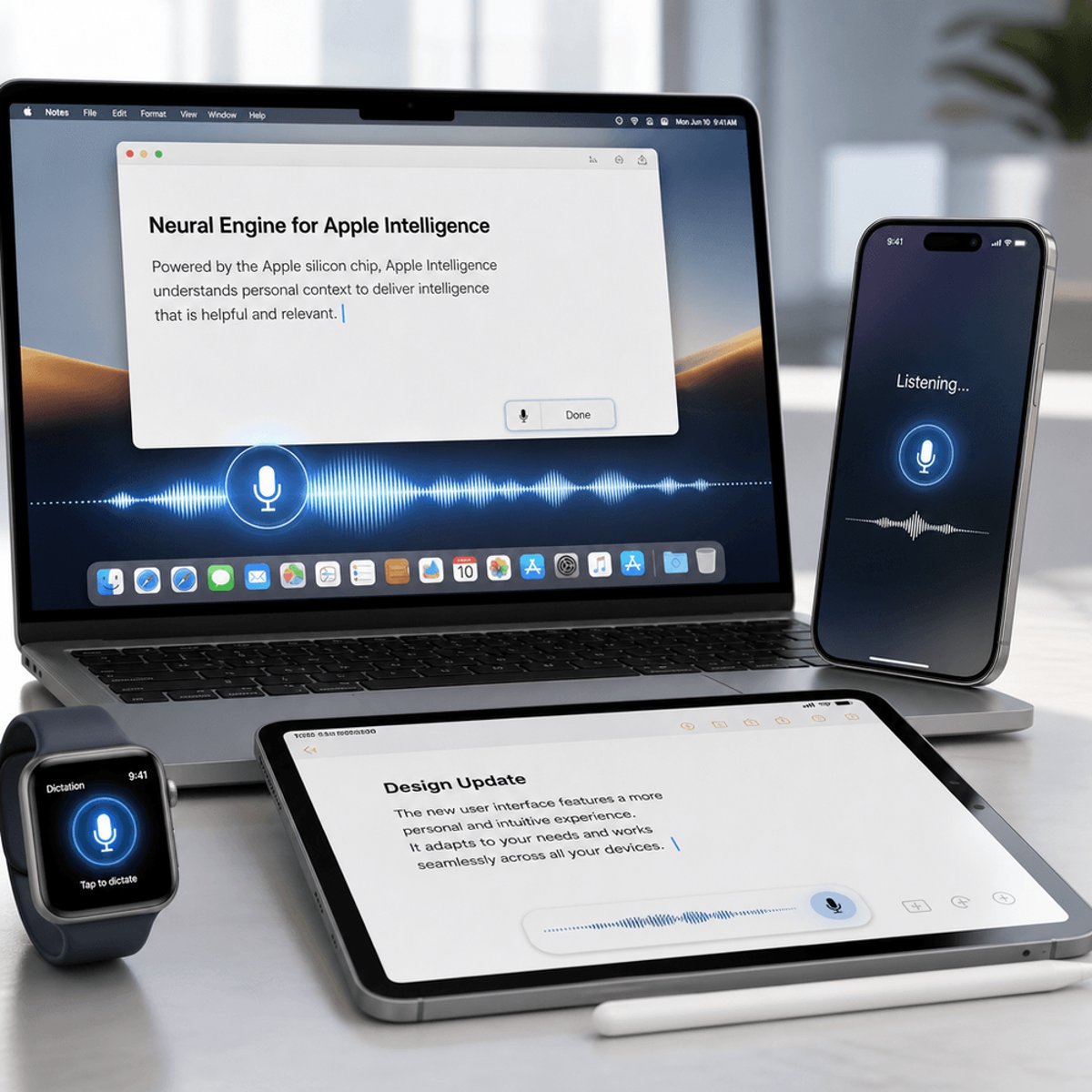
Apple just fired a shot across the bow of AI voice input startups. At WWDC 2026, the company unveiled a systemwide dictation feature that works across every app on Mac and iOS, directly competing with tools like Wispr Flow that have carved out a niche in AI-powered voice input. The move signals Apple's intent to own the voice interface layer as AI becomes the primary way users interact with devices.
Apple isn't just adding another feature - it's potentially closing the door on an entire category of AI startups. The company's new systemwide dictation capability, announced at WWDC 2026, works everywhere on Mac and iOS without requiring developers to build in support. You can dictate into any text field, any app, any time.
The timing is pointed. Wispr Flow and similar AI voice input tools have gained traction over the past year by solving exactly this problem - offering fast, accurate dictation that works systemwide. But those are third-party solutions requiring separate downloads and sometimes subscription fees. Apple's version is baked into the OS.
According to Ivan Mehta's report for TechCrunch, the dictation system leverages Apple Intelligence, the company's on-device AI framework announced last year. That means processing happens locally on your iPhone or Mac rather than pinging cloud servers, a privacy advantage Apple has hammered repeatedly as it rolls out AI features.
The competitive implications are stark. Wispr Flow raised venture funding by proving demand exists for seamless voice input across applications. Now Apple's offering the same functionality for free to anyone running recent hardware. It's a familiar playbook - Apple watches third-party developers validate a feature, then integrates a polished version at the system level.
What makes this different from Apple's existing dictation button? The new system is truly universal and always accessible. Previous dictation tools in macOS and iOS required app-specific implementation and didn't work consistently across the interface. This version apparently works anywhere text input is possible, from Messages to Google Docs to Slack.
The announcement comes as voice interfaces gain momentum in the AI era. OpenAI made waves with ChatGPT's voice mode, while Google has pushed voice commands deeper into Android. Apple's been playing catch-up on AI features generally, but systemwide dictation could be an area where its control over hardware and software creates an advantage.
For developers who built businesses around voice input tools, the news is concerning. Apple's platforms have a history of Sherlocking - the industry term for when Apple integrates functionality that kills third-party apps. Flashlight apps, weather widgets, and password managers have all faced this fate.
But there might be room for specialized players to survive. Enterprise dictation tools with medical or legal vocabularies, or services that offer cross-platform support including Windows and Android, could maintain niches. Consumer-focused tools that only work on Apple devices face tougher odds.
Apple didn't specify which devices will support the new dictation or when it ships. The Apple Intelligence framework currently requires recent chips - M1 or later on Mac, A17 Pro or later on iPhone. That limitation could give third-party tools breathing room on older devices, though Apple's installed base skews toward recent hardware.
The feature also raises questions about accuracy and language support. Apple's previous dictation has lagged behind Google's speech recognition in some benchmarks, though the company has closed the gap. Whether the new system reaches the accuracy levels that made Wispr Flow popular with power users remains to be seen.
Industry observers note this fits Apple's broader AI strategy - cherry-picking the most useful AI features and integrating them deeply rather than racing to ship experimental capabilities. Systemwide dictation is practical and solves a real problem, versus flashier but less useful AI tricks.
Apple's systemwide dictation marks another example of the company leveraging platform control to integrate features that startups validated first. For users, it means seamless voice input without downloading third-party tools. For AI voice startups like Wispr Flow, it's a classic platform risk materializing - when your feature becomes compelling enough that the platform owner notices. The question now is whether Apple's execution matches the ambition, and how quickly the feature rolls out across the installed base. If the accuracy and reliability deliver, the market for consumer dictation tools on Apple devices might have just evaporated.