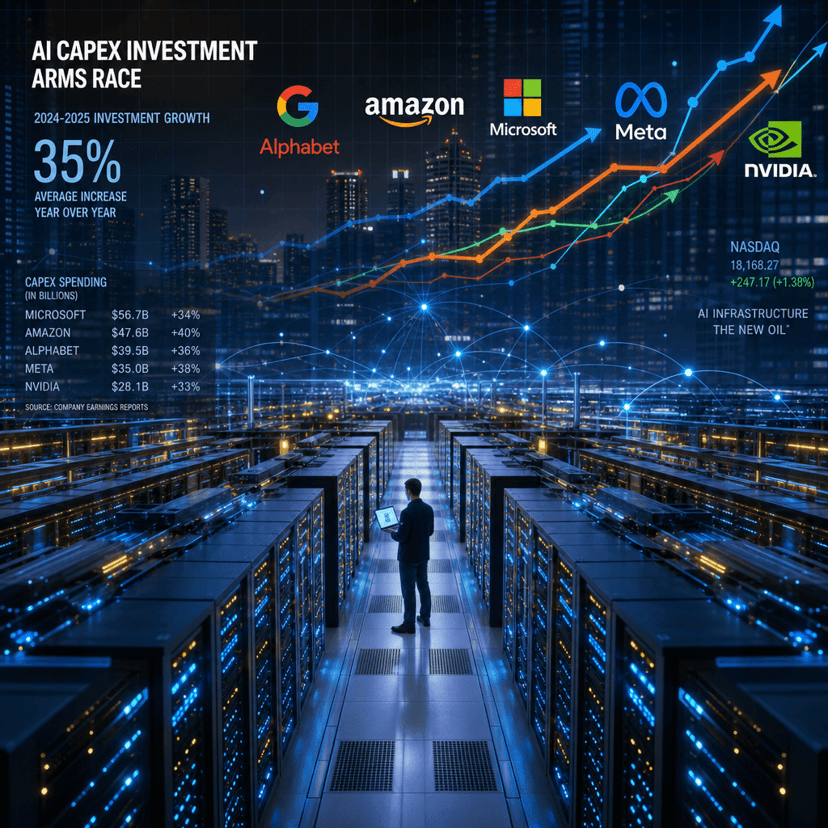
NVIDIA just landed one of the biggest deals in tech history. The chipmaker signed a $500-billion-plus partnership with South Korea's SK Group to build massive AI infrastructure covering everything from data center construction to next-generation memory supply. The letters of intent formalize what could reshape the global AI compute landscape as demand for processing power continues to explode across industries.
NVIDIA and South Korea's SK Group just announced what might be the tech industry's biggest infrastructure bet yet - a sprawling $500-billion-plus partnership that touches nearly every layer of the AI stack. The two companies signed letters of intent that formalize plans spanning AI factory construction, next-generation memory development, and comprehensive compute infrastructure buildout.
The sheer scale is staggering. At over half a trillion dollars, this partnership dwarfs most tech deals in recent memory and signals just how frantic the race for AI compute capacity has become. NVIDIA has been riding an unprecedented wave of demand for its AI chips, with data centers scrambling to add GPU capacity as fast as suppliers can deliver. Now it's locking in supply chain partnerships that extend far beyond chip sales into the physical infrastructure that powers AI.
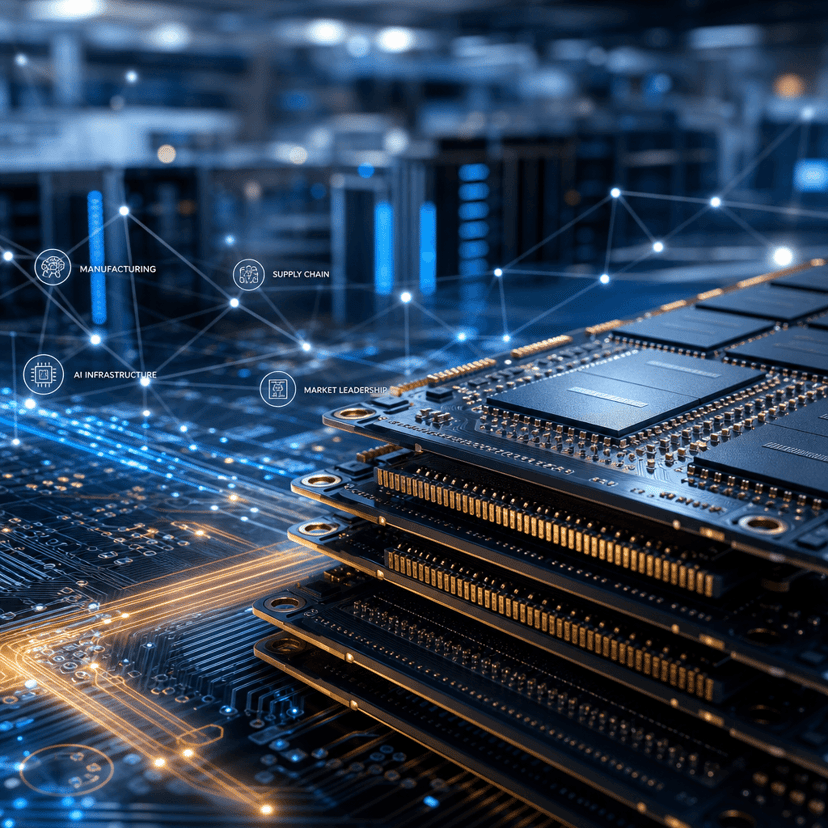
SK Group brings serious semiconductor muscle to the table. The South Korean conglomerate's SK hynix subsidiary is already one of the world's leading memory chip manufacturers, and it's been working closely with NVIDIA on high-bandwidth memory (HBM) chips that are critical for AI training workloads. This expanded partnership appears to deepen that collaboration while adding infrastructure development into the mix.
The AI factory component is particularly telling. These aren't just data centers - they're purpose-built facilities optimized for AI training and inference at massive scale. As companies race to build and deploy larger language models and other AI systems, the bottleneck increasingly isn't just chip availability but the entire infrastructure stack including power, cooling, networking, and specialized facilities designed for AI workloads.
Memory has emerged as one of the critical constraints in AI development. Training large models requires moving massive amounts of data between processors and memory, making high-bandwidth memory architectures essential. SK hynix has been at the forefront of HBM development, and this partnership likely signals expanded production capacity and potentially next-generation memory technologies tailored specifically for AI applications.
The timing makes sense given where the market is heading. Global spending on AI infrastructure is projected to reach hundreds of billions annually as enterprises, cloud providers, and AI-native companies build out compute capacity. NVIDIA CEO Jensen Huang has repeatedly talked about the shift to "AI factories" as a fundamental transformation in computing infrastructure, comparable to the rise of cloud data centers over the past decade.
For SK Group, this represents a massive strategic bet on AI infrastructure becoming a dominant theme in tech spending for years to come. The conglomerate is committing enormous capital to ensure it's positioned across multiple layers of the AI stack - from memory chips to complete facilities. It's also a hedge against the cyclical nature of the semiconductor business, diversifying into infrastructure and services.
The letters of intent suggest this is still being formalized, but at this scale, the partnership has likely been in negotiation for months. Both companies have strong incentives to move quickly - NVIDIA needs to secure supply chain capacity to meet ballooning demand, while SK Group wants to lock in its position as a critical AI infrastructure partner before competitors can establish similar relationships.
This deal also reflects the increasingly vertical nature of AI infrastructure. Rather than simply selling chips into a commoditized market, NVIDIA is building deep partnerships that span from silicon to systems to facilities. It's a strategic shift that gives the company more control over the entire stack while creating stickier, longer-term revenue streams beyond individual chip sales.
The global implications are significant too. South Korea has been pushing to establish itself as a critical node in AI infrastructure, competing with the U.S. and China for dominance in next-generation computing. This partnership positions SK Group and the broader Korean tech ecosystem as essential players in the AI buildout, with potential ripple effects for regional investment and industrial policy.
The NVIDIA-SK Group partnership represents more than just a massive capital commitment - it's a signal about where the AI industry is heading. As compute demand continues to outpace supply, we're seeing vertical integration across the entire stack from chips to facilities. For NVIDIA, this secures critical supply chain capacity and infrastructure partnerships that extend its competitive moat beyond chip design. For SK Group, it's a transformational bet on AI infrastructure becoming one of the defining investment themes of the next decade. Watch for other chipmakers and cloud providers to announce similar mega-partnerships as the race for AI compute capacity intensifies.