South Korea just turbocharged its AI infrastructure ambitions. NAVER, NVIDIA, and Brookfield announced they're more than tripling Korea's sovereign AI factory deployment to 200 megawatts - up from the 55MW buildout revealed just last month. The move signals Asia's largest tech players are racing to build AI compute capacity outside the U.S. hyperscaler ecosystem, with NAVER targeting a massive 1-gigawatt deployment long-term.
NAVER isn't waiting around. Less than a month after announcing a 55-megawatt AI factory deployment with NVIDIA, Korea's dominant internet company just revealed it's ramping that up to 200 megawatts - with plans to hit 1 gigawatt down the line. The expansion, announced today in partnership with Brookfield, represents one of the most aggressive sovereign AI infrastructure plays outside the United States.
The numbers tell the story of Asia's AI infrastructure race heating up. Going from 55MW to 200MW in weeks suggests NAVER saw immediate demand that blew past initial projections. For context, 200 megawatts of AI compute represents enough power to run tens of thousands of NVIDIA's latest GPU accelerators - the kind of capacity needed to train frontier AI models and serve millions of inference requests.
What makes this deal particularly interesting is Brookfield's involvement. The Canadian asset manager brings serious infrastructure finance expertise and has been quietly building a portfolio of AI data center investments globally. Their backing signals institutional investors see sovereign AI infrastructure as a major growth bet, especially in markets like Korea where tech giants want compute independence from U.S. cloud providers.
According to NVIDIA's announcement, the expanded deployment will use NVIDIA's DSX AI factory platform - the same architecture powering AI supercomputing clusters worldwide. The DSX platform integrates NVIDIA GPUs with networking, software, and orchestration tools designed specifically for training and deploying large language models and other AI workloads.
NAVER dominates Korea's internet landscape with its search engine, messaging app LINE, and cloud services. But the company's been racing to catch up in AI after watching U.S. tech giants leap ahead with models like ChatGPT. Building massive in-house compute gives NAVER the infrastructure to develop Korean-language AI models without relying on Amazon, Microsoft, or Google's clouds - a strategic priority as AI becomes core to everything from search to e-commerce.
The timing aligns with a broader trend of sovereign AI investments across Asia. Japan's announced initiatives to build domestic AI compute, while Singapore's positioning itself as a regional AI hub. Countries are realizing that AI infrastructure is becoming as strategic as semiconductor manufacturing or energy grids - and they don't want to be dependent on foreign cloud providers for their AI future.
Brookfield's infrastructure finance model could prove crucial for scaling these deployments. AI data centers require enormous upfront capital - hundreds of millions to billions of dollars for land, power infrastructure, cooling systems, and GPU hardware. Traditional project finance structures haven't kept pace with AI's breakneck expansion, creating opportunities for institutional investors willing to back long-term infrastructure plays.
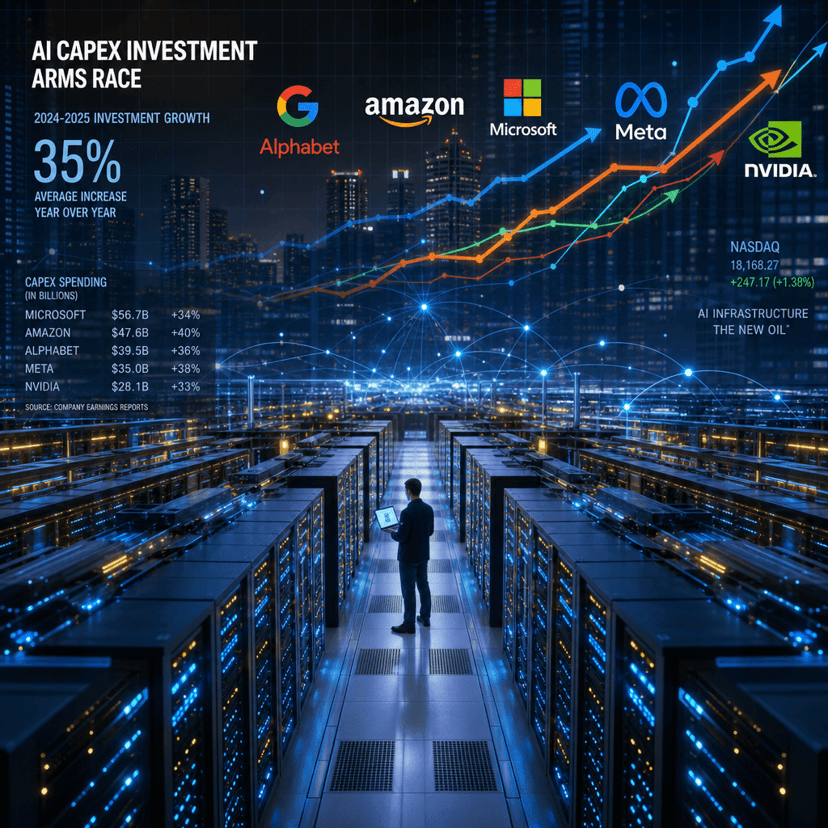
NVIDIA benefits from the arrangement by securing a major Asian anchor customer for its data center platforms. While the company doesn't typically disclose deal values, a 200MW deployment likely represents GPU orders worth hundreds of millions to over a billion dollars depending on configuration. And if NAVER hits its 1GW target, that's one of the largest single-customer AI infrastructure commitments NVIDIA's secured outside U.S. hyperscalers.
The gigawatt ambition is particularly striking. For comparison, some of the largest U.S. data center campuses run in the 100-300MW range. A 1GW AI factory would rank among the world's largest compute facilities - assuming NAVER can secure the power, real estate, and equipment to build it. Korea's aggressive renewable energy buildout may help, but powering AI at this scale remains one of the industry's biggest infrastructure challenges.
What remains unclear is the timeline for reaching 200MW and the path to 1GW. The announcement describes these as "planned investments" and "proposed expansion," suggesting some details are still being finalized. Power grid connections, permitting, and GPU supply chains all represent potential bottlenecks that could stretch deployment schedules.
Still, the speed of the expansion - tripling capacity within weeks of the initial announcement - shows how quickly AI infrastructure plans are evolving. Companies are betting big that demand for AI compute will keep growing exponentially, making today's massive deployments look modest in a year or two.
Korea's AI infrastructure sprint reflects a global shift in how countries think about technological sovereignty. NAVER's partnership with NVIDIA and Brookfield shows that building world-class AI compute no longer requires being a U.S. hyperscaler - it requires capital, partnerships, and the conviction that AI infrastructure will define competitive advantage for decades. As more nations pursue similar strategies, expect the AI infrastructure arms race to accelerate beyond anything we've seen in traditional cloud buildouts. The question isn't whether other Asian tech giants will follow NAVER's playbook, but how quickly they can mobilize similar capital and partnerships to catch up.