Applied Computing just landed $20 million in Series A funding to tackle one of AI's least sexy but most lucrative frontiers: oil and gas plants. The startup is building a foundation model designed to optimize entire petrochemical facilities, betting that vertical-specific AI will outperform general-purpose tools in industrial settings. It's a sharp contrast to the consumer AI feeding frenzy, and it signals where enterprise investors think the real money lives.
Applied Computing is making a contrarian bet. While most AI startups chase chatbots and code assistants, this team is diving deep into the industrial guts of petrochemical plants. The $20 million Series A they just closed isn't funding another wrapper around OpenAI's API. It's bankrolling a foundation model trained on the messy, complex reality of oil and gas operations.
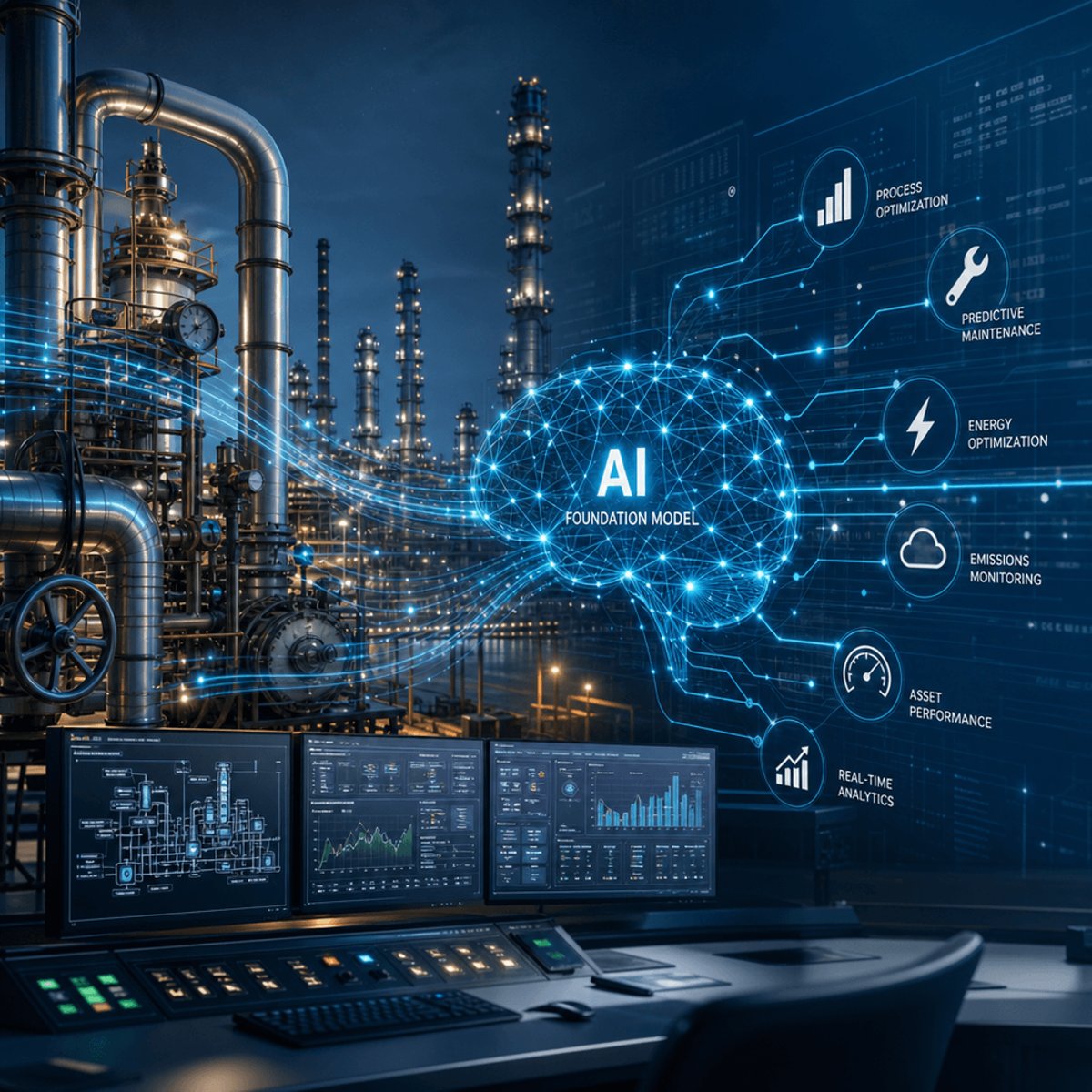
The pitch is straightforward but ambitious: give operators a single AI model that understands an entire plant, not just isolated equipment or processes. Current industrial AI tools tend to be narrow - predicting pump failures here, optimizing throughput there. Applied Computing wants to connect those dots across drilling, refining, distribution, and everything in between. Think of it as going from point solutions to a platform play, except the platform is trained on decades of sensor data, maintenance logs, and operational know-how.
Timing matters here. Energy companies are sitting on mountains of data they've barely tapped. Every valve, compressor, and heat exchanger generates streams of telemetry, but translating that into actionable intelligence has been a persistent challenge. Generic AI models trained on internet text don't know the difference between a distillation column and a distribution center. Applied Computing is betting that domain expertise baked into the model architecture will beat general-purpose tools every time.
The funding round, reported by TechCrunch, didn't disclose lead investors but the $20 million figure puts it squarely in the growth stage for enterprise AI startups. Series A rounds at this size typically signal strong early customer traction or compelling pilot data. For a vertical as conservative as oil and gas, getting operators to commit resources to an AI experiment means the value proposition is resonating.
What makes foundation models attractive in industrial settings is their ability to transfer learning across similar but not identical environments. No two refineries are exactly alike, but they share common physics, equipment types, and operational patterns. A model trained on data from multiple facilities could theoretically generalize better than custom-built solutions for each site. That's the promise, anyway. The challenge is gathering enough high-quality training data and proving the model's recommendations actually improve outcomes in production environments.
Applied Computing isn't alone in chasing vertical AI opportunities. Healthcare, legal, and financial services have all seen startups pitch industry-specific models. But energy infrastructure represents a particularly compelling target - high capital intensity, razor-thin margins on efficiency gains, and regulatory pressure to reduce emissions all create buying urgency. If the model can shave even 1% off energy consumption or prevent a single major equipment failure, the ROI case basically writes itself.
The broader shift toward vertical foundation models reflects a maturation in enterprise AI thinking. After years of trying to force general-purpose tools into specialized workflows, buyers are demanding solutions that speak their language from day one. That's creating space for startups willing to get their hands dirty in unglamorous but lucrative industries. Oil and gas may not have the cachet of consumer social apps, but the contract sizes dwarf anything in B2C.
What Applied Computing has to prove now is that their model delivers measurable value in real-world deployments. Pilot programs are one thing. Rolling out across multi-billion-dollar facilities where downtime costs millions per hour is another entirely. The company will need to demonstrate not just accuracy but reliability, safety, and integration with existing control systems. That's a long road from Series A to widespread adoption, but the funding suggests investors believe the path is viable.
Competition will come from established industrial software players like Honeywell and Emerson, both of which have been layering AI capabilities into their process automation platforms. The startup advantage is focus and speed - no legacy product lines to protect, no enterprise sales cycles stretched across decades-old relationships. But the incumbents have customer trust and integration advantages that can't be dismissed.
The energy sector's willingness to embrace AI also depends on regulatory acceptance and workforce dynamics. Operators and engineers who've spent careers developing intuition about their plants won't hand over control to a black box model without serious validation. Applied Computing will need to position its AI as augmenting human expertise, not replacing it, at least in the early stages. That's as much a change management challenge as a technical one.
Applied Computing's $20 million bet on vertical AI for oil and gas is a clear signal that enterprise investors see more value in deep industry expertise than broad generalization. If they can prove a foundation model trained on petrochemical operations delivers measurable improvements in efficiency, safety, and uptime, it opens the door for similar plays across manufacturing, logistics, and other capital-intensive sectors. The real test isn't the technology - it's whether conservative industrial buyers will trust AI with decisions that affect millions of dollars in assets. That adoption curve will determine whether vertical foundation models become the next enterprise AI category or remain niche solutions for early adopters.