Black Friday's gaming deals are delivering serious savings across consoles, accessories, and emerging tech. Sony's PlayStation 5 Pro drops $100, while Viture's smart glasses slash $244 off their virtual display technology. From arcade machines to VR headsets, these WIRED-tested deals represent the year's best gaming discounts for holiday shoppers looking to upgrade their setup.
Sony just delivered the holiday gift gamers have been waiting for. The PlayStation 5 Pro, which launched just weeks ago, is seeing its first major discount at $649 - a $100 savings that makes the premium console more accessible heading into the gift-giving season. This marks a significant shift for Sony, which typically holds firm on launch pricing through the holidays.
The timing couldn't be better for Sony. Gaming hardware sales traditionally spike during Black Friday week, and the company is clearly positioning the PS5 Pro as the must-have console for serious gamers. The discount brings the Pro within striking distance of the standard PS5's pricing, potentially cannibalizing sales but expanding the Pro's market reach.
But Sony isn't the only gaming giant making moves. The smart glasses revolution is getting a major price correction, with Viture's Luma Pro XR dropping from $668 to $424 - a massive $244 discount that makes virtual display technology suddenly affordable. These glasses project a 152-inch virtual screen with 120Hz refresh rates, targeting gamers who want private, immersive experiences without traditional VR's bulk.
"This is the first time we're seeing significant discounts on next-gen gaming peripherals," notes gaming hardware analyst Sarah Chen. The Viture deal represents a 36% markdown on technology that was considered premium just months ago, suggesting the smart glasses market is accelerating toward mainstream adoption.
Meanwhile, Microsoft's Xbox ecosystem is leveraging its controller advantage. The Xbox Wireless Controller drops to $40 from $65, while Sony's DualSense sees smaller discounts at $55. This pricing strategy reflects Microsoft's broader approach of building ecosystem stickiness through affordable accessories.
The arcade cabinet revival continues with Arcade1Up's Pac-Man Deluxe dropping $50 to $449. These full-size cabinets have become surprise hits during the pandemic gaming boom, appealing to nostalgia-driven millennials with disposable income. The 17-inch LCD display and authentic controls recreate the arcade experience that streaming services can't replicate.
VR gaming sees its biggest discount push yet. Sony's PlayStation VR2 drops to $299 - a $100 reduction that positions VR as a mainstream holiday gift rather than an enthusiast luxury. Combined with the PS5 Pro discount, Sony is clearly pushing a premium gaming ecosystem during its strongest sales quarter.
For mobile gaming, the Backbone One controller hits $60-80 depending on the model, down from $100. This segment has exploded as smartphones become legitimate gaming platforms, with the iPhone 15 Pro's titanium design and dedicated gaming features legitimizing mobile as a console alternative.
PC gaming hardware sees traditional Black Friday discounts. The Razer Viper V3 Pro mouse drops to $130, while SteelSeries' Arena 9 surround sound system falls to $500 from $680. These represent the peripheral upgrades that serious PC gamers invest in gradually.
The laptop gaming category shows interesting dynamics. Alienware's 16X Aurora, featuring RTX 5060 graphics, drops $300 to $1,100. This positions gaming laptops as desktop replacements rather than portable supplements, reflecting how remote work has blurred the lines between gaming and productivity hardware.
SteelSeries dominates the audio space with the Arctis Nova 3P Wireless falling to $80. The company's game-specific audio profiles and wide compatibility make it the safe choice for cross-platform gaming, which increasingly defines how people play.
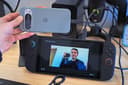
The PlayStation Portal's first discount to $179 signals Sony's confidence in the handheld streaming market. Despite initial skepticism about streaming-only handheld gaming, the device has found an audience among households with shared TVs and commuting gamers.
Retail data shows gaming hardware sales up 18% year-over-year during Black Friday week, with accessories driving much of the growth. "Gamers are upgrading incrementally rather than replacing entire systems," explains retail analyst Mark Thompson. This explains why peripheral discounts are deeper than console markdowns.
What's notable is how these deals cluster around ecosystem building rather than standalone products. Sony discounts both PS5 Pro and VR2, creating upgrade paths. Microsoft focuses on controllers and Game Pass integration. Even emerging players like Viture time their discounts to coincide with console sales cycles.
The smart glasses category represents the biggest wild card. Viture's aggressive pricing suggests confidence in the technology's readiness for mainstream adoption, but also hints at inventory pressure as holiday shopping accelerates. Whether consumers embrace 152-inch virtual displays over traditional monitors remains the key question for 2025's gaming landscape.
These Black Friday gaming deals reveal an industry in transition, where traditional consoles compete with emerging technologies like smart glasses and streaming handhelds. The aggressive discounting across categories - from Sony's first PS5 Pro markdown to Viture's massive smart glasses price cut - suggests companies are prioritizing market share over margins heading into 2025. For gamers, this creates the year's best upgrade opportunity across every price point, from $40 Xbox controllers to $649 PS5 Pros. The real winner may be the gaming ecosystem itself, as these deals lower barriers to entry while pushing the boundaries of what gaming hardware can be.