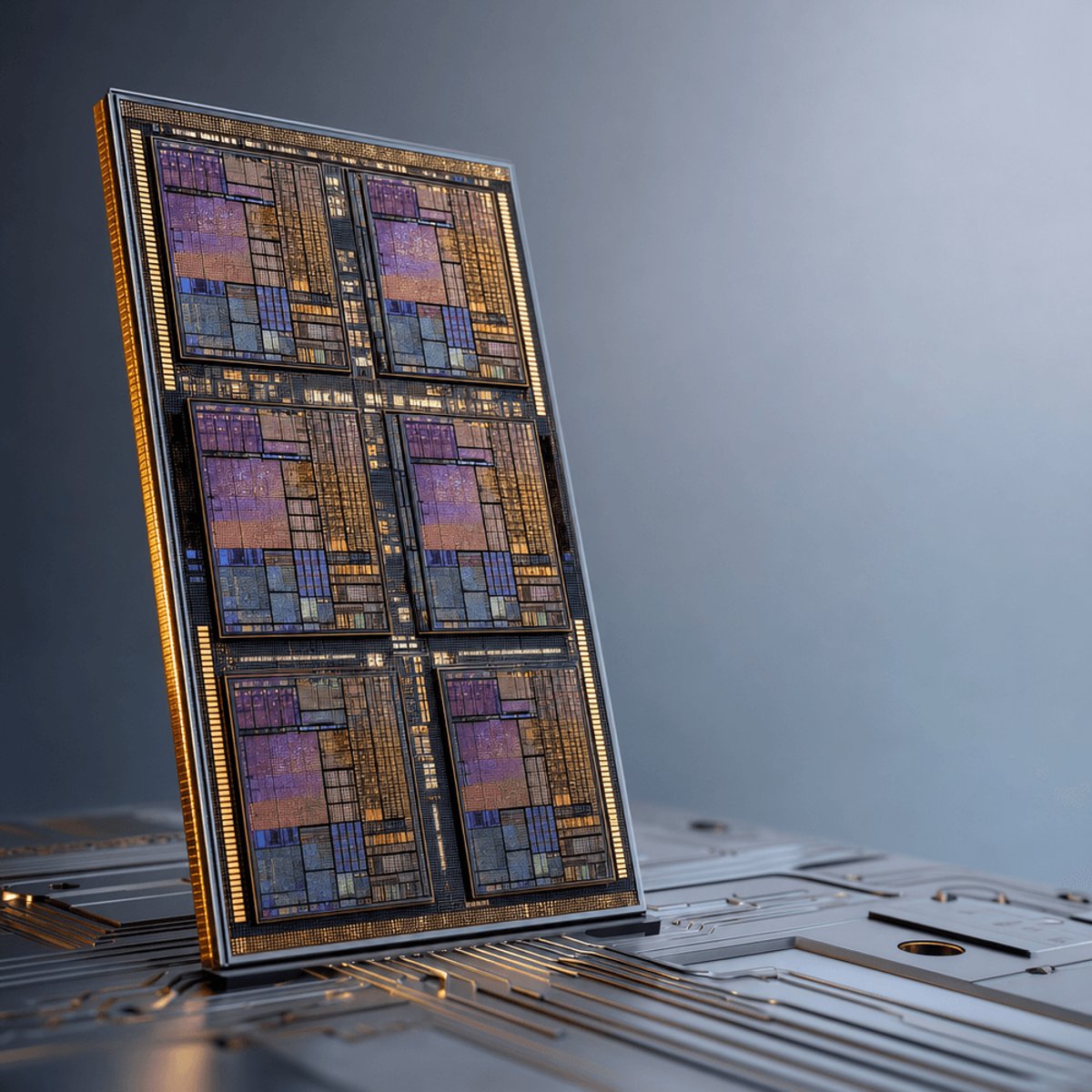
Nvidia just made its first serious play in the CPU market, and it's targeting the hottest segment in AI. The company began delivering its Vera CPU to Anthropic, OpenAI, SpaceXAI, and Oracle Cloud Infrastructure this week, marking a strategic expansion beyond its GPU dominance. Built specifically for AI agent workloads, Vera signals Nvidia's bet that autonomous AI systems need fundamentally different silicon than today's training-focused hardware.
Nvidia isn't waiting for competitors to own the AI agent infrastructure market. The chip giant began delivering its first Vera CPUs to the AI industry's most influential players this week, with Vice President of Hyperscale and High-Performance Computing Ian Buck personally dropping off units at Anthropic in San Francisco, OpenAI in Mission Bay, and SpaceXAI in Palo Alto on Friday. Oracle Cloud Infrastructure in Santa Clara received theirs Monday, according to Nvidia's announcement.
The white-glove treatment signals just how strategic this launch is. While Nvidia's dominated AI training with its H100 and upcoming Blackwell GPUs, the CPU market has remained firmly in Intel and AMD's territory. Vera changes that equation by targeting a workload those incumbents weren't optimizing for: AI agents that need to make rapid decisions, manage memory efficiently, and coordinate multiple tasks simultaneously.
The customer list tells you everything about where the AI market's headed. Anthropic's Claude and OpenAI's GPT models are already powering agent frameworks that autonomously browse the web, write code, and manage complex workflows. SpaceXAI, Elon Musk's latest AI venture, is racing to catch up. All three need infrastructure that can handle inference at scale with minimal latency, not just brute-force training throughput. That's where CPU architecture matters.
Nvidia's been telegraphing this move for months. During its GTC conference earlier this year, CEO Jensen Huang emphasized that agent workloads represent "a fundamentally different computing pattern" than training large language models. Agents spend more time reasoning, retrieving context, and executing tool calls than crunching massive matrix multiplications. Traditional server CPUs from Intel's Xeon lineup or AMD's EPYC weren't built with these patterns in mind.
Vera's architecture reportedly emphasizes memory bandwidth and low-latency interconnects over raw core count. That makes sense when your primary job is shuttling data between GPU accelerators, fetching information from vector databases, and managing the control flow of multi-step agent tasks. It's a different optimization target than your typical database or web server workload.
The Oracle delivery is equally telling. Cloud providers are scrambling to differentiate their AI infrastructure offerings, and Oracle's been aggressively courting AI startups with competitive pricing and custom configurations. Getting early access to Vera gives them a potential edge over AWS, Google Cloud, and Microsoft Azure in the emerging agent-as-a-service market.
This also represents a direct challenge to AMD's Instinct MI300A, which combined CPU and GPU cores on a single package specifically for AI workloads. Nvidia's now competing across both dimensions, potentially bundling Vera with its next-gen Blackwell GPUs to offer a complete, vertically integrated solution. That's a powerful pitch to enterprises that want a single vendor for their entire AI stack.
The timing couldn't be better for Nvidia. Enterprise adoption of AI agents is accelerating faster than most analysts predicted six months ago. Companies aren't just experimenting with chatbots anymore - they're deploying agents that handle customer service, write reports, manage cloud infrastructure, and even conduct code reviews. Those production workloads need reliable, efficient infrastructure, and they need it now.
But Nvidia faces real competition here. Intel's Gaudi processors are already deployed at scale for inference workloads, and the company's working on tighter CPU-accelerator integration. AMD's betting heavily on its ROCm software ecosystem to lure developers away from Nvidia's CUDA lock-in. Google's TPU infrastructure remains the backbone of its own AI services and is available to cloud customers.
What happens next depends on performance benchmarks that haven't been published yet. Can Vera actually deliver better price-performance for agent workloads than established alternatives? How well does it integrate with Nvidia's GPU lineup compared to using off-the-shelf Xeon or EPYC processors? And critically, will Nvidia's software ecosystem make Vera a must-have, or will developers stick with more familiar CPU architectures?
The hand-delivered units are likely pre-production samples for integration testing and benchmarking. Don't expect these chips to show up in cloud instance types next week. But the fact that Nvidia's prioritizing the companies building the most advanced AI agents shows where the company thinks the market's going. It's not enough to win on training anymore - the real money's in inference infrastructure that can run thousands of concurrent agents efficiently.
Nvidia's Vera CPU launch represents more than just a new product line - it's a strategic bet that AI infrastructure needs to be purpose-built for agents, not retrofitted from training hardware. By targeting the companies at the forefront of agent development and partnering with cloud providers like Oracle, Nvidia's positioning itself to own the full stack as enterprises move from experimental AI to production deployments. The question now is whether Intel and AMD can respond quickly enough, or if Nvidia's first-mover advantage in agent-optimized silicon will prove as durable as its GPU dominance. For AI labs and cloud providers, the arrival of Vera signals that the infrastructure wars are entering a new phase - one where inference efficiency and agent coordination matter as much as raw training power.