The race to AI-powered drug discovery just shifted gears. SandboxAQ, the Google spinout backed by Eric Schmidt, is integrating its specialized computational biology models directly into Anthropic's Claude platform. The move sidesteps the biggest bottleneck in AI drug discovery - not building better models, but getting them into the hands of researchers who don't have PhDs in computer science. While competitors like Chai Discovery and Isomorphic Labs focus on model performance, SandboxAQ is betting that accessibility matters more than marginal accuracy gains.
SandboxAQ just made a calculated bet that the future of AI drug discovery isn't about who has the best model - it's about who makes those models easiest to use. The company announced it's plugging its specialized computational biology AI directly into Anthropic's Claude platform, letting researchers interact with complex drug discovery simulations through simple conversational prompts.
The timing is deliberate. While venture-backed competitors like Chai Discovery and Google's Isomorphic Labs have been locked in an arms race to build more accurate protein folding and molecular prediction models, SandboxAQ identified a different bottleneck entirely. The real problem isn't model quality - it's that most biologists can't actually use these tools without hiring a team of machine learning engineers.
"We've watched pharma companies spend millions building internal AI teams just to query our models," a SandboxAQ spokesperson told TechCrunch. "That's backwards. The expertise should be in biology, not Python."
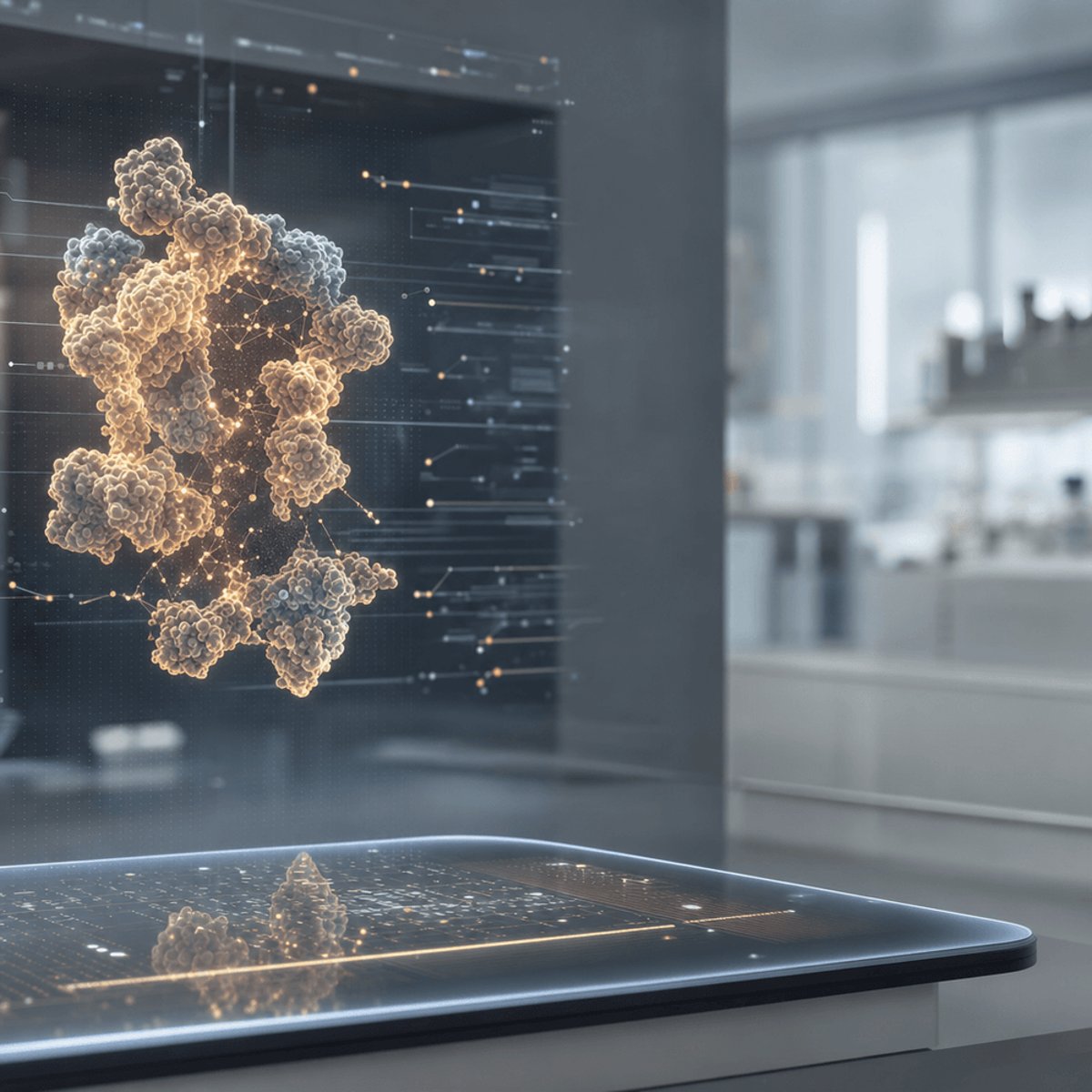
The integration works by embedding SandboxAQ's models as specialized tools within Claude's interface. A researcher can now type something like "show me how this compound interacts with the ACE2 receptor" and get back simulation results, molecular visualizations, and binding affinity predictions - all without touching a command line. It's the difference between needing to know how a car engine works versus just being able to drive.
SandboxAQ spun out of Google in 2022 with backing from Eric Schmidt and has raised over $500 million to date, according to Crunchbase. The company has focused on applying AI to simulation-heavy scientific problems, particularly in quantum chemistry and drug discovery. Its models specialize in predicting how molecules will behave in biological systems - crucial for identifying drug candidates before expensive lab work begins.
The competitive landscape is heating up fast. Chai Discovery recently emerged from stealth with models claiming superior accuracy on protein structure prediction benchmarks. Isomorphic Labs, led by DeepMind co-founder Demis Hassabis, has partnered with Eli Lilly and Novartis on undisclosed drug discovery programs. Both companies have published papers showing incremental improvements over existing tools like AlphaFold.
But SandboxAQ is making a different argument - that the bottleneck has shifted from model performance to practical deployment. "Everyone's chasing another percentage point on accuracy," the company notes. "We think the bigger unlock is getting these tools into every pharma lab, not just the ones with massive AI budgets."
The Claude integration also positions SandboxAQ strategically within Anthropic's growing enterprise ecosystem. Anthropic has been aggressively courting vertical-specific AI applications, and drug discovery represents one of the highest-value use cases for large language models augmented with specialized domain tools. The partnership gives Anthropic credibility in life sciences while giving SandboxAQ distribution to Claude's enterprise customer base.
For pharmaceutical companies, the appeal is immediate. Instead of building internal AI infrastructure or negotiating custom API integrations, they can simply add SandboxAQ's capabilities to their existing Claude subscriptions. Drug hunters can prototype new compounds in conversational sessions, iterate on molecular designs, and run simulations without waiting for compute clusters to spin up or data engineering teams to process results.
The approach also addresses a talent shortage crisis in computational biology. There simply aren't enough people who understand both molecular biology and machine learning systems. By abstracting away the technical complexity, SandboxAQ potentially expands the pool of researchers who can meaningfully contribute to AI-driven drug discovery from thousands to tens of thousands.
Not everyone is convinced the strategy will work. Critics argue that serious drug discovery still requires deep technical customization that conversational interfaces can't support. And accuracy still matters - a model that's easy to use but gives wrong answers about drug toxicity is worse than useless.
But SandboxAQ is betting that for the vast majority of early-stage research questions, accessibility trumps cutting-edge performance. Most drug discovery projects fail not because the AI models weren't accurate enough, but because researchers never got to ask the right questions in the first place.
SandboxAQ's Claude integration represents a fundamental shift in how AI drug discovery tools get deployed - from bespoke research infrastructure to conversational software anyone can use. If the bet pays off, the competitive advantage in pharma AI may belong not to whoever builds the most accurate models, but to whoever makes those models accessible to the most researchers. The next few quarters will reveal whether Chai Discovery and Isomorphic Labs stick with their accuracy-first roadmaps or pivot to match SandboxAQ's accessibility play. Either way, the barrier to entry for AI-powered drug discovery just dropped significantly.