TL;DR:
• Do Kwon pleads guilty to conspiracy and wire fraud in plea deal
• Terra/Luna collapse wiped out $40 billion in investor funds during May 2022 crash
• Extradited from Montenegro after year-long international legal battle
• Sentencing set for December 11th, facing up to 25 years in prison
Terraform Labs co-founder Do Kwon just pleaded guilty to conspiracy and wire fraud in a New York courtroom, three years after his algorithmic stablecoin experiment vaporized $40 billion and triggered one of crypto's darkest chapters. The admission closes a dramatic international manhunt and signals the beginning of the end for one of DeFi's most notorious collapses.
The crypto world's most wanted fugitive just became its latest convicted felon. Terraform Labs co-founder Do Kwon entered his guilty plea Tuesday morning in Manhattan federal court, admitting to orchestrating one of the most devastating frauds in cryptocurrency history.
The plea deal represents a stunning fall for the Stanford-educated entrepreneur who once commanded a $60 billion DeFi empire. According to Bloomberg's courtroom reporting, Kwon accepted reduced charges in exchange for his admission of guilt, avoiding a potentially lengthier trial that could have resulted in even harsher penalties.
Kwon's admission comes nearly three years after the spectacular May 2022 collapse that sent shockwaves through the entire cryptocurrency ecosystem. His Terra ecosystem, built around the UST stablecoin and its sister token LUNA, was designed to maintain a $1 peg through an algorithmic mechanism that many experts warned was fundamentally flawed. When the system broke, investors lost everything they had put into what they believed was a "stable" cryptocurrency.
During Tuesday's proceedings, Inner City Press reported that Kwon explicitly admitted to "knowingly defrauding cryptocurrency customers." The court filings reveal he also confessed to working with another company to artificially prop up Terra's dollar peg, undermining the entire premise of his algorithmic stablecoin.
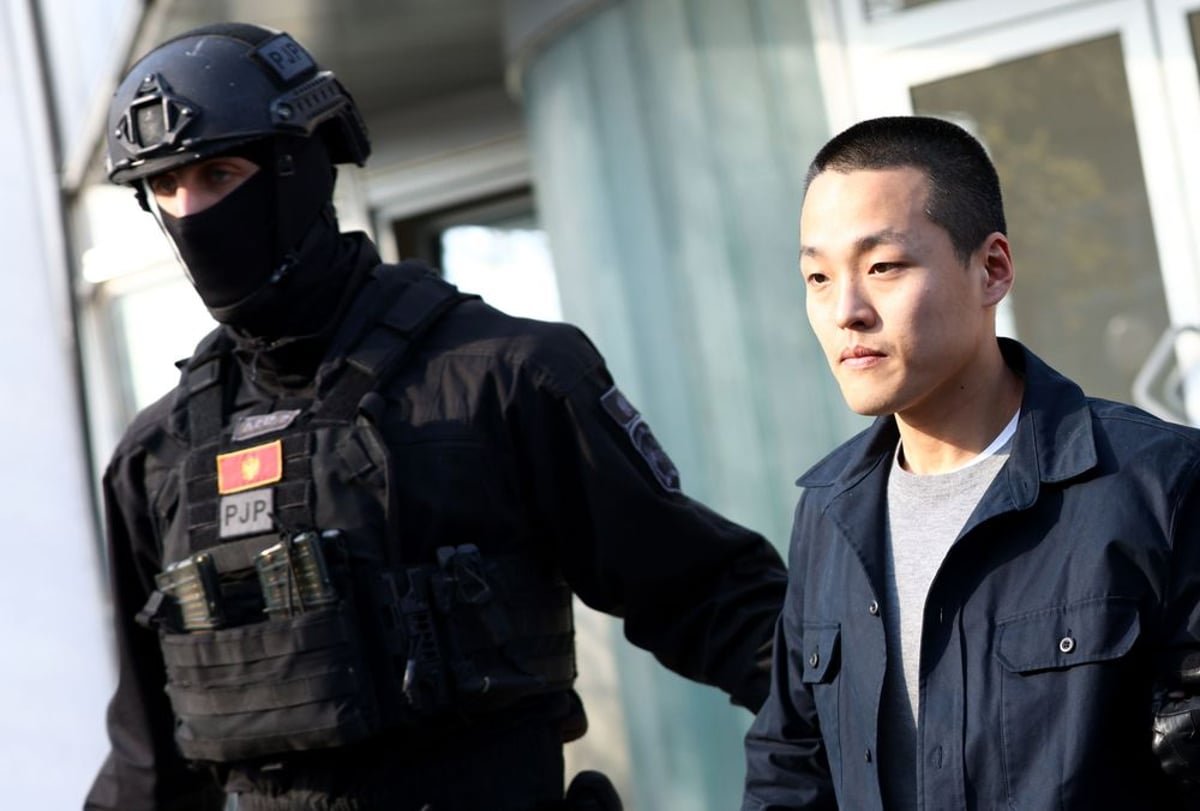
The guilty plea caps an extraordinary international manhunt that began when Kwon fled South Korea as regulators closed in. He spent months as a digital nomad, posting defiant tweets and launching new projects even as his Terra empire crumbled. His run ended in March 2023 when Montenegrin police arrested him at Podgorica airport using a fake Costa Rican passport.
What followed was a complex extradition battle between the United States and South Korea, both seeking to prosecute Kwon for his role in the Terra collapse. Montenegro ultimately chose to extradite him to the US in December 2024, ending more than a year of legal wrangling.
The Terra collapse didn't just destroy individual fortunes – it triggered a cascade of failures across the crypto industry. Three Arrows Capital, the Singapore-based hedge fund, imploded after massive Terra exposure. Celsius Network and other lending platforms froze withdrawals. The contagion spread to traditional finance, with several banks reporting significant cryptocurrency-related losses.
Federal prosecutors built their case around evidence that Kwon knew his algorithmic stablecoin was fundamentally unstable. Internal documents allegedly showed Terraform Labs executives discussing the system's vulnerabilities months before the collapse, even as they continued promoting UST as a safe alternative to traditional stablecoins backed by real assets.
The conspiracy charge carries a maximum five-year sentence, while wire fraud could result in up to 20 years behind bars. Legal experts expect Kwon's cooperation and guilty plea to result in a sentence closer to the lower end of that range, though the massive scale of investor losses could push for harsher penalties.
Kwon's sentencing is scheduled for December 11th, just as the cryptocurrency industry enters what many see as a new era of regulatory clarity under evolving US oversight. His case has become a watershed moment for prosecutors building fraud cases against crypto executives, providing a roadmap for future enforcement actions.
Kwon's guilty plea marks more than just the end of a legal saga – it represents a reckoning for an industry that spent years prioritizing innovation over investor protection. As prosecutors prepare for his December sentencing, the Terra collapse serves as a stark reminder that even the most sophisticated financial engineering can't overcome fundamental economic laws. For the thousands of investors who lost their life savings, Kwon's admission provides legal closure but no financial remedy for one of crypto's most devastating frauds.