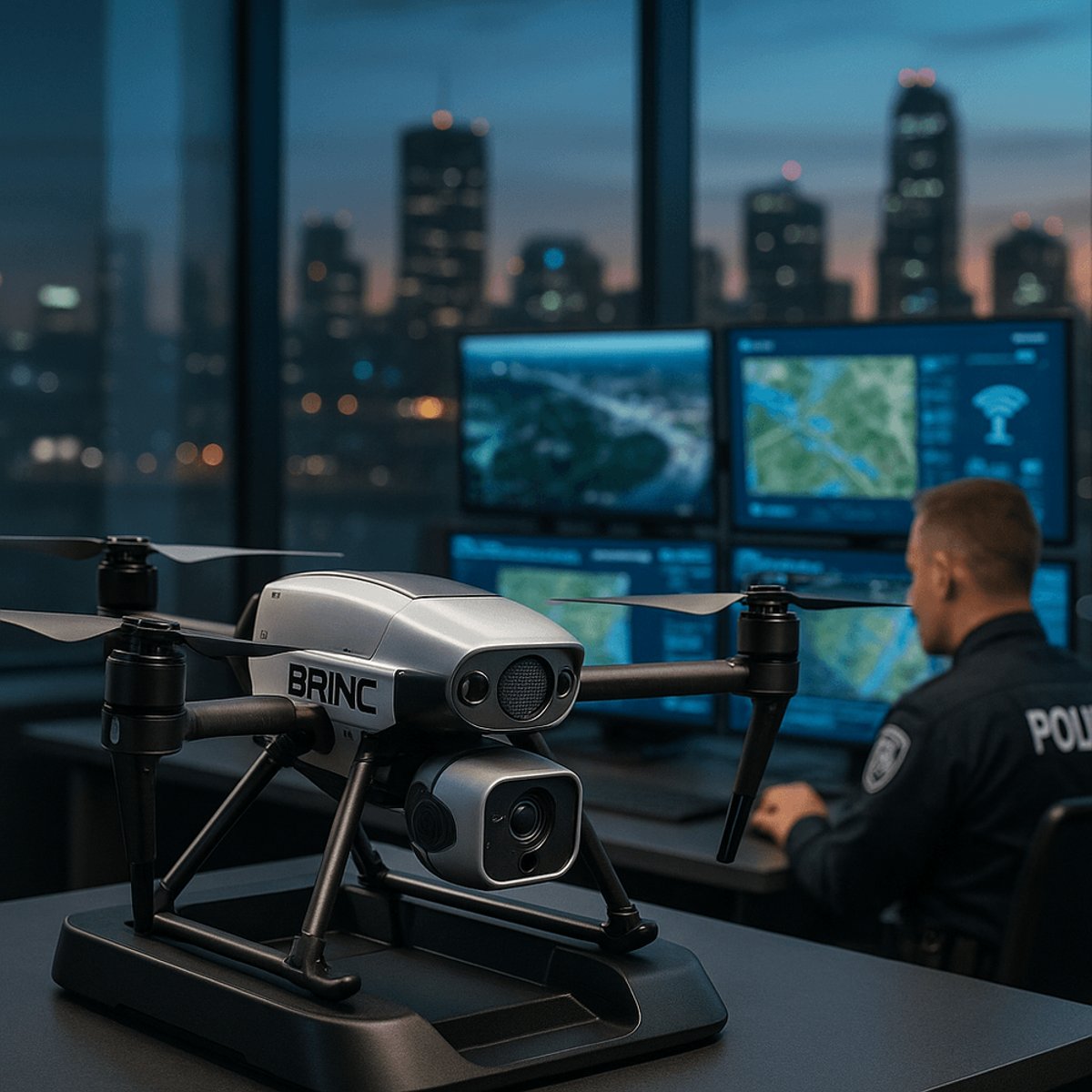
A Seattle-based drone startup founded by a former Peter Thiel fellow just rolled out what it claims could make police helicopters obsolete. Brinc launched its newest 911 response drone this week, marking a significant push into the public safety market as cities nationwide grapple with shrinking budgets and aging aerial fleets. The move positions the well-funded startup - backed by both Thiel and Sam Altman - directly against traditional helicopter manufacturers in the growing emergency response technology sector.
Brinc is making its boldest play yet to transform how American law enforcement responds to emergencies. The Seattle startup launched its newest 911 response drone platform this week, positioning the aircraft as a cost-effective replacement for the aging police helicopter fleets that have patrolled cities for decades.
The company's founder, a former Peter Thiel fellow who dropped out of college to pursue the venture, secured backing from both Thiel and Sam Altman in earlier funding rounds. That pedigree has helped Brinc become one of the most watched names in the public safety technology space, where venture capital has flooded in as cities search for budget-friendly alternatives to traditional emergency response infrastructure.
Police helicopters typically cost between $500 to $2,000 per flight hour when factoring in fuel, maintenance, and crew salaries. Brinc's drones slash those costs by roughly 95%, operating for as little as $25 per hour while offering response times measured in seconds rather than minutes. The company's platform integrates Starlink satellite connectivity, enabling real-time video feeds even in areas without cellular coverage.
The timing couldn't be better. Cash-strapped police departments across the country are being forced to ground helicopter units that cost millions annually to maintain. According to industry data, the average police helicopter has a operational lifespan of 20 years but requires constant upgrades to avionics and safety systems. Many departments are flying aircraft well past their recommended service dates simply because replacement costs run between $3 million and $15 million per unit.
Brinc isn't alone in seeing the opportunity. Skydio and Axon have both launched competing platforms targeting the same market, while Chinese manufacturer DJI continues to dominate commercial drone sales despite growing concerns about data security. But Brinc differentiates itself by building purpose-designed emergency response systems rather than adapting consumer drones for police work.
The startup's latest model features thermal imaging, loudspeakers for crowd communication, and autonomous flight capabilities that allow officers to launch missions without piloting experience. The drone can patrol pre-programmed routes, respond automatically to 911 calls based on GPS coordinates, and stream footage directly to incident commanders on the ground.
Critics have raised privacy concerns about persistent aerial surveillance, arguing that low-cost drones could normalize constant monitoring of American neighborhoods. Civil liberties groups point to studies showing that departments with easy access to aerial technology tend to deploy it far more frequently than expensive helicopter units, potentially creating a surveillance state by accident.
Brinc has attempted to address these concerns by building audit trails into its software that track every deployment and limit flight times over residential areas. The company says its systems comply with existing FAA regulations and can be configured to meet local privacy ordinances, though enforcement remains largely voluntary.
The public safety drone market is expected to reach $2.3 billion by 2028 as departments nationwide replace or supplement traditional aircraft. Several major cities have already begun pilot programs, with early results showing dramatic improvements in response times for missing persons cases, pursuit situations, and disaster assessment.
What remains unclear is whether Brinc can scale production fast enough to meet demand while maintaining the quality and reliability that emergency services require. The company will face intense scrutiny from both regulators and the public as its drones become fixtures in American skies, transforming the fundamental economics of aerial law enforcement in ways that were impossible just five years ago.
Brinc's latest launch represents more than just another drone hitting the market - it's a fundamental reimagining of how cities provide aerial emergency response. With backing from Silicon Valley's elite and a product that undercuts helicopter costs by orders of magnitude, the startup is positioned to capitalize on a perfect storm of budget pressures and technological advancement. Whether police departments and communities embrace this shift or push back against the privacy implications will determine if Brinc's vision of drone-first public safety becomes reality or remains a well-funded experiment.