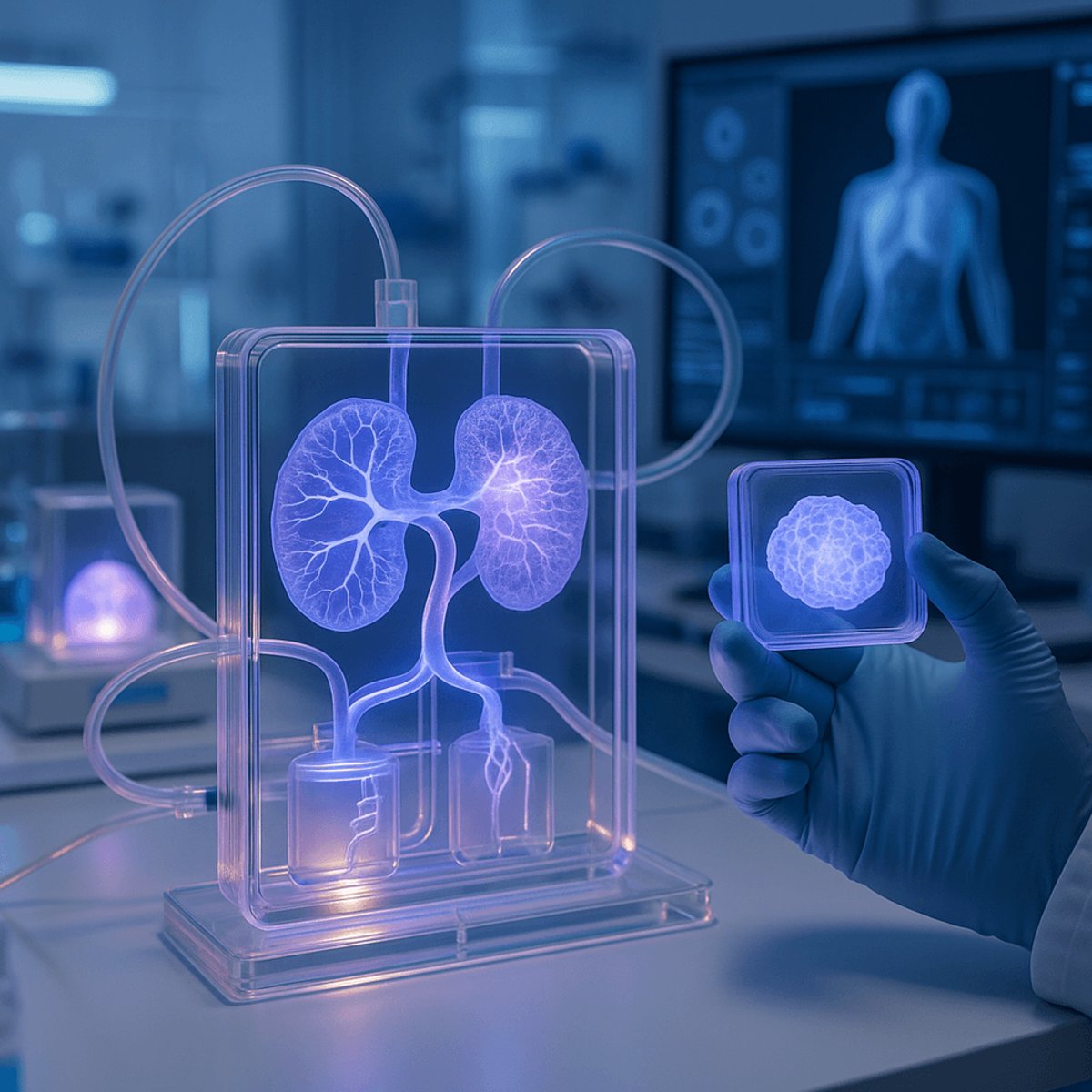
A billionaire-backed biotech startup is taking a radical approach to ending animal testing. R3 Bio is engineering complete organ systems that lack brains—what they call 'organ sacks'—to serve as living test beds for drug development. The company's long-term vision? Scale the technology to create human versions, potentially revolutionizing pharmaceutical testing while sidestepping the ethical minefield of animal research.
R3 Bio just emerged from stealth with one of the most audacious ideas in biotech: grow complete organ systems in the lab, minus the brain, and use them to test drugs instead of mice and rabbits. The concept sounds like science fiction, but the company's billionaire backers are betting real money that engineered biological systems can finally crack a problem that's plagued pharma for decades.
The pharmaceutical industry burns through millions of lab animals annually, yet nine out of ten drugs that pass animal trials still fail in humans. That disconnect costs the sector upward of $2 billion per failed drug, according to industry estimates. R3 Bio's cofounders believe the solution isn't better animals—it's engineered organ systems that mimic human biology without the ethical baggage.
The startup's approach involves genetically engineering complete organ systems that develop without neural tissue. Think of it as growing interconnected organs—liver, kidneys, cardiovascular system—that function as a cohesive biological unit but lack consciousness. The technology builds on decades of organoid research, but takes it several steps further by creating systems that actually interact the way they would in a living body.
According to Wired's reporting, a cofounder confirmed the ultimate goal is to transition from animal-based systems to human versions. That would represent a seismic shift for drug development, potentially eliminating the species gap that makes animal testing such an unreliable predictor of human outcomes. But the technical hurdles are enormous—no one's successfully grown interconnected human organ systems at scale before.
The timing couldn't be better. Regulatory pressure is mounting globally to reduce animal testing. The European Union has pushed for alternatives, California banned cosmetic animal testing in 2020, and the FDA recently eliminated the requirement for animal trials in certain drug pathways. Biotech companies and pharma giants are desperate for reliable alternatives that can actually predict human responses.
R3 Bio isn't the only player chasing organ-on-chip technology and advanced in vitro models. Companies like Emulate and Organovo have been working on miniaturized systems for years. But R3 Bio's whole-system approach—growing interconnected organs rather than isolated chips—represents a fundamentally different bet on the future of preclinical testing.
The billionaire backing signals serious conviction. While Wired didn't disclose specific investors or funding amounts, the involvement of ultra-high-net-worth backers suggests the startup secured substantial seed or Series A capital. That kind of early support typically indicates the founders have demonstrated proof-of-concept in animal models—likely rodents or pigs.
The ethical calculus here gets complicated fast. Growing brain-free organ systems sidesteps concerns about animal suffering, but raises new questions about the boundaries of biological engineering. If the technology works with human cells, what exactly are these organ sacks? The fact they lack brains puts them outside traditional definitions of organisms, but the regulatory framework hasn't caught up to these possibilities.
From a commercial standpoint, the market opportunity is massive. Contract research organizations that conduct preclinical animal testing generate over $10 billion annually. If R3 Bio can deliver organ systems that better predict human outcomes, pharma companies would pay a premium to reduce their staggering drug failure rates. Every eliminated late-stage failure saves hundreds of millions in development costs.
The technical roadmap is ambitious but follows a logical progression. Start with animal organ systems to prove the concept works, refine the genetic engineering and growth protocols, then transition to human tissue. Each step requires solving problems no one's solved before—vascularization, immune system integration, maintaining viability for weeks or months of testing.
Competitors are watching closely. The organ-on-chip sector has attracted over $300 million in venture funding over the past five years, but hasn't yet delivered the transformative impact investors hoped for. R3 Bio's whole-system approach could leapfrog incremental improvements, or it could prove too complex to scale economically.
R3 Bio is placing a big bet that the future of drug testing doesn't involve animals at all—it involves engineered biological systems that are alive but not conscious. If the technology delivers on its promise, it could reshape pharmaceutical development while resolving ethical debates that have raged for decades. But between proof-of-concept and commercial reality lie years of technical challenges, regulatory uncertainty, and the fundamental question of whether lab-grown organ sacks can truly replicate human biology better than the animals we've relied on for a century. The billionaire backing suggests some very smart money thinks the answer is yes.