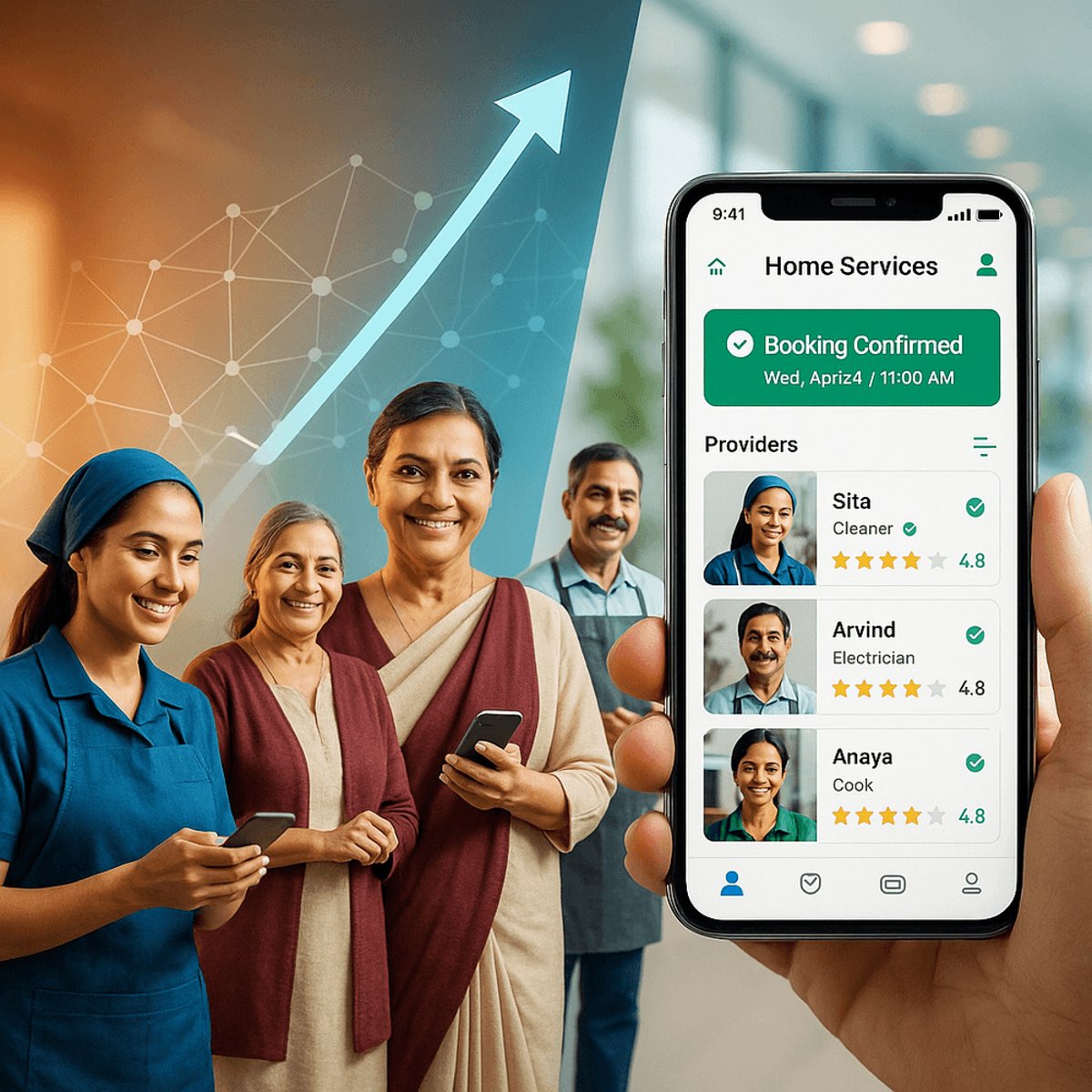
India's home services market is having its Uber moment. Pronto, a startup digitizing everything from house cleaning to cooking help, just saw its valuation rocket eightfold in less than a year as investors bet big on formalizing India's massive informal workforce. With 18,000 daily bookings and fresh capital from heavyweights like General Catalyst and Glade Brook Capital, the company is sprinting to capture a market that's been operating offline for decades.
Pronto is turning India's chaotic home services market into a digital marketplace, and investors are throwing money at the vision. The Bangalore-based startup just closed a funding round that pushed its valuation up eightfold from where it stood barely a year ago, a remarkable jump that signals how hungry venture capitalists are for platforms that can crack India's informal economy.
The numbers tell the growth story. Pronto now handles 18,000 daily bookings for services ranging from home cleaning and cooking to elder care and childcare. That's not just transaction volume - it represents thousands of gig workers who've moved from cash-based, word-of-mouth arrangements to a platform that offers steady work, digital payments, and basic protections.
General Catalyst led the latest round, joined by Glade Brook Capital, Bain Ventures, and Epiq Capital. The investor lineup reads like a who's who of firms betting on India's digital transformation, particularly in sectors where technology meets massive underserved markets.
What makes Pronto's rise particularly interesting is the operational challenge it's solving. India's home services market has historically run on informal networks - workers found through local references, paid in cash, with zero benefits or job security. That system works until it doesn't, leaving both consumers scrambling for reliable help and workers vulnerable to exploitation.
Pronto's platform attempts to formalize this chaos. Workers get onboarded with background checks, training, and access to a steady stream of customers. Consumers get vetted service providers, transparent pricing, and the ability to book through an app rather than making endless phone calls. It's the classic marketplace playbook, but executing it in a market where most participants have never used digital services requires different tactics.
The company faces serious competition. Urban Company, India's largest home services platform, has been building its network for years and counts SoftBank among its backers. Regional players and vertical-focused startups are also circling the same customers. The question isn't whether India's home services market will digitize - that's inevitable - but who'll capture the largest share before the market consolidates.
Investors clearly think Pronto has cracked something important. An eightfold valuation jump doesn't happen because a startup has a nice app. It happens when growth metrics suggest real traction and a path to market leadership. The 18,000 daily bookings indicate Pronto isn't just acquiring customers - it's building habits.
The stakes extend beyond Pronto's balance sheet. India's informal workforce numbers in the hundreds of millions, with home service workers representing a significant chunk. Platforms that can successfully formalize these workers - providing income stability, benefits, and upskilling - could fundamentally reshape how millions of Indians work and earn.
But rapid expansion brings its own challenges. Maintaining service quality while scaling across new cities tests any marketplace. Worker retention becomes critical when competitors can poach trained service providers. And unit economics need to work at scale, particularly in a price-sensitive market where consumers expect affordable services.
Pronto's backers are betting the company can navigate these challenges faster than rivals. General Catalyst's involvement is particularly telling - the firm has backed marketplace companies globally and understands what separates winners from also-rans. Their playbook typically involves aggressive expansion followed by operational excellence.
The timing works in Pronto's favor. Smartphone penetration keeps climbing in India, digital payments are mainstream post-demonetization, and COVID-19 accelerated consumer comfort with on-demand services. The infrastructure for marketplace businesses is better than it's ever been.
What happens next will define India's home services landscape for years. Pronto needs to convert this capital into market share before competitors do the same. That means signing up workers faster, expanding to new cities, and building the kind of brand recognition that makes consumers default to its app when they need help.
Pronto's eightfold valuation surge captures a larger story about India's economic transformation. As millions of informal workers move onto digital platforms, they're gaining income stability and protections that were previously unthinkable. For consumers, it means reliable service at their fingertips. The race is far from over - competitors are well-funded and the market is huge - but Pronto's momentum suggests it's positioned to be a major player in how India works in the coming decade. Watch how quickly they can scale to new cities while maintaining quality. That execution will determine whether this valuation jump was justified or just another round of frothy startup optimism.