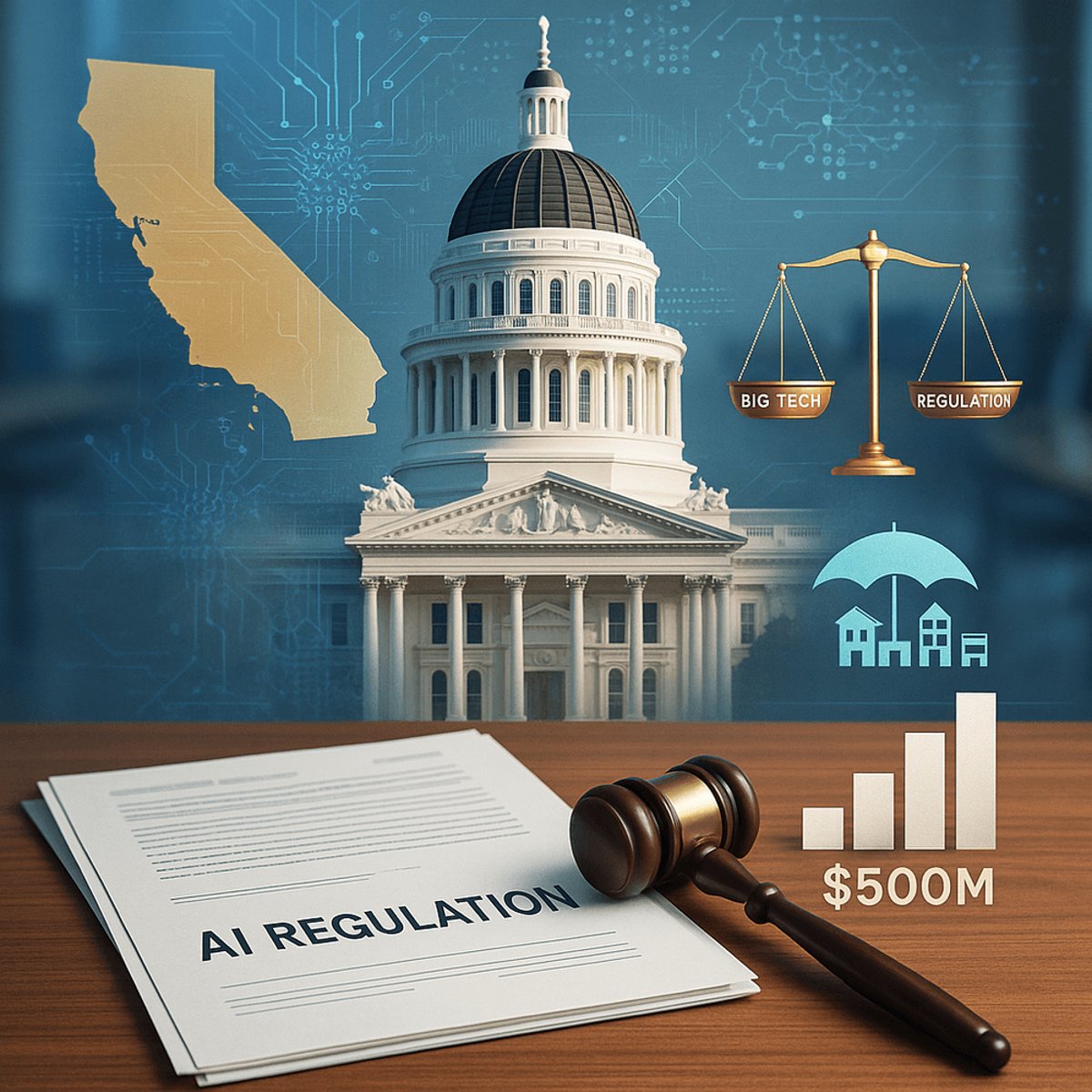
California's state senate just passed SB 53, a scaled-back AI safety bill that zeros in on companies making over $500 million from AI models. Unlike last year's vetoed SB 1047, this narrower approach has Anthropic's backing and appears designed to survive Governor Gavin Newsom's scrutiny while still creating meaningful oversight of AI giants like OpenAI and Google DeepMind.
California's legislature just handed Governor Gavin Newsom what could be the state's first successful AI safety law. SB 53, authored by state senator Scott Wiener, cleared its final hurdle after learning harsh lessons from last year's regulatory defeat.
The new bill represents a strategic retreat from Wiener's previous attempt. Where SB 1047 cast a wide net that spooked the startup ecosystem, SB 53 laser-focuses on AI companies generating more than $500 million annually from their models. That threshold effectively targets the industry's power players - OpenAI, Google DeepMind, Meta, and Anthropic - while giving smaller companies breathing room.
The bill's requirements aren't revolutionary, but they're real. Major AI developers would need to publish safety reports for their models, immediately disclose any incidents to state authorities, and provide whistleblower channels for employees with safety concerns. For workers who've signed NDAs, that last provision could prove crucial as competition intensifies and safety protocols face internal pressure.
"We're entering this era where AI companies are becoming the most powerful companies in the world, and this is going to be potentially one of the few checks on their power," TechCrunch's Max Zeff said during a recent Equity podcast discussion about the legislation.
The timing matters as much as the content. Anthropic's endorsement signals that at least one major AI company sees regulatory cooperation as preferable to an adversarial relationship with lawmakers. That's a marked shift from last year's united industry opposition to SB 1047.
California's regulatory push comes as the federal landscape tilts decidedly pro-industry. The Trump administration has actively discouraged AI regulation, even inserting language into funding bills that would prevent states from implementing their own AI oversight. While those provisions haven't passed yet, they highlight the growing tension between federal deregulation and state-level safety concerns.
Geography gives California unusual leverage in this fight. "Every major AI company is pretty much, if not based here, it has a major footprint in this state," noted Kirsten Korosec during the same podcast discussion. That concentration means California regulations carry national weight, regardless of federal preferences.
The bill's carve-outs reflect political realities. Smaller startups face minimal requirements - they'll share some safety information but avoid the heavy reporting mandates hitting larger competitors. This approach directly addresses criticism that killed SB 1047, where opponents argued broad regulations would stifle California's booming AI startup scene.
But complexity comes with compromise. The new bill includes numerous exceptions and thresholds that could create enforcement challenges. Critics question whether a $500 million revenue threshold makes sense when some AI companies generate massive user bases without equivalent revenue streams.
Industry observers see SB 53 as a test case for state-federal AI policy conflicts. If Newsom signs the bill, it becomes the template for other state regulations. If he vetoes it again, California's regulatory momentum stalls just as AI capabilities accelerate.
The stakes extend beyond California borders. European regulators are watching American states attempt what federal lawmakers haven't - meaningful AI oversight without innovation-killing restrictions. Success here could influence global regulatory approaches as countries balance safety concerns with competitive pressures.
California's SB 53 represents a more pragmatic approach to AI regulation - narrower in scope but potentially broader in impact. By focusing on revenue thresholds rather than blanket requirements, the bill could establish the first meaningful state-level oversight of major AI companies. Whether Governor Newsom signs it will signal how seriously California takes AI safety versus industry concerns, setting the tone for regulatory battles nationwide.