Most people approach Claude Code like a smarter terminal. You type a question, it scans your codebase, runs a few commands, and returns something useful. That framing works at the beginning, but it quietly limits how much of the system you can actually see. Underneath that interface is something closer to a small, layered agent system, and channels are the piece that changes how it behaves. They shift the session from something you actively query into something that can notice, react, and respond without waiting for you to initiate.
To understand why that matters, you have to zoom out and look at how the system is structured before channels even enter the picture.
Claude Code is built as a stack of three cooperating layers. At the center sits the core session, the main Claude process running inside your terminal. This is where the system’s judgment lives. It holds your repository, your shell access, your CLAUDE.md files, your conversation history, and the reasoning loop that ties everything together. When Claude decides whether to explore a bug, ask for clarification, or delegate work, that decision originates here. It is also where control lives on your side: approving tool calls, choosing execution modes, and observing what the system is doing.
Surrounding that core is a layer of sub-agents. These are not just helper functions but isolated workers, each with its own context window and scope. When the core session delegates a task, it spins up one of these workers to handle it in isolation. That separation matters. It keeps the main session from filling up with noise, and it prevents unrelated tasks from contaminating each other’s context. A sub-agent can be tightly constrained, given only the tools it needs for a specific job. One might only read files and search code. Another might run shell commands but have no access to anything else. Each does its work, then returns a distilled result back to the core.
Then there is the outer layer: extensions. This is where Claude connects to the rest of your environment. Through MCP servers and tools, it gains the ability to interact with git, query databases, call APIs, read documentation systems, or trigger CI workflows. These tools are how Claude moves beyond reasoning into action. They give it reach.
Taken together, these layers form a capable system. The core session decides, sub-agents execute in focused contexts, and tools provide access to the outside world. But they all share one underlying pattern: nothing happens unless the system decides to act. Every interaction begins from inside. Claude pulls information when it needs it. It calls tools when it chooses to. It spawns sub-agents when it delegates.
There is no mechanism for the outside world to interrupt that flow.
That is the gap channels fill.
##What's New?
A channel introduces a different direction of movement. Instead of waiting to be called, it delivers events into the running session. At a technical level, it is an MCP server with the ability to push notifications, but the important shift is conceptual. Your Claude session stops being a closed loop and becomes something that can receive signals from the systems around it.
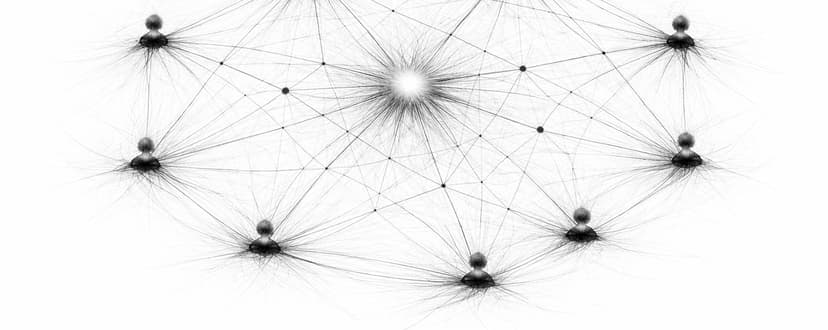
Once that connection exists, the architecture changes shape. External systems feed events into channels. Channels deliver those events into the core session. The core session interprets them, decides what matters, and then uses sub-agents and tools to respond. The rest of the stack stays the same, but the trigger point moves. Activity no longer depends entirely on you being present at the keyboard.
You can see this clearly in a simple workflow. A CI pipeline fails. Instead of you checking the dashboard, the failure is sent as an event into the session. It arrives as structured input, something the core session can read and reason about. From there, the system behaves exactly as it would if you had typed a request manually. It decides whether to act, spins up a sub-agent to investigate, uses tools to pull logs or inspect changes, and then produces a result. If configured, that result can even be sent back out through the same channel, closing the loop without ever touching the terminal.
Nothing about the reasoning layer changes. What changes is when and why it activates.
Once you start thinking in those terms, the architecture begins to look less like a tool and more like a small event-driven system. Channels act as an input stream. Sub-agents behave like workers that handle specific categories of tasks. MCP tools provide the capabilities those workers rely on. The core session ties everything together, deciding what to ignore, what to escalate, and what to act on.
That structure makes it possible to design flows that feel closer to infrastructure than to a command-line tool. CI failures can trigger investigation routines automatically. Security alerts can be enriched with context before anyone reviews them. Questions coming in from chat platforms can be answered using internal knowledge without routing through a human first. Each case follows the same pattern: an external signal arrives, the system routes it, a focused worker processes it, and the result surfaces where it is needed.
At that point, the terminal becomes only one interface among several. It is where you can observe, guide, or override the system, but it is no longer the only place where work begins.
What are the Limits?
There are still boundaries, and they matter. Channels only operate while the session is running, which means the system is not silently active in the background unless you choose to keep it that way. Activation is explicit. You decide which channels are enabled for a given session, and only approved senders can inject events. These constraints keep the system anchored to human control, even as it becomes more reactive.
What emerges from all of this is a clearer picture of what Claude Code actually is. The core session provides reasoning and oversight. Sub-agents provide focus and isolation. Tools provide reach into external systems. Channels provide awareness of what is happening outside the session. Together, they form a system that can listen, decide, and act across boundaries that used to require constant manual intervention.
Once you see that shape, the original mental model starts to feel incomplete. The terminal is still there, but it is no longer the center of gravity.