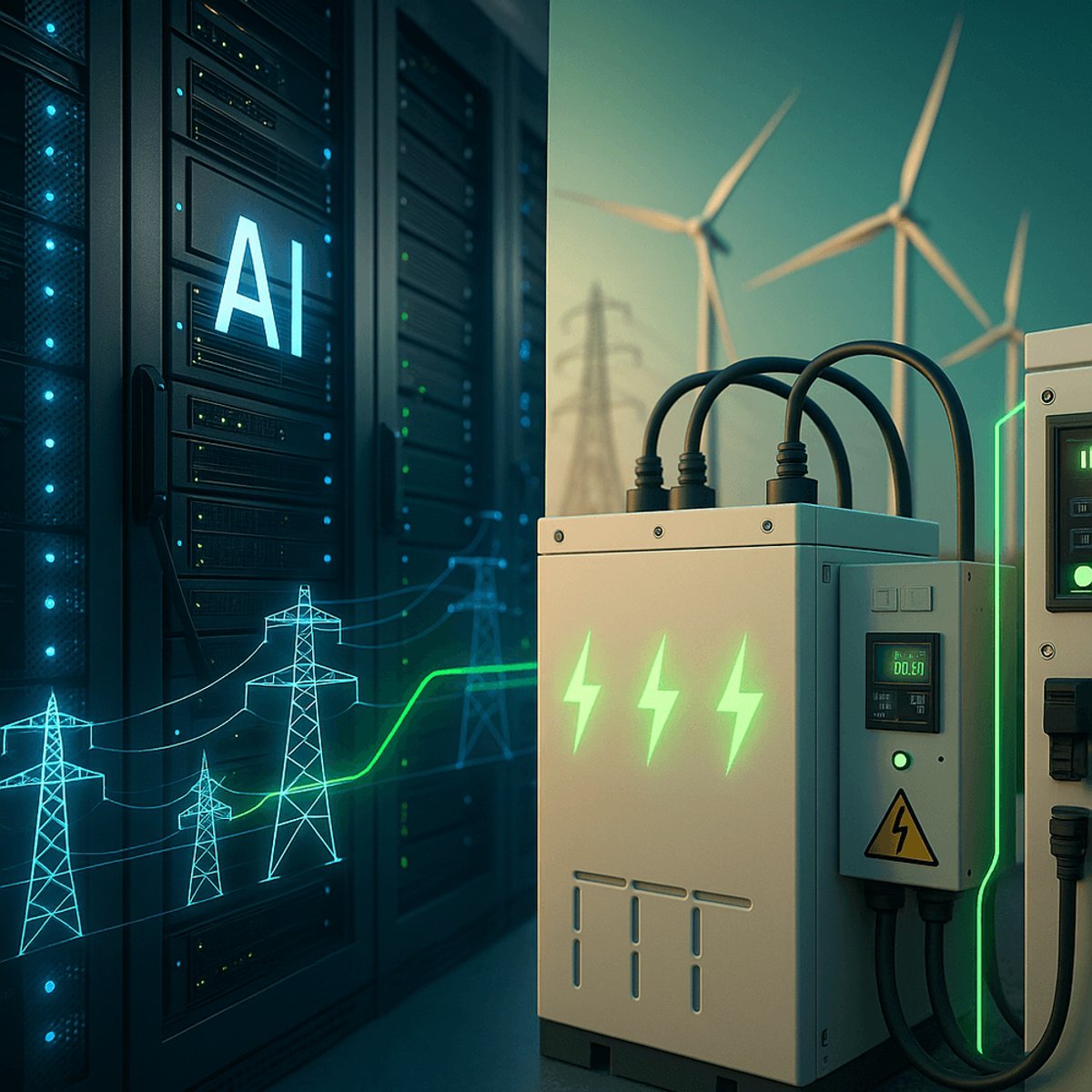
The AI boom has hit a wall, and it's not made of silicon. Power constraints are now the single biggest roadblock to building new data centers, and that's reshaping where venture capital flows next. As hyperscalers race to secure gigawatts for their AI ambitions, energy infrastructure startups are suddenly the hottest tickets in town, according to a new TechCrunch analysis of the investment landscape.
The AI industry's insatiable appetite for compute is running headlong into a problem no amount of venture funding can quickly solve: there's simply not enough power to go around. While Microsoft, Google, and Amazon have poured billions into AI chips and models, they're now discovering that securing reliable electricity has become the harder challenge.
This infrastructure crunch is quietly redirecting capital flows across the tech industry. Energy storage companies, grid management platforms, and alternative power providers are fielding term sheets at valuations that seemed impossible just 18 months ago. The bet is straightforward - whoever solves AI's power problem stands to capture enormous value as the technology scales.
The numbers tell the story. A single large-scale AI training cluster can consume as much power as a small city, with some facilities requiring 500 megawatts or more. That's enough to power roughly 375,000 homes, except these data centers need that juice 24/7 with near-perfect reliability. Traditional grid infrastructure wasn't designed for this kind of concentrated, always-on demand, creating gaps that startups are racing to fill.
Investors are taking notice of companies working on battery energy storage systems that can smooth out demand spikes and provide backup power during outages. Others are betting on advanced cooling technologies that can dramatically reduce data center energy consumption. And some are backing entirely new approaches to power generation designed specifically for the density and reliability requirements of AI workloads.
The shift represents a fundamental rethinking of AI infrastructure investment. For years, the focus was on semiconductor capabilities - faster chips, more efficient architectures, better interconnects. Those investments haven't stopped, but they're increasingly paired with energy considerations. What good is a cutting-edge GPU cluster if you can't keep the lights on?
This dynamic is playing out most visibly in project timelines. Microsoft has publicly discussed challenges in bringing new data center capacity online fast enough to meet demand. Google has explored everything from nuclear partnerships to demand response programs to secure power. Amazon has been snapping up available grid capacity wherever it can find it, sometimes years in advance of actual deployment.
For venture investors, the opportunity cuts across multiple sectors. Grid optimization software that uses AI to manage power distribution more efficiently. Advanced battery chemistries that can store renewable energy for data center use. Modular nuclear reactors designed for data center co-location. Even humble electrical equipment manufacturers are suddenly attractive targets if they can accelerate deployment timelines.
The climate tech angle adds another dimension. Energy solutions that reduce AI's carbon footprint while solving infrastructure constraints hit two birds with one stone. That's attracting both traditional tech VCs and climate-focused funds, expanding the pool of available capital and driving up valuations for promising startups.
What makes this investment thesis particularly compelling is the timeline. Unlike software plays that can scale overnight, energy infrastructure takes years to build out. Companies that establish strong positions now could enjoy sustained competitive advantages as AI continues expanding. The barriers to entry - regulatory relationships, grid interconnection rights, physical infrastructure - create natural moats that venture investors love.
The ripple effects extend beyond pure-play energy startups. Data center operators with power advantages are commanding premium valuations. Real estate in locations with available grid capacity has become unexpectedly valuable. Even utilities are finding themselves courted by tech giants in ways that seemed unimaginable a few years ago.
Some investors see parallels to previous infrastructure buildouts that created lasting value. Just as the fiber optic boom of the late 1990s built communications infrastructure that powered decades of internet growth, today's energy investments could enable AI scaling for years to come. The difference is that energy constraints are physical and fundamental in ways that bandwidth limitations never quite were.
The AI power crunch isn't just a technical challenge - it's reshaping where smart money flows in tech. As hyperscalers compete for gigawatts and startups race to provide solutions, energy infrastructure has evolved from boring utility play to critical enabler of the next wave of AI innovation. For investors willing to look beyond the latest model release or chip architecture, the biggest AI opportunity might just be keeping the lights on. The companies that crack this problem won't just power data centers - they'll power the future of artificial intelligence itself.