John Deere's Deanna Kovar and the Road From Precision Farming to Autonomous Industry
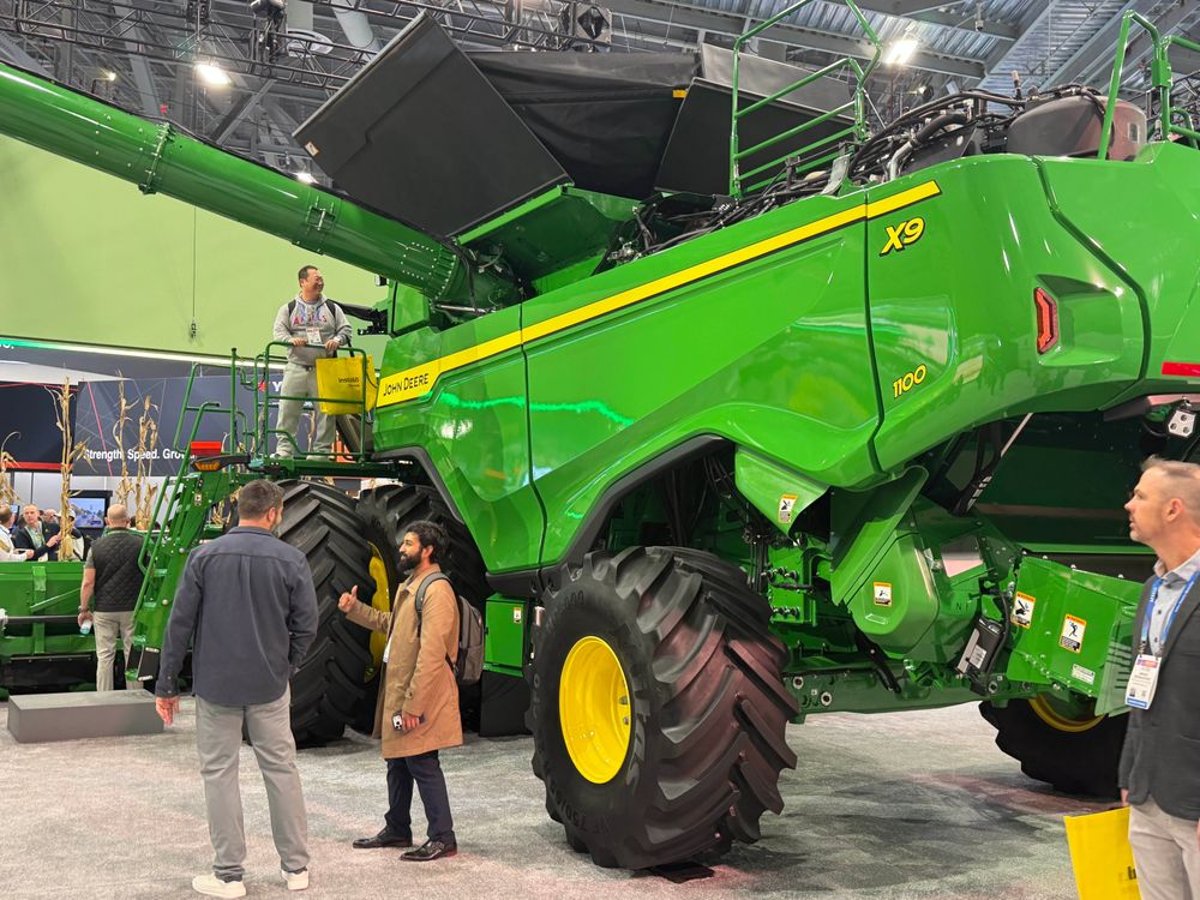
At CES 2026, John Deere delivered one of the strongest real-world technology showings on the floor. The company brought the largest autonomous heavy machinery at the event, drawing attention not through spectacle, but through systems that are already operating in fields and moving steadily into construction and industrial use.
At the center of this momentum is Deanna Kovar, President of Worldwide Agriculture and Turf for Production and Precision Agriculture. Her leadership reflects a long-term view where autonomy, policy, and infrastructure move together, grounded in the realities farmers and operators face every day. As Deanna wrote recently:
“Growing up on a dairy farm, I saw firsthand how policy decisions influence the day-to-day realities of running an operation.”
From Farming Roots to Scaled Autonomy
John Deere’s work in autonomy did not start on a show floor. It started in agriculture, where labor shortages, tight margins, and sustainability pressures demand tools that work every day, in all conditions.
At CES, John Deere showcased autonomous systems built for orchards, fields, and GPS-challenged environments, including a fully automated 5ML diesel orchard tractor. This machine uses 7 cameras, 3 LiDAR sensors, and real-time 3D perception to spray autonomously under tree canopies where satellite visibility is limited.
The system understands its surroundings. It distinguishes obstacles like fallen branches from objects it can safely pass. It operates at low speeds, often at night, and runs repeatable jobs that growers perform 3 to 8+ times per year. That consistency brings better measurement, better control, and better outcomes.
“When farmers have the certainty and support they need, they strengthen rural communities, our economy, and America’s energy future.”
Autonomy That Fits Real Operations
John Deere’s autonomy strategy focuses on repeatability, measurement, and availability. Farmers gain the ability to run equipment 24/7, schedule work when conditions are ideal, and redirect labor toward higher-value tasks.
Key points John Deere emphasized at CES include:
-
Autonomous operation in GPS-denied environments
-
Retrofitting autonomy onto existing tractors
-
Full integration with the John Deere Operations Center
-
Detailed documentation for regulatory and sustainability reporting
-
Reduced idle time, fuel use, and emissions through data-driven optimization
This approach makes autonomy accessible today, not as a future concept.
From Agriculture to Construction
What makes John Deere’s CES presence stand out is how cleanly its agricultural technology transfers into construction and industrial equipment.
Perception systems trained to work around trees, crops, and uneven terrain adapt naturally to job sites, warehouses, and infrastructure projects. The same autonomy stack that helps a grower spray an orchard supports lifting, hauling, and inspection tasks in construction settings.
The result is a clear expansion path. Precision agriculture becomes the proving ground. Construction becomes the next deployment surface.
Leadership Shaped by Policy and Practice
Beyond hardware, Deanna Kovar has been active in Washington, D.C., meeting with lawmakers including Senator Deb Fischer and Senator John Boozman, Chairman of the Senate Committee on Agriculture, Nutrition, and Forestry.
Her advocacy highlights how policy certainty affects the ability of farms to invest, adapt, and remain resilient. She has spoken openly about renewable fuels like ethanol and E15, pointing out how stable demand supports farmers while lowering fuel costs for consumers and strengthening U.S. energy security.
That perspective comes from experience. Kovar grew up on a dairy farm, where policy decisions showed up immediately in daily operations. At John Deere, that understanding translates into technology that aligns with economic reality rather than abstract promises.
“The widespread deployment of innovative precision agriculture technologies and practices in recent decades have led to productivity, efficiency, and sustainability gains never seen before.”
Electric and Autonomous Futures
CES also marked the first public look at a battery-electric autonomous tractor prototype, part of John Deere’s LEAP strategy. Designed for a full day’s work in orchards and vineyards, the electric platform targets 2026 deployment and extends autonomy into lower-emission operations.
Electric drivetrains, autonomous perception, and centralized fleet management now sit on the same roadmap.
Why John Deere’s CES Moment Matters
John Deere’s CES 2026 showing demonstrated something rare in consumer tech spaces. These machines are not speculative. They are being tested, refined, and deployed by customers who depend on uptime and results.
With Deanna Kovar at the helm, John Deere is connecting policy, precision, and autonomy into a system that scales from farms to construction sites. The company’s presence in Las Vegas made one thing clear. The future of autonomous industry is being built by teams that understand how work actually gets done.
And John Deere is firmly among the leaders shaping that future.
“America’s farmers are more than capable of meeting and exceeding our nation’s demand for both food and clean energy.”