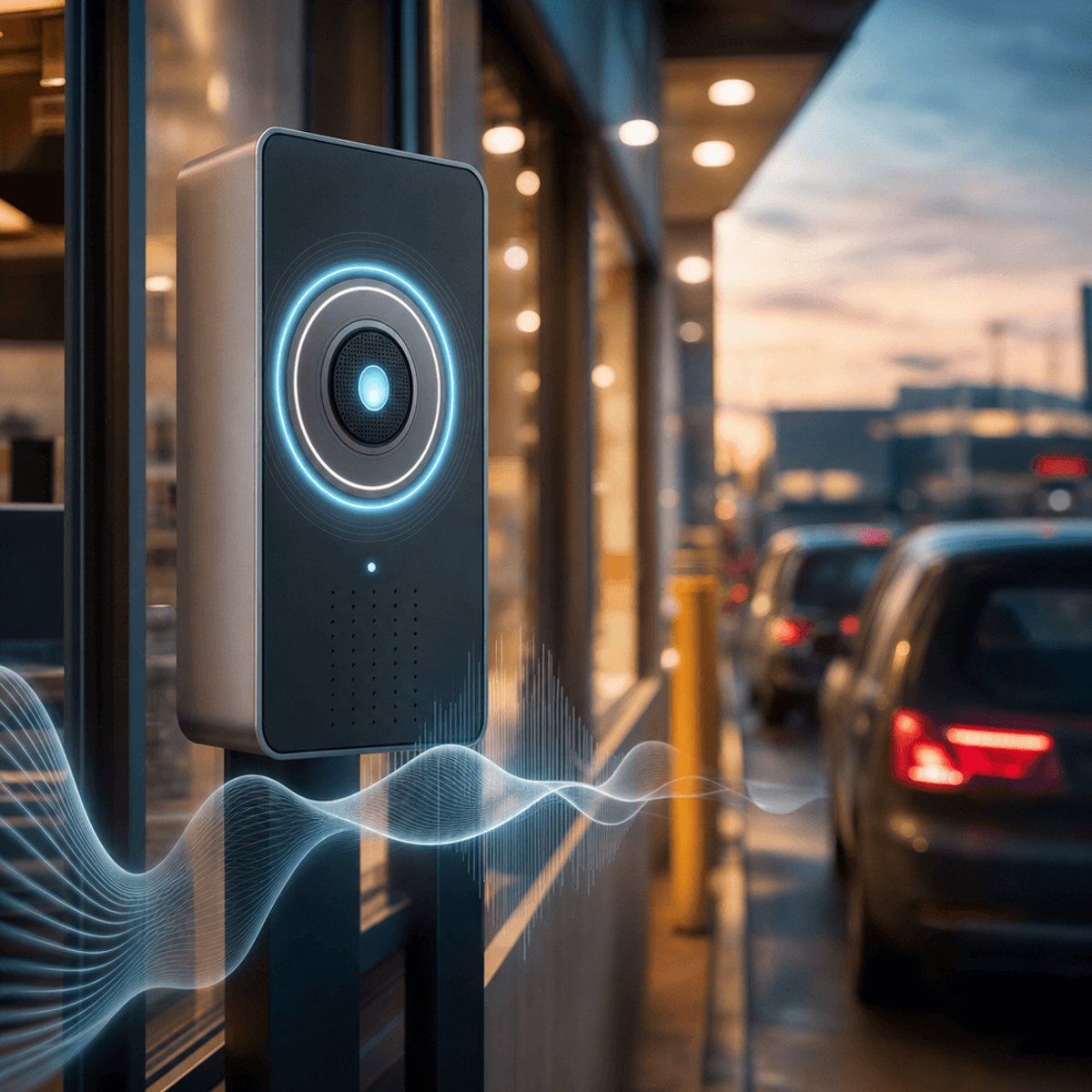
The fast-food industry is quietly automating one of its most crucial customer touchpoints. What started as a 10-location experiment in Chicago has become a full-scale race to deploy AI voice assistants at drive-thru windows nationwide. McDonald's pioneered the shift in 2021, and now competitors like Wendy's are scrambling to catch up. But the real story isn't just about taking orders - it's about what happens when conversational AI proves it can handle millions of daily transactions in one of retail's most demanding environments.
McDonald's didn't make a big splash when it first rolled out AI chatbots at drive-thru windows in 2021. The company quietly deployed the technology at just 10 locations in Chicago, treating it like any other operational test. But that low-key approach masked something bigger - the fast-food giant was betting that voice AI could fundamentally reshape how millions of customers order their meals every day.
The tech behind those early experiments came from Apprente, a voice technology startup McDonald's acquired in 2019. Apprente specialized in conversational AI designed specifically for quick-service restaurants, where speed and accuracy matter more than flowery dialogue. McDonald's later partnered with IBM to refine the system, tapping into Big Blue's enterprise AI expertise to handle the complexities of real-world drive-thru chaos.
What makes this rollout different from typical AI hype is the environment. Drive-thru ordering is brutal for voice recognition - you're dealing with background noise from idling cars, varying accents, kids screaming in the backseat, and customers who change their minds mid-sentence. If AI can work there, it can work almost anywhere in retail. That's why competitors are paying attention.
Wendy's has emerged as one of the most aggressive followers, pushing its own AI ordering system into production. The company sees automation as a way to address persistent labor challenges while maintaining speed of service. For fast-food chains operating on razor-thin margins, shaving even 30 seconds off average order times can translate to millions in additional revenue. An AI system that never calls in sick, never needs a break, and can handle multiple orders simultaneously starts to look pretty attractive.
But the technology isn't perfect. Early reports from customers and workers revealed the usual AI stumbles - misheard orders, confusion over customizations, and the occasional completely baffling response. One viral video showed a McDonald's AI repeatedly adding extra items to an order despite the customer's protests. These failures are instructive because they highlight where conversational AI still struggles: understanding context, handling exceptions, and knowing when to gracefully hand off to a human.
The fast-food industry's embrace of voice AI matters because it's one of the first mass-market tests of conversational technology in a high-volume, high-stakes environment. Unlike chatbots on websites or voice assistants in smartphones, drive-thru AI has to perform under pressure with zero room for extended troubleshooting. Either the system takes your order correctly, or you're holding up a line of increasingly angry customers.
What's emerging from these deployments is a clearer picture of where AI voice technology actually works versus where it's still aspirational. Simple, routine orders - a Big Mac meal with a Coke - are handled smoothly. Complex customizations, dietary restrictions, or questions about ingredients still trip up most systems. The smart operators are designing their AI to recognize these limits and seamlessly transfer complicated orders to human workers rather than trying to force the technology beyond its capabilities.
The broader implications extend well beyond burgers and fries. Retail chains, banks, healthcare providers, and other service businesses are watching these fast-food experiments closely. If McDonald's and Wendy's can make voice AI work in the drive-thru, similar technology could handle pharmacy orders, appointment scheduling, or customer service calls across dozens of industries. The fast-food sector is essentially running a massive, real-world beta test that will inform AI deployment strategies across the entire service economy.
There's also a labor angle that can't be ignored. Fast-food companies position these systems as tools to help workers, freeing them from repetitive order-taking to focus on food preparation and customer service. Critics counter that it's the first step toward eliminating jobs entirely. The truth is probably somewhere in between - AI will reshape these roles rather than eliminate them completely, but that transition won't be painless for workers who've built careers around tasks that machines can now handle.
The technology's evolution is happening faster than many expected. What started as a tentative experiment in 10 Chicago locations is now expanding rapidly as the systems prove they can handle real customer volumes. McDonald's hasn't disclosed exact expansion numbers, but industry observers note the company is steadily adding AI-powered drive-thrus across multiple markets. That suggests the early results were promising enough to justify scaling up despite the inevitable hiccups.
Fast food's dive into AI-powered drive-thrus represents more than just another automation trend - it's a proving ground for conversational AI in one of the most demanding retail environments imaginable. The technology's success or failure at scale will determine whether voice AI becomes a standard feature across service industries or remains limited to controlled environments. For now, the major chains are doubling down on their bets, refining systems that handle millions of orders while learning from the inevitable mistakes. What happens in these drive-thru lanes over the next few years will shape how we interact with AI in countless other contexts, from pharmacy counters to bank branches. The question isn't whether AI will automate more customer service roles, but how smoothly that transition happens and whether the technology can deliver on its promise of better, faster service without sacrificing the human touch when it's actually needed.