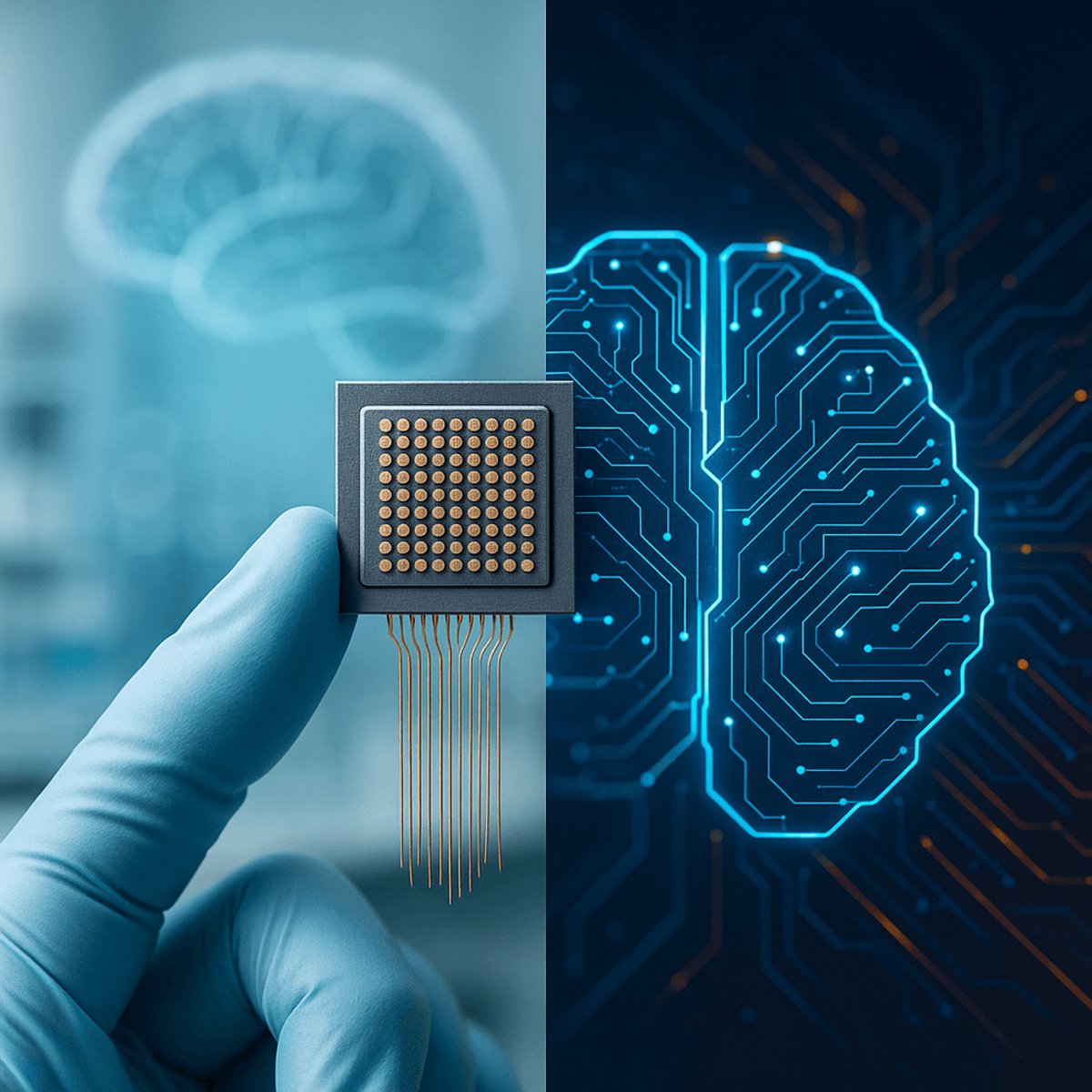
China just made a historic leap in the brain-computer interface race. The country's medical regulators have approved the first commercial brain chips for sale, vaulting past Western competitors still navigating clinical trials. While companies like Neuralink continue testing in controlled environments, Chinese manufacturers are now free to market neural implants directly to patients—a move that could reshape the global biotech landscape and ignite a new front in the tech cold war.
China's medical device regulators just threw down the gauntlet in the brain-computer interface race. The China National Medical Products Administration has greenlit the country's first commercial brain chips for sale, according to Wired's investigation, marking a watershed moment that leaves Western competitors in the dust.
While Neuralink and European brain-implant startups meticulously work through multi-year clinical trials, Chinese patients can now walk into medical centers and receive neural implants designed to treat conditions ranging from paralysis to neurological disorders. It's a regulatory philosophy clash playing out in real time—and China is betting that speed to market will trump the West's cautious approach.
The implications ripple far beyond healthcare. Brain-computer interfaces represent the convergence of AI, biotech, and hardware—a trifecta that's drawn massive investment and government attention. China's State Council has reportedly earmarked neural interface technology as a strategic priority, funneling research grants and fast-tracking regulatory pathways in ways that would be impossible in the US or EU regulatory frameworks.
The technology itself remains somewhat mysterious. Chinese manufacturers have been tight-lipped about the specific capabilities of these approved devices, but industry analysts suggest they're focused on medical applications rather than the more ambitious consumer and enhancement uses that companies like Neuralink envision. Think therapeutic interventions for stroke victims and spinal injury patients, not sci-fi brain augmentation—at least not yet.
But here's where it gets interesting for the broader tech ecosystem. China's aggressive commercialization strategy could create a massive real-world data advantage. While Western companies painstakingly accumulate clinical trial data on hundreds of patients, Chinese manufacturers could potentially gather implant performance data from thousands of procedures. That data could accelerate AI training for neural signal interpretation, creating a feedback loop that's hard for competitors to match.
The move also exposes fault lines in global medical device regulation. The FDA's rigorous approval process—which can take a decade or more for novel implantable devices—was designed to prevent disasters like the 1960s thalidomide crisis. But critics argue it's become so risk-averse that it stifles innovation and delays life-changing treatments. China's regulators are clearly willing to accept more uncertainty in exchange for faster access to emerging therapies.
Neuralink, for context, only began human trials in 2024 and remains years away from any potential commercial approval in the United States. The company has successfully demonstrated its device in a handful of patients, allowing paralyzed individuals to control computers with their thoughts. But the path from promising trial results to FDA approval is notoriously long and unpredictable.
Investment markets are already reacting. Chinese biotech stocks with neural interface exposure have surged on speculation that early mover advantage could translate into global market dominance. Meanwhile, US venture capitalists are reportedly pressing portfolio companies to explore international regulatory pathways, including potential partnerships with Asian manufacturers.
The geopolitical dimension can't be ignored either. Brain-computer interfaces touch on national security concerns in ways that few other technologies do. Direct neural access raises questions about data privacy, cognitive sovereignty, and the potential for surveillance or manipulation that make semiconductor supply chain debates look simple by comparison. Don't be surprised if this triggers new export controls or technology transfer restrictions from Washington.
For now, China's approved brain chips appear focused squarely on medical applications—restoring function rather than enhancing it. But the regulatory infrastructure is now in place for more ambitious applications down the line. And with Chinese AI companies already pushing the boundaries of large language models and computer vision, the combination of neural interfaces and advanced AI could open entirely new frontiers.
The clock is ticking for Western regulators to figure out how to respond. Do they maintain existing safety standards and risk falling behind in a technology with enormous medical and strategic value? Or do they create fast-track pathways that could expose patients to unknown risks? There's no easy answer, but China just forced everyone to make a choice.
China's approval of commercial brain chips isn't just a regulatory milestone—it's a statement of intent. By leapfrogging Western competitors still mired in clinical trials, Chinese manufacturers have secured first-mover advantage in what could become one of the most consequential technology markets of the coming decades. The question now is whether the West's emphasis on long-term safety data will prove prescient or whether China's bet on rapid commercialization will reshape the global biotech landscape. Either way, the brain-computer interface race just entered a new phase, and the stakes have never been higher.