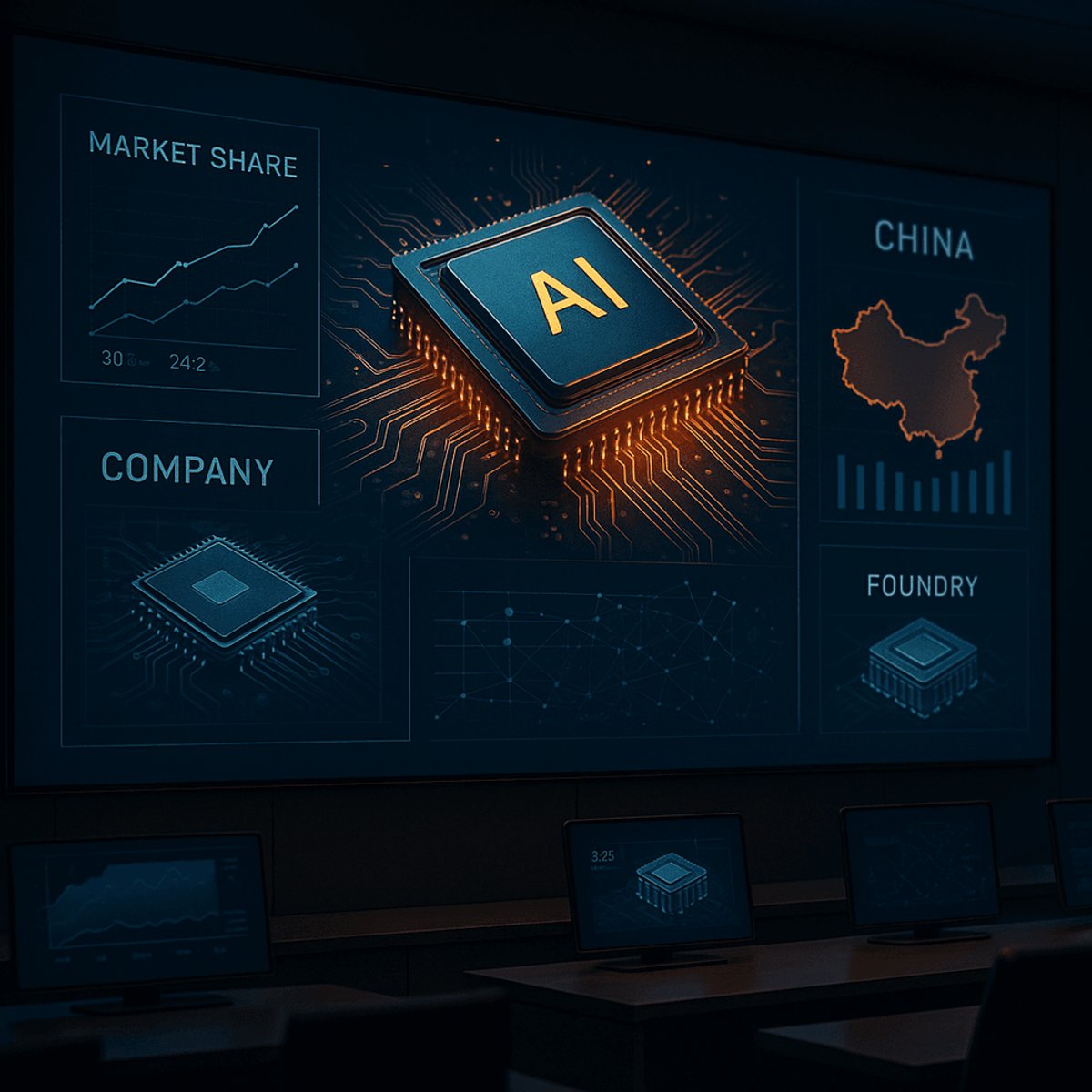
While China's AI chip sector is experiencing a public markets boom, the region's most formidable semiconductor player remains decidedly private. Huawei's chip division continues to outpace newer rivals hitting IPO roadshows, exposing a paradox in Beijing's push for semiconductor self-sufficiency. The company's dominance isn't just a market footnote—it signals how geopolitical pressure can create asymmetric advantages for private players sheltered from public scrutiny.
The IPO momentum is real. Over the past six months, China's semiconductor sector has seen a flood of new listings and roadshow announcements—companies eager to tap public markets as investors globally search for alternatives to Nvidia's dominance in AI chips. But beneath the headline-grabbing stock debuts sits a deeper truth that complicates the narrative of Chinese semiconductors "catching up." Huawei, by far the most advanced AI chip maker in the region, isn't going public anytime soon.
The contrast is stark. Biren, founded in 2021, has been hustling toward a public listing with its general-purpose GPUs. Metax is positioning itself as an alternative for cloud computing workloads. Moore Threads raised over $200 million to scale graphics processing. Even SMIC, the nation's foundry giant, continues courting institutional investors with expansion announcements. Yet all of these players lag Huawei's HiSilicon in actual performance metrics and design maturity.
What explains this divergence? Start with geopolitics. The Trump-era export controls that cut Huawei off from Qualcomm chips and advanced manufacturing didn't cripple the company—they forced it into overdrive on internal R&D. HiSilicon's engineers, already talented, suddenly became critical to the entire organization's survival. The company poured resources into custom AI accelerators, compiler stack optimization, and software-hardware codesign. The private status meant no quarterly earnings calls to appease, no activist investors demanding faster ROI timelines. Just single-minded chip development.
The newer public-track companies face a different pressure dynamic. They need to show revenue traction fast. They need growth stories. Going public accelerates both—access to capital, sure, but also an immediate audience of analysts looking for disruption narratives. It's why you're seeing these startups competing aggressively on price and positioning themselves as cost alternatives rather than performance leaders. Biren's pitch centers on affordability relative to Nvidia A100s. Moore Threads emphasizes software compatibility to lower customer switching costs. These are smart strategies, but they're reactive—responding to what Huawei's HiSilicon has already proven possible.
The market data backs this. According to industry tracking cited by investors familiar with the space, HiSilicon chips power roughly 40% of new AI inference deployments at Chinese cloud providers. The nearest competitor claims maybe 8-12%. That gap didn't appear overnight. It's the result of years of quiet iteration, architectural refinement, and the kind of freedom only private ownership—especially under state support—provides.
There's also a strategic calculation here about visibility and vulnerability. Going public makes Huawei's chip operations a more obvious target for further US sanctions. By keeping HiSilicon private, the company maintains operational opacity. Beijing's industrial policy machinery can work behind the scenes with fewer regulatory complications. The newer public players, by contrast, become symbols of Chinese semiconductor ambition—almost marketing assets for Beijing's narrative about technological self-reliance.
None of this means the public companies lack merit. SMIC's manufacturing capability is genuinely improving. Moore Threads and Metax are attracting real engineering talent. The capital they're raising will accelerate development. But they're starting from further back, and they're doing it in the daylight—every quarterly miss, every delayed product launch, becomes a public story. Huawei didn't have to manage that.
The bigger implication: China's AI chip ecosystem will probably benefit from both pathways. The public companies will handle commodity segments—inference, training clusters at lower price points. HiSilicon will likely stay at the high-performance frontier, where design complexity and proprietary innovation matter most. It's not either-or. It's a division of the market shaped by entirely different corporate structures and geopolitical circumstances.
China's semiconductor sector is building out through both channels: the headline-grabbing IPO wave and the quiet dominance of a private leader. This dual-track approach might actually be more resilient than a single-company strategy. The public chipmakers provide optionality, manufacturing scale, and competitive pressure that keeps innovation moving. Huawei's HiSilicon provides the proof of concept and the top-tier performance that anchors the entire ecosystem. For investors and policymakers watching the chip wars, the story isn't that China's startups are going public. It's that the most important player never had to.