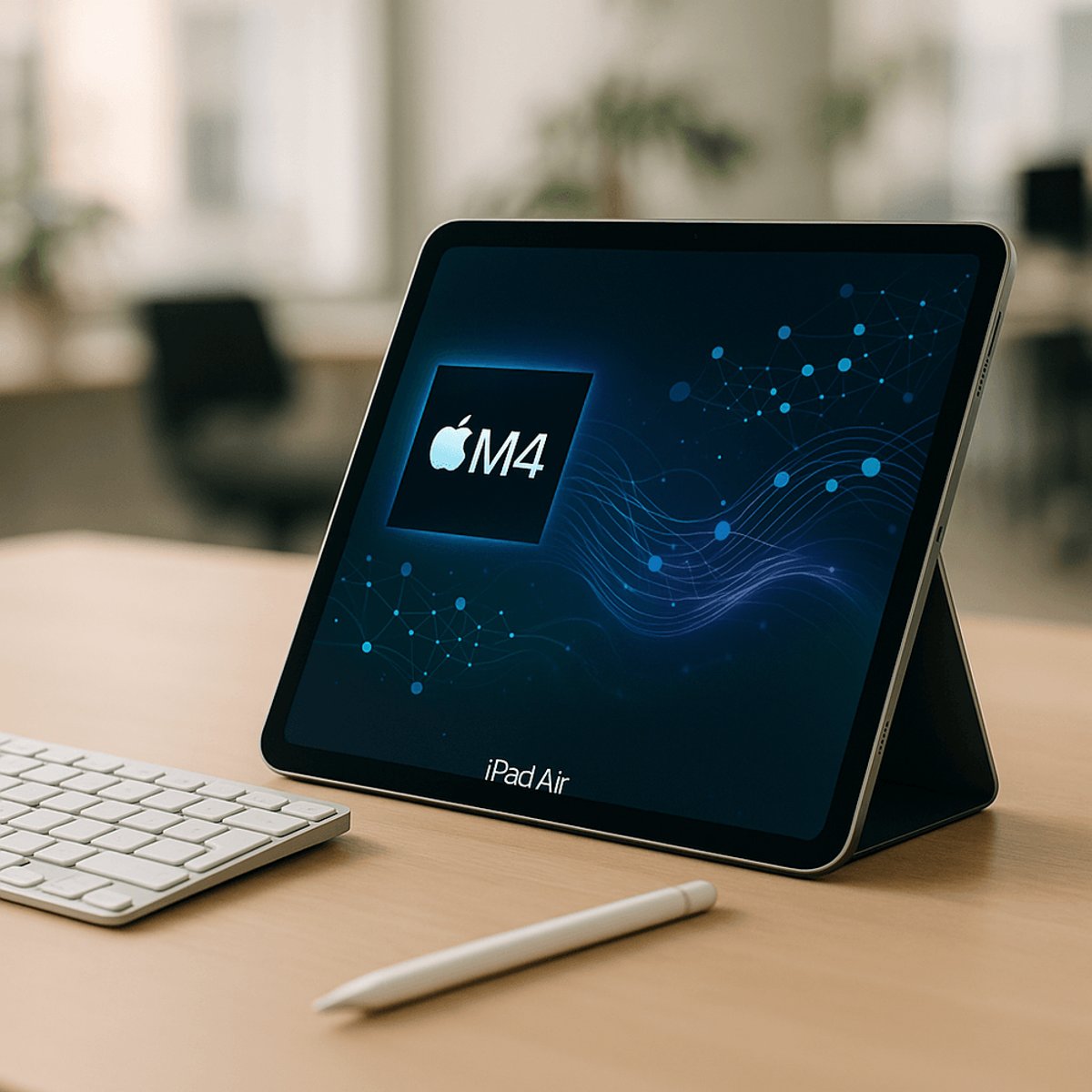
Apple just made its mid-range tablet a serious AI contender. The company dropped an M4-powered iPad Air refresh today, starting at $599, with boosted memory specifically designed to handle on-device AI tasks. It's a clear signal that Apple's betting big on bringing AI capabilities to mainstream devices, not just flagship hardware.
Apple is pushing AI capabilities down the product stack. The company's refreshed iPad Air, announced today, packs the same M4 chip that debuted in the iPad Pro last year, but at a significantly more accessible $599 starting price. The upgrade isn't just about raw speed - it's about making on-device AI processing available to the masses.
The timing tells you everything. While competitors scramble to cram AI features into cloud-dependent apps, Apple's doubling down on local processing. The M4 chip's neural engine and increased memory headroom mean the iPad Air can handle AI workloads without constantly phoning home to remote servers. That's a privacy advantage Apple's been hammering for years, and now they're making it affordable.
According to TechCrunch, the refresh specifically targets AI use cases with improved memory configurations. Translation: this thing's built to run Apple Intelligence features without breaking a sweat. The previous M2-powered Air could technically handle some AI tasks, but the M4 brings the kind of headroom that makes the difference between "it works" and "it flies."
The competitive landscape just shifted. Samsung has been positioning its Galaxy Tab S series as productivity powerhouses, but those devices lean heavily on cloud processing for AI features. Microsoft is pushing Copilot across its Surface lineup, but again, that's mostly server-side intelligence. Apple's now offering comparable AI horsepower that runs entirely on the device, and they're doing it at a price point that undercuts most premium tablets.
The M4 chip itself is the real story here. When Apple first introduced it in the iPad Pro, the focus was on display technology and creative workflows. But the neural engine inside that silicon was always the long game. It's the same processor architecture that powers Apple's most advanced AI features in MacBooks and iMacs. Bringing it to the $599 iPad Air means Apple's AI ambitions aren't limited to users who can drop $1,000+ on hardware.
Memory is the unsung hero of this refresh. AI models are memory hogs - they need room to breathe. By bumping the base RAM configuration, Apple's ensuring the iPad Air can keep multiple AI-powered apps running smoothly. That matters when you're editing photos with intelligent masking, transcribing audio in real-time, or using predictive text that actually understands context.
The pricing strategy is aggressive. At $599, Apple's positioning the M4 iPad Air directly against mid-range tablets that can't touch its AI capabilities. It's also creating a clear product tier: if you want ProMotion displays and top-tier accessories, you spring for the iPad Pro. But if you want serious AI performance without the premium, the Air just became the obvious choice.
What this means for developers is huge. Apple's essentially guaranteeing a growing install base of devices capable of running sophisticated on-device AI models. That changes the calculation for app developers who've been hesitant to build AI features that only work on flagship devices. Now they've got a broader target audience.
The ripple effects are already visible. Tablet sales have been flat for years, but AI-capable hardware could change that equation. If the iPad Air can handle tasks that previously required a laptop - sophisticated image editing, real-time translation, advanced note-taking with AI summaries - then Apple's not just selling a tablet upgrade. They're selling a new category of personal computing.
Watch the education market closely. Schools have been huge iPad customers, and the Air's price point sits right in the sweet spot for institutional buyers. If Apple can position AI-powered learning tools that run locally on these devices, they could lock in another generation of students on their platform. That's a long-term play Google Chromebooks should be worried about.
Apple's M4-powered iPad Air isn't just a spec bump - it's a statement about where consumer AI is heading. By bringing flagship AI processing to a $599 device, Apple's betting that on-device intelligence is the next major computing platform shift. The real test won't be benchmark scores, but whether users actually adopt AI features when they're fast, private, and built into hardware they can afford. If the strategy works, we'll look back at this refresh as the moment AI capabilities became truly mainstream. And competitors who've been banking on cloud-based AI will need to rethink their entire approach.