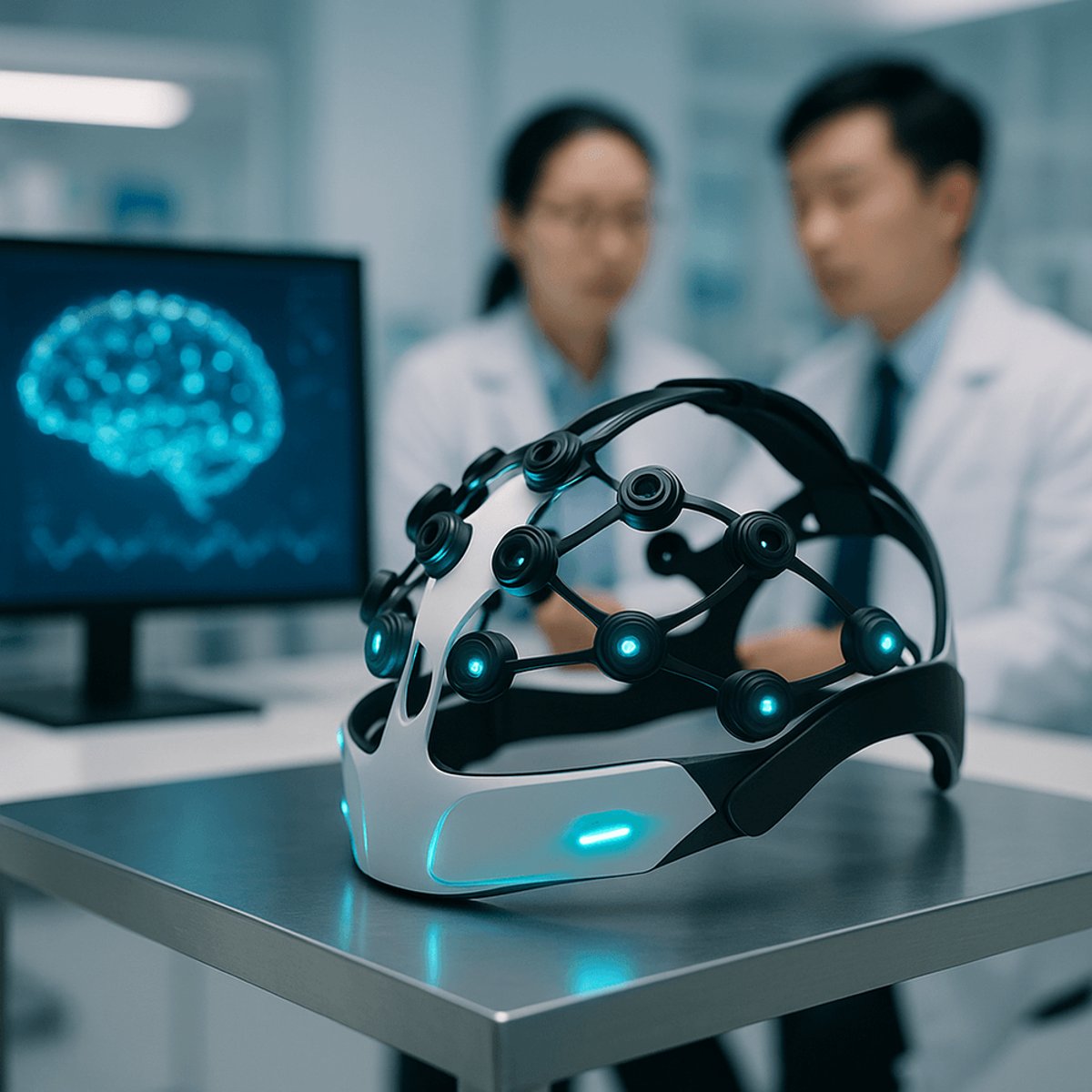
China's brain-computer interface industry is sprinting from lab benches to hospital beds, outpacing Western competitors in a race that could redefine how humans interact with machines. Fueled by aggressive government backing, a surge in clinical trials, and fresh venture capital, Chinese BCI startups are challenging Neuralink and Synchron on their home turf, while building a massive domestic market that's already testing devices on patients.
China just planted its flag in the neurotech frontier. The country's brain-computer interface industry is moving from academic research to real-world applications at a pace that's making Silicon Valley's BCI darlings nervous. While Neuralink grabs headlines with Elon Musk's bold promises, Chinese startups are quietly racking up clinical trials and regulatory milestones that could give them first-mover advantage in the world's largest healthcare market.
The acceleration isn't accidental. Beijing has made BCI development a strategic priority, weaving it into national science and technology plans with the kind of policy support that turns nascent industries into global powerhouses overnight. That backing is translating into tangible momentum for companies like NeuroXess, BrainCo, and Gestala, which are advancing both invasive and non-invasive BCI technologies at a clip that rivals or exceeds their Western counterparts.
What's particularly striking is the clinical trial velocity. Chinese firms are moving devices into human testing faster than their US peers, benefiting from regulatory frameworks that prioritize speed without sacrificing safety oversight. This isn't corner-cutting - it's strategic positioning. By logging more patient hours and real-world data earlier, Chinese companies are building the evidence base needed for commercial approvals while Synchron and Neuralink navigate lengthier FDA pathways.
The technology landscape is diversifying too. While much of the Western BCI conversation centers on invasive electrode arrays that require brain surgery, Chinese researchers are making serious progress on ultrasound-based approaches and minimally invasive options. Gestala, for instance, is exploring ultrasound BCI technology that could bypass the skull entirely, potentially offering a less risky pathway to widespread adoption. It's the kind of parallel innovation that could leapfrog today's surgical implants if the science pans out.
Investor appetite is following the momentum. Venture capital is flowing into Chinese BCI startups as funds bet on the sector's commercial potential and the massive domestic market opportunity. China's aging population and rising demand for assistive technologies create built-in demand for devices that can help paralyzed patients communicate or control prosthetics through thought alone. That's a market measured in tens of millions of potential users, dwarfing the addressable populations in Western markets.
BrainCo represents the consumer angle of this push. The company's work on non-invasive BCI devices targets applications beyond medical treatment - think focus-enhancing headbands for students or brain-controlled gaming interfaces. It's a bet that BCI technology won't just heal, but enhance, opening revenue streams that could fund more ambitious medical research down the line.
The geopolitical dimension is impossible to ignore. Brain-computer interfaces sit at the intersection of AI, biotechnology, and human augmentation - exactly the domains where US-China tech competition runs hottest. Whoever dominates BCI development will shape how the technology gets deployed, what ethical guardrails exist, and which countries control the intellectual property that underpins the next generation of human-machine interaction.
For Western companies, China's BCI surge presents both threat and opportunity. The threat is straightforward: losing technological leadership in a field that could be as transformative as smartphones. The opportunity lies in potential collaboration and knowledge-sharing, particularly on the scientific fundamentals that transcend national borders. But current trade tensions and technology export controls make such cooperation increasingly fraught.
What happens next will depend partly on regulatory outcomes. If Chinese firms can demonstrate safety and efficacy in large-scale trials and secure domestic approvals, they'll have a proven product to take global. That could force Western regulators to accelerate their own approval timelines or risk ceding the market. Alternatively, if safety concerns emerge or clinical results disappoint, the entire sector's timeline could shift.
The brain-computer interface race is no longer just about whether Elon Musk can make good on his promises. It's about whether China's coordinated industrial policy can outmaneuver Silicon Valley's startup model in the most intimate technology ever developed - one that literally reads your mind.
China's brain-computer interface industry is transitioning from promise to practice faster than most observers expected, backed by policy muscle and clinical momentum that's rewriting the competitive landscape. For investors, technologists, and policymakers watching the AI race, BCI represents the next frontier - where the competition isn't just about building smarter software, but about fundamentally redefining the interface between human cognition and digital systems. The country that gets there first won't just win market share; it'll set the template for how billions of people eventually think alongside machines.