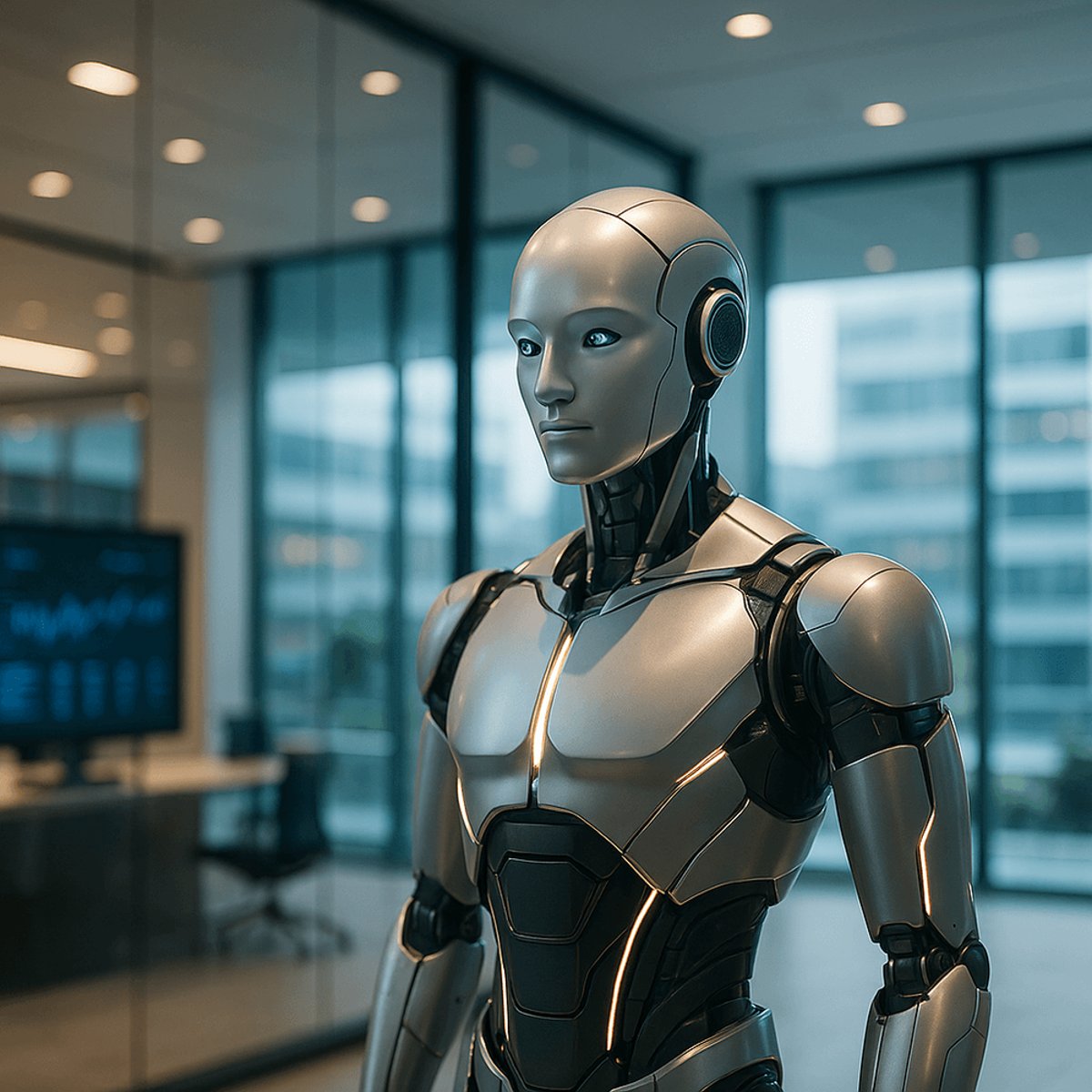
Unitree's sleek G1 humanoid robot just became the year's most unexpected AI industry commentator. CNBC asked KOID, a 77-pound machine with a glowing face and 23 degrees of motion freedom, whether the AI boom is actually a bubble. The answer? A perfectly non-committal "only time will tell." It's a charming moment that captures something deeper about the humanoid robotics race: while Tesla's Optimus remains vaporware, Chinese companies are already shipping robots to customers.
CNBC did something delightfully absurd on Tuesday: it asked a humanoid robot about the AI bubble. The result was surprisingly thoughtful, if deliberately hedged.
KOID, a Unitree G1 model manufactured by one of China's fastest-rising robotics companies, delivered its verdict on whether the AI boom is destined to pop. "We might see a lot of excitement around AI right now, but whether it's a bubble or just a transformative wave, is something only time will tell," the robot said during a segment on CNBC's Power Lunch.
It's a perfect non-answer—the kind of diplomatic language you'd expect from a CEO in earnings calls, not a 77-pound machine with a glowing ring for a face. Yet there's something telling about the moment. Here's Unitree, a Chinese robotics startup that most Americans have never heard of, confidently deploying actual humanoid robots in customer hands while Tesla's Optimus robots remain more myth than market reality. The fact that CNBC is interviewing a robot about robot viability says something about how far the technology has come—and how much hype is already priced in.
KOID isn't some experimental prototype locked in a lab. The robot is available for purchase through RoboStore, America's largest distributor of Unitree robots. Prices range from $8,990 to $128,900 depending on the model and customization. You can literally buy one today. The G1 model KOID represents has 23 degrees of freedom—specific points where it can move independently—which lets it pull off everything from dancing to boxing. It's Nvidia-powered, naturally, running the AI infrastructure that's become table stakes for any robot claiming true autonomy.
What's fascinating is the contrast between the hype and the reality. RoboStore CEO Teddy Haggerty was remarkably candid about where the industry actually stands. "We're in the prototyping stage," he told CNBC's Power Lunch. The fundamental question remains unsolved: what do we actually want robots to do? Are they housekeepers? Manufacturing workers? Job replacers? That uncertainty, even as companies are already selling these machines, is where the bubble talk gets real.
Yet Unitree is betting that the future is now. The company just unveiled its H2 model earlier this year and dominated competitions like the World Robot Conference and World Humanoid Robot Games. It's not content to wait around—Unitree is heading toward an IPO that could value the company at up to $7 billion. That's serious capital betting serious money that humanoid robots are about to go from niche curiosity to mainstream presence.
The competitive landscape tells the story. Tesla's Elon Musk has been talking up Optimus as a future pillar of the company's valuation for months, but the robots haven't hit the market. Meanwhile, Boston Dynamics and Agility Robotics are also racing forward. But Unitree is the one actually shipping units and building distribution networks in the US. That's the gap between vaporware and real business.
KOID's answer to the bubble question—that time will tell—is actually the most honest assessment anyone's given. The robot itself is evidence that something real is happening. But whether the current valuation expectations and deployment timelines are justified? That's the genuine open question. The humanoid robotics boom may not be a bubble. But we're definitely in uncharted territory where hype and substance haven't fully aligned yet.
The real story isn't whether a robot can sound thoughtful about market trends—it's that robots like KOID are already shipping to paying customers while competitors are still in announcement mode. Unitree turning an AI industry debate into a moment of self-aware robot commentary is both clever television and a subtle flex on competitors stuck in development purgatory. Whether this moment marks the beginning of a genuine humanoid robotics era or just the early stages of a speculative bubble, KOID's answer applies equally well to the company's own IPO plans: only time will tell.