Your internet service provider just became an AI factory. Comcast and NVIDIA announced they're deploying GPU-accelerated compute directly into the cable network infrastructure that already reaches 65 million homes and businesses across America. Think of it as bringing the cloud down from orbit and embedding it in your neighborhood.
This marks a fundamental shift in how AI gets delivered. For years, the assumption was simple: train models in massive data centers, send queries up to the cloud, wait for answers to bounce back. But AI inference is breaking that old cloud model by forcing distributed architecture across edge, core, and cloud to work together. The Comcast-NVIDIA collaboration positions intelligence milliseconds from end users rather than hundreds of milliseconds away in distant server farms.
Why Cable Networks Win the Edge AI Race
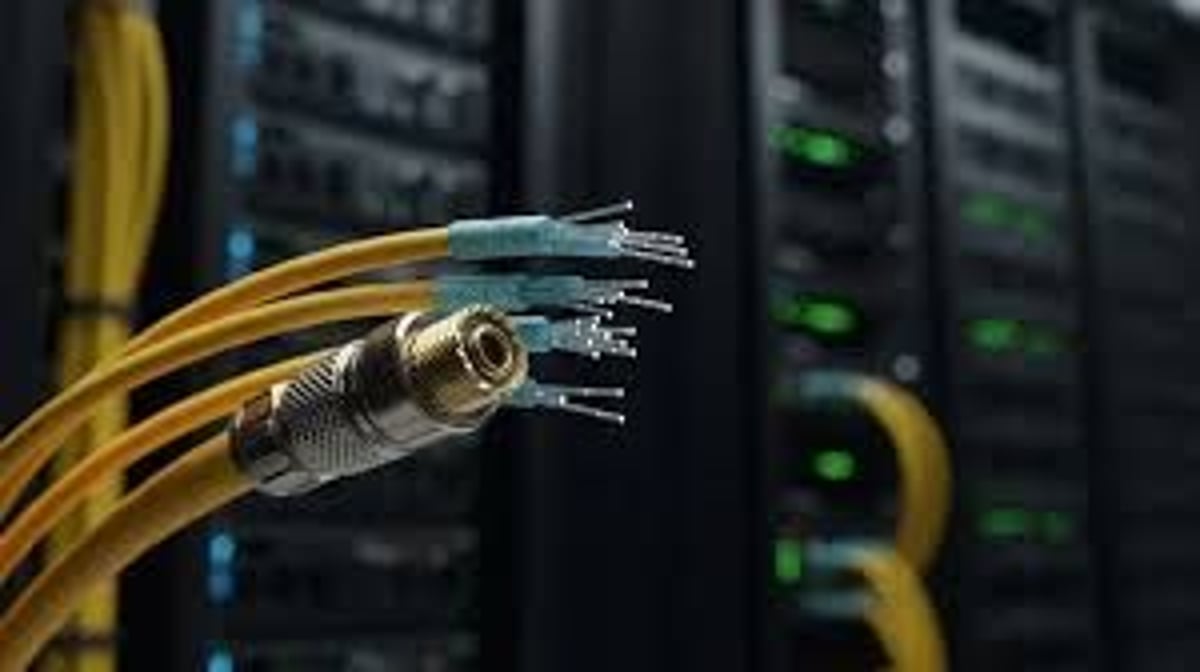
Here's the counterintuitive part. Comcast's hybrid fiber-coax (HFC) architecture, the same physical plant that brought you cable TV in the 1990s, turns out to be eerily well suited for distributed AI workloads. The company has quietly transformed that legacy infrastructure into something new: 1,300 virtualized cable modem termination system nodes, over 50,000 edge compute servers, and 100,000+ AI-capable smart amplifiers running DOCSIS 4.0 Full Duplex technology.
That distributed topology matters because you don't need massive GPU coordination for an inference workload the way you do for training. Video ads customized to household preferences, small business AI receptionists, ultra-low-latency gaming streams: these applications care more about proximity than raw horsepower. Running them in regional facilities scattered across the country delivers better economics and performance than hauling every request to Virginia or Oregon.
The technical architecture behind this is genuinely novel. Comcast has embedded intelligence directly into network amplifiers and nodes using DOCSIS 4.0 chipsets co-developed with Broadcom that support simultaneous upload and download at multi-gigabit speeds while running real-time AI inference. The system can detect power outages, self-configure around network noise, and optimize traffic patterns autonomously. Edge compute platforms process telemetry data locally, training models that improve network reliability without shipping raw data to centralized locations.
Three Use Cases That Signal What's Coming
The initial trial applications reveal the playbook. First up: hyper-personalized video advertising powered by Decart's real-time AI video models, customizing ads down to individual households based on language, content preferences, and demographics. No more wasting impressions showing Spanish-language car ads to Mandarin speakers or retirement planning spots to college students.
Second: an AI-powered small business concierge running on HPE ProLiant servers with Personal AI's small language models, essentially giving every corner store the same virtual front desk capabilities that enterprise customers pay thousands monthly to deploy. Greeting customers, managing appointments, answering FAQs, all processed locally with no cloud roundtrip delay.
Third: gaming latency improvements building on technology Comcast already deployed for NVIDIA GeForce NOW. When GPU resources live physically closer to players, responsiveness jumps. Competitive gamers measure advantage in single-digit milliseconds.
The Grid Question
This announcement arrives as the infrastructure world grapples with a power crisis. Goldman Sachs estimates that approximately $720B in grid upgrades will be required through 2030 to meet projected data center demand, with wait times for power connections extending up to five years in premium markets like Northern Virginia and Silicon Valley. Meanwhile data center occupancy rates increased from 85% in 2023 to over 95% by late 2025.
The distributed approach sidesteps part of this bottleneck. Rather than building another gigawatt-scale facility competing for scarce transmission capacity, partnerships between EPRI, NVIDIA, Prologis and InfraPartners are creating smaller scale (5-20MW) distributed data centers closer to utility substations with available grid capacity. Comcast's existing edge infrastructure already sits at these dispersed locations with power provisioned and cooling deployed.
What This Means for Builders and Investors
The telco-as-compute-platform thesis looked dubious for a decade. 5G was supposed to enable edge computing magic; mostly it delivered slightly faster TikTok. But the convergence of small language models optimized for efficiency, real-time inference requirements, and grid constraints creates genuine demand for what Comcast is offering.
Watch for new business models around third-party edge compute services. Comcast has already piloted with Vapor IO to let outside developers host applications in local markets. If the economics work, cable operators transform from connectivity pipes into distributed cloud platforms, monetizing the compute capacity sitting idle between peak usage hours.
The competitive landscape shifts too. Fiber providers can't easily replicate this distributed edge footprint without massive capital deployment. Wireless carriers have distributed infrastructure but lack the backhaul capacity and power density. Akamai is the first global-scale implementation of NVIDIA AI Grid, intelligently routing AI workloads across its edge, regional, and core footprint, but cable operators control the actual last mile to homes and businesses.
For real estate and infrastructure investors, this validates the thesis that existing telecom assets appreciate in value as AI workloads migrate from centralized to distributed models. The cable plant built to deliver reruns of Friends turns out to be perfectly positioned for the age of ambient intelligence.
Comcast will share additional details at GTC in San Jose this week. The demos better be convincing. The entire telecom industry is watching to see if the last mile can become the first mile for AI deployment.