Databricks is making a major strategic pivot into cybersecurity with the launch of Lakewatch, an AI-powered security platform designed to help organizations respond faster to emerging threats. The move comes as the data analytics unicorn bulks up its product portfolio ahead of an anticipated IPO, potentially opening a new multi-billion dollar revenue stream in the enterprise security market. With cyber attacks accelerating and vulnerabilities being disclosed at record rates, Databricks is betting its AI expertise can give it an edge in one of tech's most lucrative sectors.
Databricks is stepping into the cybersecurity ring with Lakewatch, an AI-powered security platform that marks the data analytics giant's most aggressive product expansion yet. The timing isn't coincidental - the company is widely expected to go public in the coming months, and adding a security play to its portfolio could significantly juice its valuation in a market where cybersecurity startups regularly command premium multiples.
The company is drawing on its core AI capabilities to tackle what's become a critical pain point for enterprises: the speed gap between when vulnerabilities get disclosed and when organizations can actually respond. According to recent industry reports, attackers are weaponizing newly disclosed vulnerabilities faster than ever, sometimes within hours. Databricks argues that traditional security tools can't keep pace, and that AI-driven automation is the only viable path forward.
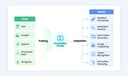
Lakewatch appears designed to sit on top of Databricks' existing data lakehouse platform, giving it access to massive amounts of security telemetry that organizations are already collecting. That's a smart architectural choice - it means customers don't need to rip and replace their existing infrastructure, and Databricks can leverage data it's already storing to power threat detection. The platform uses machine learning models to identify anomalies, correlate threat intelligence with internal logs, and automatically suggest or execute response actions.
For Databricks, this represents a calculated bet on convergence. The lines between data analytics, AI, and security have been blurring for years, and the company clearly sees an opportunity to own more of that stack. It's not dissimilar to how Microsoft leveraged its Office dominance to build a security empire, or how Amazon Web Services parlayed cloud infrastructure into a suite of security services.
The IPO angle here is impossible to ignore. Databricks has been one of the most valuable private companies in enterprise software, with its last funding round reportedly valuing it north of $40 billion. But the IPO market has been brutal for single-product companies, and investors have rewarded platform plays that can demonstrate multiple revenue streams. By launching Lakewatch now, Databricks can potentially walk into roadshow meetings with a more diversified story and early traction in a category that commands some of the highest willingness-to-pay in enterprise tech.
The cybersecurity market is notoriously difficult to crack, though. Established players like CrowdStrike, Palo Alto Networks, and Microsoft have deeply entrenched relationships with CISOs and massive sales engines built specifically for security buyers. Databricks will need to prove it can navigate a sales cycle that's fundamentally different from selling data analytics platforms - security purchases often involve lengthy POCs, compliance reviews, and buy-in from risk committees.
What Databricks has going for it is timing and technology. The cybersecurity industry is in the middle of a generative AI arms race, with every major vendor scrambling to integrate LLMs into their products. But most are bolting AI onto legacy architectures. Databricks can potentially build AI-native security from the ground up, using the same underlying models and infrastructure that already power its analytics products. That architectural advantage could translate into better detection accuracy, faster response times, and lower operational overhead.
The product launch also signals where Databricks thinks the market is heading. Rather than competing head-on with endpoint detection or network security vendors, Lakewatch appears positioned as a security analytics and orchestration layer - think SIEM meets SOAR with AI baked in. That puts it more in competition with players like Splunk (now owned by Cisco) and emerging security data lake vendors. It's a smart positioning that plays to Databricks' strengths in handling massive data volumes and running complex analytics at scale.
For enterprise buyers, the value proposition is clear but the execution risk is real. If Lakewatch can actually deliver on the promise of AI-powered threat response, it could dramatically reduce the time between detection and remediation. But security teams are notoriously skeptical of new vendors, especially those without a track record in the category. Databricks will need to invest heavily in building security-specific expertise, hiring threat researchers, and proving it can keep pace with the rapidly evolving threat landscape.
The launch comes at a moment when organizations are drowning in security alerts and struggling with tool sprawl. The average enterprise uses dozens of security products, generating thousands of alerts daily that overwhelm security operations teams. If Databricks can use AI to cut through that noise and automate response workflows, it'll find plenty of interested buyers. The question is whether it can execute on that vision fast enough to gain meaningful market share before its IPO window opens.
Databricks' entry into cybersecurity with Lakewatch represents a high-stakes bet that AI can disrupt one of enterprise tech's most entrenched markets. The timing ahead of its IPO is strategic - a successful security product could diversify revenue and command premium valuation multiples. But the company faces an uphill battle against established vendors with deep security expertise and customer relationships. The key question isn't whether AI-powered security is the future - most experts agree it is - but whether Databricks can execute fast enough to become a credible player before it goes public. For CISOs and security teams watching this space, Lakewatch represents an intriguing option worth evaluating, especially for organizations already invested in the Databricks ecosystem. The next few quarters will reveal whether this is a genuine platform expansion or a pre-IPO product launch designed more for investor pitch decks than security operations centers.