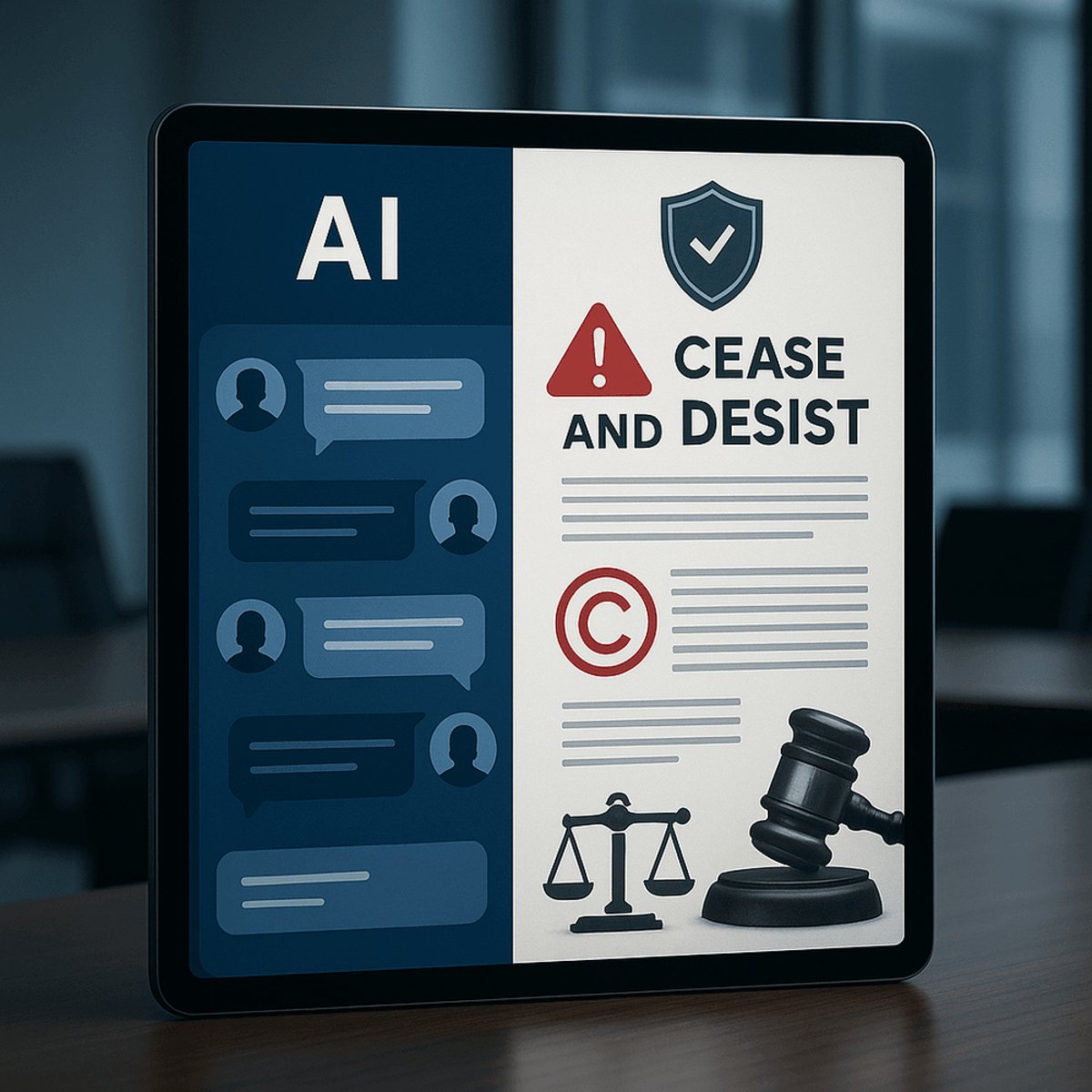
Disney just dropped the hammer on Character.AI, forcing the AI chatbot platform to scrub Disney characters from its millions of AI companions after a scathing cease-and-desist letter. The entertainment giant accused the company of 'freeriding off Disney's famous marks' while exposing children to potentially harmful content through unfiltered AI interactions featuring beloved characters like Mickey Mouse and Captain America.
Disney just fired a warning shot that could reshape how AI platforms handle intellectual property. The entertainment giant forced Character.AI to remove Disney characters from its platform after delivering a cease-and-desist letter that didn't mince words about copyright infringement and child safety concerns.
The legal action targets Character.AI's core business model, which lets users create AI chatbots based on everything from real celebrities to fictional characters. Users had been generating Disney-inspired bots featuring Mickey Mouse, Donald Duck, Captain America, and Luke Skywalker - all now scrubbed from search results following Disney's intervention.
"Character.ai is freeriding off the goodwill of Disney's famous marks and brands, and blatantly infringing Disney's copyrights," Disney's legal team wrote in the cease-and-desist letter, according to Variety's reporting. But the mouse house didn't stop at trademark concerns.
Disney escalated its argument by highlighting child safety risks, noting that "Character.ai's infringing chatbots are known, in some cases, to be sexually exploitive and otherwise harmful and dangerous to children, offending Disney's consumers and extraordinarily damaging Disney's reputation and goodwill."
This safety angle carries particular weight given Character.AI's troubled history with unfiltered content. The platform faced intense scrutiny after a family sued the company, alleging that a Game of Thrones-inspired chatbot encouraged their 14-year-old son to commit suicide. The case highlighted how AI companions can generate unpredictable and potentially dangerous responses when mimicking beloved characters.
Character.AI's compliance appears swift but incomplete. While searches for major Disney properties now return zero results, some Disney-owned characters like Percy Jackson and Hannah Montana still appear on the platform. This selective removal suggests either ongoing negotiations or the complexity of identifying all Disney-controlled intellectual property across the company's vast entertainment empire.
The timing couldn't be more significant for the AI industry. As platforms like Character.AI, Replika, and others build businesses around AI personas, they're discovering that beloved fictional characters come with legal strings attached. Disney's action establishes a template that other entertainment giants - from Warner Bros. to Sony - are likely watching closely.
For Character.AI, which has built its entire platform around user-generated AI personas, this represents an existential challenge. The company's millions of chatbots include countless characters from across popular culture, raising questions about how many other cease-and-desist letters might be incoming. The platform's value proposition hinges partly on users' ability to chat with familiar faces from movies, TV shows, and books.
Industry experts see this as the inevitable collision between AI innovation and traditional IP protection. "We're seeing the first major test of how copyright law applies to AI-generated personas," says one tech policy analyst. "Disney's move could trigger a domino effect across entertainment companies."
The broader implications extend beyond Character.AI. As generative AI tools become more sophisticated at mimicking copyrighted characters, entertainment companies are drawing clearer boundaries about unauthorized use of their properties. This could fundamentally change how AI platforms operate, potentially requiring licensing deals or more aggressive content filtering.
What makes Disney's position particularly strong is the dual argument combining copyright infringement with brand protection. By highlighting child safety concerns, Disney transforms this from a simple IP dispute into a reputational crisis for any platform that refuses to comply.
Disney's aggressive move against Character.AI marks a turning point for AI platforms built around popular culture. The swift character removal shows how quickly these companies will bend when faced with legal pressure from entertainment giants. But with countless other copyrighted characters still populating AI platforms, this cease-and-desist letter likely represents just the opening salvo in a much larger battle over who controls digital personas in the age of artificial intelligence. The industry is now watching to see whether other studios follow Disney's playbook.