Q-Games just dropped something that'll mess with your head. Dreams of Another isn't your typical game - it's more like stepping into someone else's fever dream, where talking benches ponder consciousness and guns create instead of destroy. The PixelJunk developer's latest project throws gaming conventions out the window for six hours of pure artistic weirdness.
Q-Games just released something that feels like it shouldn't exist in today's gaming landscape. Dreams of Another lands on PS5 and PC as a deliberate rejection of everything we expect games to be - and somehow that's exactly what makes it work.
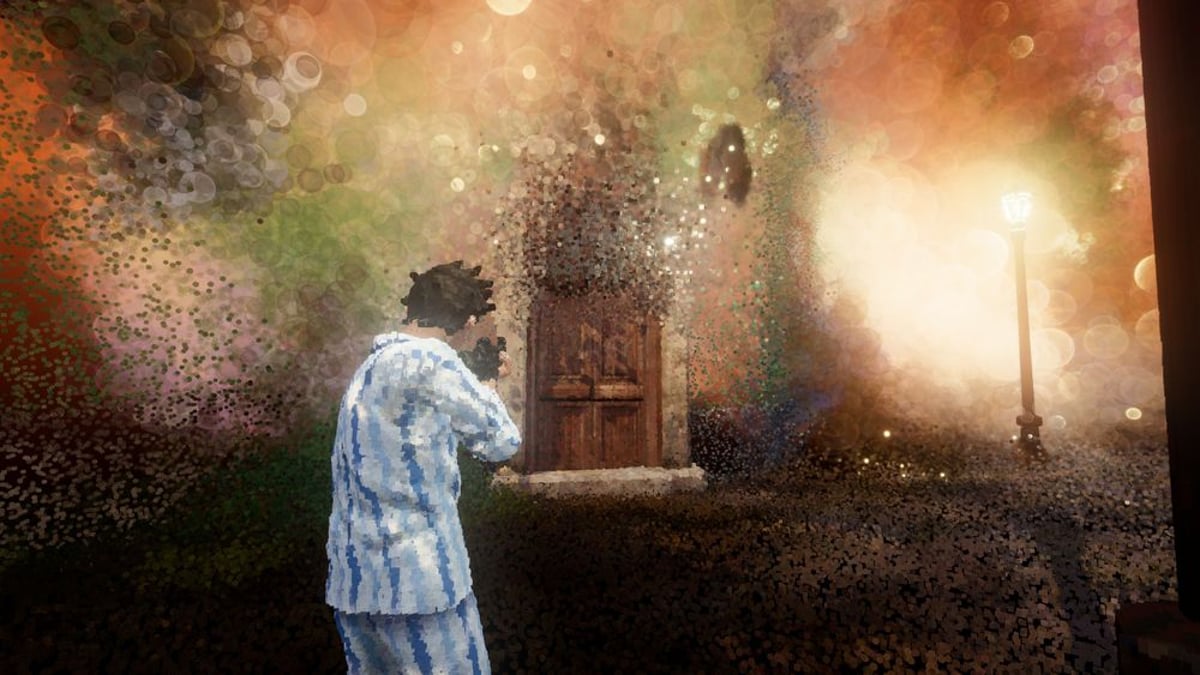
The game drops you into the role of the Man in Pajamas, wielding a gun that does the opposite of what guns usually do in video games. Instead of destruction, it creates. When The Verge's Jay Peters fired at scattered colorful fragments across surreal landscapes, they solidified into benches, trees, buildings, and even people - all held together by those same loose pieces that could scatter again at any moment.
This isn't accidental weirdness. Q-Games, the studio behind the beloved PixelJunk series, deliberately crafted an experience that operates more like a series of art installations than a traditional game. Each vignette lasts just a few minutes before the world dissolves to white and deposits you somewhere entirely new, often without explanation or transition.
The conversations you'll have defy logic in the best possible way. A clown creates massive ring statues from divorced couples' wedding bands. An elderly woman takes a photo of her husband and casually mentions it'll "make a nice funeral portrait for him." Even inanimate objects like benches engage in philosophical discussions about consciousness. Characters deliver dialogue in halting, unnatural rhythms that somehow feel more honest than polished voice acting.
Q-Games calls it a "third-person exploration-action game," but that description misses the point entirely. Dreams of Another functions as interactive art that happens to use gaming controls. The developer prioritizes exploring themes of consciousness, human nature, and artistic expression over traditional gameplay satisfaction or narrative coherence.
This approach won't work for everyone. The game's six-hour runtime demands patience with ambiguity and comfort with moments that don't "make sense" in conventional terms. But for players willing to embrace that unpredictability, Dreams of Another delivers something genuinely unique - those profound moments that stick with you long after the credits roll, just like fragments from actual dreams.
The timing feels significant too. While major studios chase photorealistic graphics and established formulas, smaller developers like Q-Games continue pushing boundaries with projects that couldn't exist within traditional publishing constraints. Dreams of Another joins a growing library of experimental games that treat interactivity as an art medium rather than just entertainment.
For indie game enthusiasts and anyone curious about gaming's artistic potential, Dreams of Another represents something rare: a game that trusts players to find meaning in confusion and beauty in fragments. It's not trying to be fun in the traditional sense - it's trying to be memorable, and in that goal, it absolutely succeeds.
Dreams of Another won't satisfy everyone, but it achieves something more valuable than universal appeal - it creates genuine artistic impact. Q-Games has crafted an experience that lingers in memory like fragments from actual dreams, proving that games can be profound without being traditionally "fun." For players seeking something that challenges conventions rather than reinforces them, this surreal six-hour journey offers rewards that extend far beyond the final scene.