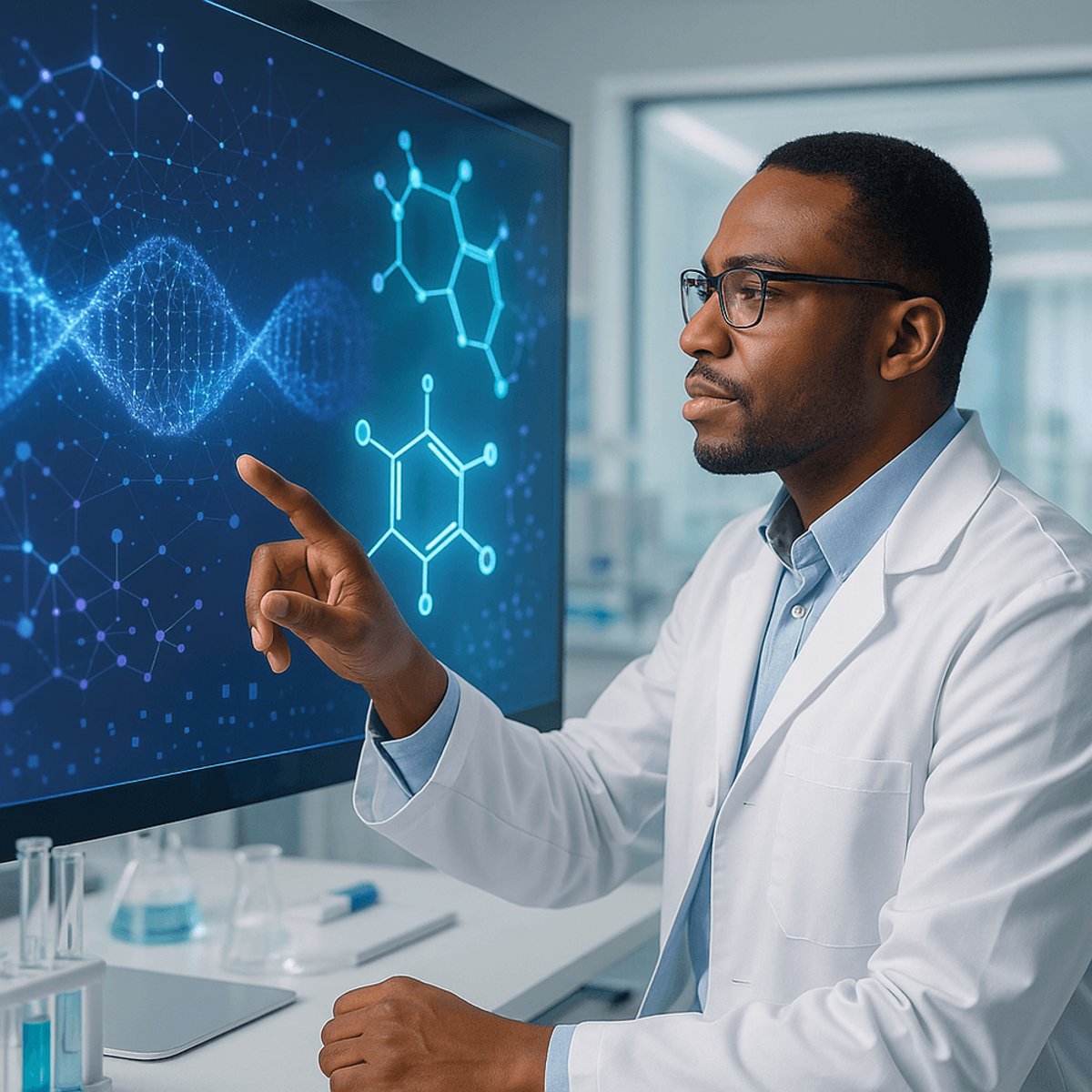
Pharmaceutical heavyweight Eli Lilly just placed a massive bet on AI-designed medicine, striking a $2.75 billion deal with Hong Kong-listed Insilico Medicine to commercialize drugs discovered entirely by artificial intelligence. The agreement, which includes $115 million upfront, marks one of the largest AI drug discovery partnerships to date and signals Big Pharma's growing confidence that machine learning can slash the traditional 10-15 year timeline for bringing new treatments to market.
Eli Lilly, the Indianapolis-based pharmaceutical titan behind blockbuster diabetes and weight-loss drugs, is putting serious money behind artificial intelligence's promise to revolutionize drug discovery. The company's newly announced partnership with Insilico Medicine carries a headline value of $2.75 billion, with $115 million flowing immediately to the Hong Kong-listed AI biotech firm.
The deal grants Lilly global rights to develop and commercialize multiple drug candidates identified through Insilico's machine learning platform, which uses neural networks to predict molecular structures that might treat specific diseases. Traditional drug discovery relies on years of laboratory screening and human intuition. Insilico's AI can scan billions of potential compounds in weeks, identifying promising candidates that human researchers might never consider.
For context, bringing a single new drug to market typically costs pharmaceutical companies between $1 billion and $2 billion over a decade or more. If AI can compress that timeline even by a few years while maintaining safety and efficacy, the economic implications are staggering. Lilly's willingness to write a nine-figure check upfront suggests the company's internal data shows Insilico's AI-discovered molecules are advancing through preclinical testing faster than conventional candidates.
The pharmaceutical industry has been circling AI drug discovery for years, but mostly through cautious pilot programs and research collaborations. This deal is different in scale and commitment. The $2.75 billion total value likely includes milestone payments tied to clinical trial progress and regulatory approvals, but the $115 million upfront payment demonstrates Lilly sees immediate commercial potential in Insilico's pipeline.
Insilico Medicine has been building its AI platform since 2014, focusing on using generative adversarial networks and reinforcement learning to design novel molecules from scratch. The company already has multiple AI-discovered drugs in clinical trials for conditions including idiopathic pulmonary fibrosis and cancer. Those programs validate that AI-generated compounds can actually work in human patients, not just computer simulations.
Lilly's move puts pressure on competitors like Pfizer, Merck, and AstraZeneca to accelerate their own AI initiatives. The pharmaceutical sector watched cautiously as tech companies promised AI would transform healthcare, but many executives remained skeptical about whether algorithms could truly replace decades of human expertise in molecular biology. This deal suggests the skepticism is fading.
The partnership also highlights a geographic shift in pharmaceutical innovation. While Insilico maintains operations in multiple countries, its Hong Kong listing and strong presence in Asia reflects how AI drug discovery is becoming a global race rather than a Western-dominated field. Chinese biotech firms have been particularly aggressive in deploying AI for drug development, sometimes moving faster than their American counterparts hamstrung by more conservative corporate cultures.
What makes AI drug discovery compelling isn't just speed but the ability to explore chemical space that humans would never intuitively investigate. Machine learning models can identify molecular patterns and predict protein interactions in ways that don't align with conventional pharmaceutical wisdom. Some of Insilico's most promising candidates have structures that medicinal chemists initially doubted would work, only to see them succeed in animal models and early human trials.
The financial structure of the deal reveals how pharmaceutical companies are adapting to AI partnerships. Rather than acquiring Insilico outright, Lilly is essentially licensing specific programs while letting the AI company continue developing other candidates. This model allows biotech firms to maintain independence and potentially strike similar deals with multiple pharma partners for different therapeutic areas.
For Lilly specifically, the investment aligns with the company's current momentum in metabolic diseases and immunology. The company's Mounjaro and Zepbound drugs for diabetes and obesity have become billion-dollar franchises, generating cash flow that can fund ambitious R&D bets. Management clearly believes AI-discovered drugs could deliver the next generation of blockbusters.
The pharmaceutical industry's embrace of AI extends beyond drug discovery into clinical trial design, patient recruitment, and manufacturing optimization. But drug discovery remains the highest-value application because it addresses the industry's most expensive problem: the high failure rate of new molecules. If AI can improve the success rate from lab to clinic even modestly, the return on investment becomes compelling.
What happens next will be closely watched across the healthcare sector. If Insilico's AI-discovered drugs successfully navigate Phase 2 and Phase 3 trials, expect a wave of similar mega-deals as every major pharmaceutical company scrambles to secure AI partnerships. If the molecules fail at the same rate as traditionally discovered drugs, the AI hype cycle in pharma will face a reckoning.
This $2.75 billion partnership between Eli Lilly and Insilico Medicine represents a watershed moment for artificial intelligence in healthcare. It's one thing for tech executives to promise AI will transform medicine - it's another for a major pharmaceutical company to commit this level of capital to drugs designed by algorithms rather than human chemists. The deal validates years of work by AI biotech startups and signals that machine learning has moved from research curiosity to commercial reality in drug development. Whether these AI-discovered molecules actually deliver better patient outcomes remains to be proven in clinical trials, but the industry's willingness to bet billions suggests the technology has already cleared a critical credibility threshold. For investors, researchers, and patients watching the AI revolution in healthcare, this deal marks the moment when theoretical potential started becoming commercial practice.