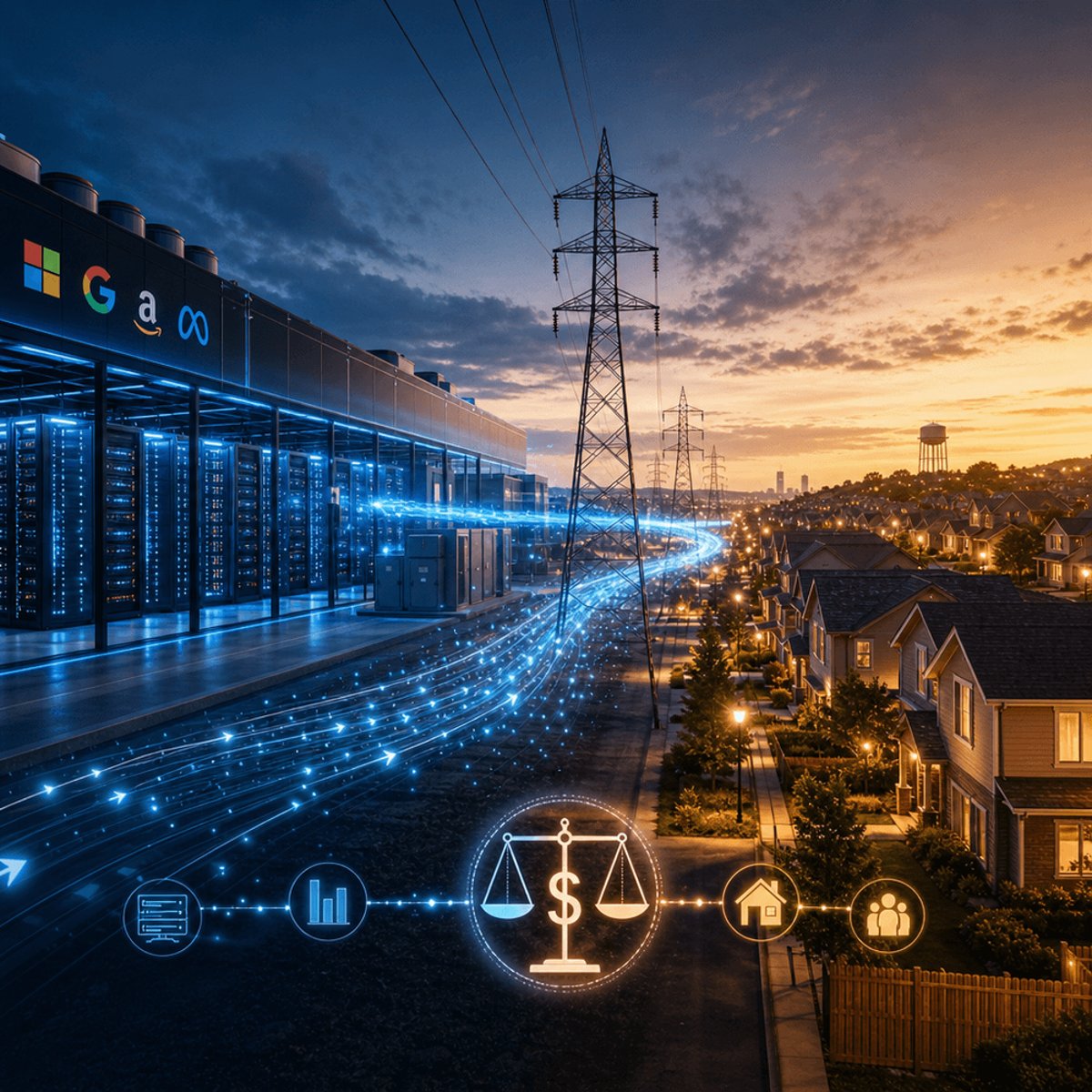
As communities across America push back against power-hungry AI data centers, Entergy CEO Drew Marsh is making a bold counter-argument. The utility chief told CNBC that massive compute facilities can actually benefit local ratepayers rather than burden them with higher electricity bills. The comments arrive as utilities nationwide grapple with unprecedented power demand from AI infrastructure, sparking heated debates over who pays for grid expansion.
Entergy CEO Drew Marsh is pushing back hard against a narrative that's gaining steam in town halls across America - that AI data centers will send your power bill through the roof. Speaking with CNBC, Marsh argued that the massive compute facilities popping up in Entergy's service territory can actually be a win for local communities rather than a burden on residents.
The timing of Marsh's comments is telling. Utilities are facing unprecedented pressure as Microsoft, Google, Amazon, and Meta race to build AI infrastructure that can gulp down gigawatts of power. Community groups have started organizing against proposed data center projects, worried that existing ratepayers will foot the bill for costly grid upgrades while tech giants reap the benefits.
But Marsh sees a different economic equation playing out. Large data center customers typically sign long-term contracts at commercial rates significantly higher than residential tariffs. That premium pricing, the argument goes, helps spread infrastructure costs across a broader base - potentially stabilizing or even reducing what everyday customers pay. Entergy serves 3 million customers across Arkansas, Louisiana, Mississippi, and Texas, regions that have become hotbeds for data center development thanks to cheaper land and favorable business climates.
The utility industry's pitch faces serious skepticism. Critics point out that data centers require massive upfront investments in transmission lines, substations, and generation capacity. Those costs get built into rate bases regardless of who's paying premium prices. And when a single AI training facility can demand as much power as a small city, the math doesn't always work in residents' favor - especially if utilities overshoot demand projections.
Entergy isn't alone in making this case. Duke Energy, Dominion Energy, and other utilities with data center-heavy territories have echoed similar talking points at recent investor meetings. They're betting that data center revenues can offset the flat or declining residential demand that's plagued the industry for years. But the regulatory picture remains messy, with state utility commissions taking wildly different approaches to how data center costs get allocated.
The stakes extend beyond electricity bills. Tech companies have committed to carbon-neutral operations, pushing utilities to build out renewable capacity at unprecedented scale. Microsoft recently signed what it called the largest corporate renewable energy deal in history. That kind of demand could accelerate the clean energy transition - or lock in decades of natural gas infrastructure if utilities can't build renewables fast enough.
Marsh's comments also reveal the precarious position utilities find themselves in. They need data center load to justify capital expenditures and keep investors happy. But if they're seen as prioritizing tech giants over everyday ratepayers, they risk political backlash that could undermine future approvals. Several state legislatures have already introduced bills requiring special scrutiny of data center interconnection agreements.
The data center boom shows no signs of slowing. OpenAI CEO Sam Altman has said future AI models will require energy resources "we can't even imagine today." Nvidia projects that data center power consumption could triple by 2030. That puts utility executives like Marsh in the uncomfortable position of selling an energy-intensive industry to communities already nervous about climate change and rising costs.
What happens next depends largely on how the first wave of data center deployments impacts actual electricity bills. If Entergy customers see stable or declining rates while data centers multiply, Marsh's argument gains credibility. But if bills spike and utilities blame necessary upgrades, the backlash could make future projects nearly impossible to site. Either way, the collision between AI's appetite for power and America's creaky electrical grid is just getting started.
Marsh's defense of AI data centers highlights the messy economics reshaping America's power grid. Utilities need the revenue and load growth that tech giants bring, but they also need community buy-in to build the infrastructure those facilities require. Whether data centers become economic engines for local communities or cautionary tales of misallocated costs won't be clear for years. What is clear is that the AI boom has turned every utility CEO into a salesperson, trying to convince skeptical residents that what's good for Microsoft and Google is also good for them. The proof will show up in electricity bills, and communities are watching closely.